Coming into the Twenty-First Century

Tarantula Nebula

“The only way to make sense of change is to plunge into it, move with it, and join the dance.” ~ Alan Watts

“How can you know what you’re capable of if you don’t embrace the unknown?” ~ Esmeralda Santiago

Today I’m at Cochise College second annual Comic Con. I’ve never attended a comic con before, but since my book can be classified as fantasy, I thought I’d get my feet wet by participating in a panel discussion about world building and see how it goes. Some of my students and former students may be there, so it’s a good time to promote my book with them.

The Space Between Time kind of defies classification. It’s part historical and contemporary fiction with some time travel, paranormal and magical realism thrown in. So the world I built is based on real life world situations. I didn’t create a whole new civilization, complete with political, scientific, and/or religious struggles. Fortunately I don’t have to do much preparation for this discussion, because I’m a little over my head with creative projects at the moment.

I wanted to share the second section of chapter one of TSBT with you today, but I’m still recovering from my cold and just don’t have the energy to get the section prepped and converted to the proper audio file. Sometimes I feel so behind the times. I want to utilize all this wonderful new technology, but learning how to use it properly can be a struggle. Yet, it’s good to learn new things. In a way it keeps me young.

This week in my dramatic structure class we watched Gentleman’s Agreement a 1947 movie about anti-semitism. It was eerily relevant to what’s happening in our country now, only with muslims, hispanic, Mexican immigrants, and as always, blacks. In the movie, the main character Phil, played by Gregory Peck is writing a series of articles for a progressive magazine. He tells everyone he’s Jewish so he can get inside what it feels like to experience the discrimination for himself and thus bring a new angle to the problem faced by Jews in America. His mother, played by the wonderful Anne Revere, says after reading the first two installments of the series, “You know something, Phil? I suddenly want to live to be very old. Very. I want to be around to see what happens. The world is stirring in very strange ways. Maybe this is the century for it. Maybe that’s why it’s so troubled. Other centuries had their driving forces. What will ours have been when men look back? Maybe it won’t be the American century after all … or the Russian century or the atomic century. Wouldn’t it be wonderful … if it turned out to be everybody’s century … when people all over the world – free people – found a way to live together? I’d like to be around to see some of that … even the beginning. I may stick around for quite awhile.” And that’s how I feel. I want to stick around for quite awhile to see if the twenty-first century is everybody’s century.

Hopefully soon, I’ll learn how to make the audio recordings of my book chapters and share them with you. I’ll keep trying to connect with what my nieces, nephews and students are interested in so I can keep up with the changes that are happening. If you look at the world as always getting better, we’re living in a pretty exciting time. When people look back on this time what will they say about us?

Thanks for reading all my meandering thoughts. Have a great weekend.

Lucinda Sage-Midgorden © 2018

Lucinda is the author of The Space Between Time, an award finalist in the “Fiction: Fantasy” category of the 2017 Best Book Awards. It’s a historical, time-travel, magical realism, women’s novel, and is available in all ebook formats at Smashwords, and print-on-demand at Amazon and other fine book sellers. To join her email list, click here. She will never sell the names on her list.

My Imagined TED Talk

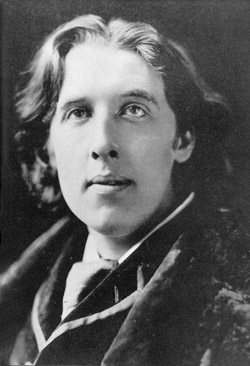
Oscar Wilde

“We are products of our past, but we don’t have to be prisoners of it.” ~ Rick Warren, The Purpose Driven Life: What on Earth Am I Here for?

“Learning is not attained by chance, it must be sought for with ardor and diligence.” Abigail Adams

My husband, Barry, and I are doing the year-long Art & Soul Reloaded course with Pam Grout. We just started the myth busting section. You know all those myths about the creative process. This week is about “Myth #2: To Make Art, You Need the Approval of a Publisher, A recording Company, an Art Gallery, Etc.” Each lesson is accompanied by an assignment. This week we are to come up with a title and subject for our TED Talk.

Sometimes, often, actually, the lessons are things I’ve already done, or am doing. But when I read this one, I knew exactly what I would speak about if I were ever to give a TED Talk. It’s the biggest personal growth question of my life: What am I supposed to be learning from this?

That question did several things for me when it came out my pen onto the page of my journal.

It stopped me in my tracks. Before writing that question I thought that life was happening TO me, that the world was against little old me and there was nothing I could do about that but moan and complain until someone came to save me. The thing was, when I asked that question, I became my own savior. Or rather, God and I became partners. S/he’d show me the way and I’d do the work of untangling the mess.

The question forced me to look at my problems from lots of new angles. It was asking me to look at myself and how I was either making the problem worse, or at the very least, not any better. I had to accept that I had a part to play in what was going on. I wasn’t just an innocent bystander.

Which brings me to taking responsibility for my actions. If you think the world is out to get you as I did, then it’s so easy to place the blame outside yourself. When I understood that I was responsible for my reactions, that gave me a new perspective about why people treated me the way they did. Taking a moment to evaluate a situation before making any kind of response is such a helpful tool. It gives me a chance to choose what kind of interaction I’m going to have with the others in the situation. What I say and do affects others in ways I can’t even comprehend at the moment of making the decision. I’ve often been surprised when people come to me and give me feedback about something I’ve said or done. It’s always much nicer when they thank me, rather than accuse and blame me.

Taking responsibility for my reactions to life events was really scary. Beyond making decisions in the heat of the moment, it meant I had to go to those dark places within and accept that I wasn’t perfect. You probably know what that feels like. For me it’s like something souring in my stomach, or having itching powder under my skin. Before asking what am I supposed to learning from this?, I’d have done anything to get rid of that feeling. But trying to escape dealing with our wounds never works. The problems get bigger and bigger until eventually our lives blow up in our faces and we either deal with them, or our souls die. Living with a dead soul is the most hellish thing I can imagine.

Answering the question, what am I supposed to be learning from this?, is a lifelong quest. I’m still working on the answer everyday. I won’t lie to you, taking a good hard look at myself, was the most scary thing I’d ever done because what I thought I’d find was the most unloveable person on the planet. But that’s not what happened. I began to see that almost everyone feels like I did. We think we’re not worthy of love or all the other good things available for us to experience.

So, I don’t know where that question came from, but I’m so glad I asked it and started on a grand adventure of discovering myself.

I’ll end with a quote from one of my favorite plays, An Ideal Husband by Oscar Wilde. “To love oneself is the beginning of a lifelong romance.” Even though the character saying this means it as a frivolous statement, there is some truth to it, though I’d change “romance” to “love affair”. If we don’t love ourselves who will? And if we don’t love ourselves, how can we love others? Everyone is so busy trying to figure out their own lives. I believe it’s in learning to love ourselves that gives us the courage to be able to build lasting bridges to other people. That’s a worthwhile goal in my book.

Thanks for reading one of my flights of fancy. I appreciate your likes and comments.

Lucinda Sage-Midgorden © 2018

Lucinda is the author of The Space Between Time, an award finalist in the “Fiction: Fantasy” category of the 2017 Best Book Awards. It’s a historical, time-travel, magical realism, women’s novel, and is available in all ebook formats at Smashwords, and print-on-demand at Amazon and other fine book sellers. To join her email list, click here. She will never sell the names on her list.

Stories That Endure

Bette Davis and Paul Henreid in Now Voyager

“After nourishment, shelter and companionship, stories are the thing we need most in the world.” ~ Philip Pullman

“Stories can conquer fear, you know. They can make the heart bigger.” ~ Ben Okri

It’s been a rough week. I’m still not completely recovered from my cold, so I dragged myself into class last night glad that the movie I’d picked was short. This class I teach every spring is titled dramatic structure. In the class we watch plays and movies and deconstruct the way the story is put together so we can discover the main message the writer and director are trying to get across to the audience. I’m always surprised when students like a classic movie, or play we watch. It gives me hope that maybe they will tune into Turner Classic Movies sometime and watch a vintage movie they might never have considered before taking the class.

Last night I was happy that my students loved the 1942 movie Now Voyager. This is the first time I’ve shown this movie, even though it’s one I love. It’s a domestic drama staring Bette Davis, Paul Henreid, and Claude Rains. Davis plays Charlotte Vale who has a nervous breakdown and must learn how to deal with her tyrannical mother played by Gladys Cooper. She is helped by Rains’ character Dr. Jaquith. The thing I love about the movie is that it shows Charlotte not only learning how to build friendships but how to stand up for herself without causing her mother to throw her out. It’s a neat balancing act. She also finds love in an unconventional relationship with a married man played by Henreid. Even though they make a pact never to see each other again, in the end they are brought back together when Charlotte has the opportunity to help Henreid’s daughter with the approval of Dr. Jaquith. I wasn’t surprised that my students could relate to having difficult family relationships and that the film gave them some strategies they could use in their own lives.

There are so many classic plays and movies that are still relevant for us today. And I’m happy to be introducing my students to some of them.

I’ve also been surprised that my students liked Gentleman’s Agreement, staring Gregory Peck and Dorothy McGuire, a story of anti-semitism right after World War II. That ground breaking movie is important because it breaks down the subtle ways people maintain their prejudices while fooling themselves into thinking they have none at all. That’s the movie for next week. I’ll be interested to hear what the students have to say about it.

An Ideal Husband, is another favorite of my students. It’s a play by Oscar Wilde in which he uses witty lines to make the audience laugh, but which has a serious message underneath. Lord Goring, the most frivolous of heroes, helps his friends navigate a serious problem in their relationship. He tells his best friend, “Gertrude, it is not the perfect, but rather the imperfect who have need of love.” We all hope for love and forgiveness from the ones we love. Oscar Wilde delivers that for his characters while at the same time making us laugh at their foibles. It’s a masterpiece as far as I’m concerned.

Sometimes I am pleasantly surprised when a student says something profound about one of the movies or plays we’ve just watched. One year, after a viewing of a filmed stage production of The Taming of the Shrew, we were discussing Kate’s final speech. This is one of Shakespeare’s speeches that is discussed adnausium because it seems that Kate gives up her will to her husband. One student surprised me by saying, “I think that speech and Petrucio’s reaction to it show that they tamed each other.” I had never thought of it like that before. I have always fantasied that after the play was over Kate and Petrucio were going to have a vibrant, sometimes contentious, but deeply loving relationship. But to think that the tamer also gets tamed was a wonderful new way to look at that play.

Now I know that some people watch movies for pure entertainment and don’t want to discuss all the nuances of the story. But social media is full of movie fan discussions dissecting every aspect of the latest movie in their favorite franchise and if that’s not evidence that stories have a kind of power to touch us deeply, I don’t know what is.

Thanks for reading. I appreciate all your comments and likes.

Lucinda Sage-Midgorden © 2018

Lucinda is the author of The Space Between Time, an award finalist in the “Fiction: Fantasy” category of the 2017 Best Book Awards. It’s a historical, time-travel, magical realism, women’s novel, and is available in all ebook formats at Smashwords, and print-on-demand at Amazon and other fine book sellers. To join her email list, click here. She will never sell the names on her list.
How to Help Your Favorite Authors

Revised book cover for The Space Between Time

“People can’t read a book if they don’t know it exists. All authors need to do marketing, regardless of how they published.” ~ Jo Linsdell

I’m a bit under the weather as I write this. I guess it’s my year to get a cold, so I’m reposting an article I wrote last year. It’s particularly appropriate since a friend of mine and my mother-in-law recently wrote reviews of my book, The Space Between Time, one on Amazon and the other on Goodreads. They were both favorable, which was very heartwarming. Thanks, Rita.

My mother-in-law, Judy, is a CHAMPION reader. I put champion in caps because she reads about two-hundred books a year. And she writes reviews for most if not all of them. In fact, she won an award from Goodreads a year or so ago for writing so many reviews. So the fact that she took time to read my book, which is not a genre she normally reads, and then wrote a lovely review was a big help for promoting my book. Thanks, Mom.

If you’re a reader, you can do your favorite authors a big favor by doing some of things below to help spread the word about their books. I’ve reposted this a couple of times, but it never hurts to repeat good information.

Word of mouth is still the best advertising tool. How many of you discuss your favorite TV show’s latest episode with friends, family and coworkers? See what I mean? You are creating a buzz. You can do that for your favorite authors as well. Here are some ways you can help them.

Write a review of the books you read and leave it on Amazon, Goodreads, in your blog, any social media site, or bookseller you choose.

If you are a member of Goodreads, just putting books on your “want to read” shelf will get the book noticed by the Goodreads staff and they may even promote them on their site.

If you like a book, let your local bookstore and library know what you thought of it, and ask them to carry and promote it.

Share your thoughts about the book with your friends and book club groups that you might belong to.

Consider asking the author to have a Skype session with your book club group so they can ask questions, or suggest that your local bookstore invite your favorite author to have a book reading/signing.

Give the book to your friends and family as gifts.

You may think these tips are rather easy and trivial, but if you help your favorite author sell more books, you will be helping them pay for all the time they spent working on it. Writing a book is not an easy thing to do, you know. If it was, more people would be doing it.

I’m shamelessly adding the reviews below.

Rita’s review: Recently, I finished reading a book titled, The Space Between Time, by my friend, Lucinda Sage-Midgorden. It was the best book I’ve read in a long time. It kept me captivated, which I have not experienced from any other book for the past couple of years. I loved all the little gems of meaningful and what I call spiritual statements throughout the book. You know, those words that make you pause and think, and sometimes have an “aha” from or a deeper awareness about something. And it was entertaining and informational about some of the history in the 1800’s and yet, contemporary. It also reminded me of the importance of “living in community” and how important it is to help one another and be engaged in your community. Thank you Lucinda for a wonderful, entertaining and captivating book!

Judy’s review: It is quite apparent that I have a relationship with the author of this book. Lucinda Sage-Midgorden is married to my son Barry. Because of that connection you should expect some bias in my evaluation of the book. However, there is another factor that may offset my favorable bias, and that is that I don’t really like and read very few in this genre. When I look at a book that is classified as time-travel, paranormal, or sci-fi, I usually skip it. I wanted to read Lucinda’s book to support her. She has worked for many years to complete this novel, and I know the editing and re-writing that she went through. Well, imagine my surprise when I found myself engrossed in the book and connecting to the characters and the story lines. I deeply respect anyone who writes a book, and Lucinda has produced a complicated novel that involves two different characters that are separated by years. At first I liked the sections with the historical character, Morgan, because my favorite genre is historical fiction. But I also became involved in the troubles that Jenna is facing in her life. It is interesting how these two women separated by time, but connected through family come to help each other deal with their problems. Many times the things these two women learn about facing life is good advice for anyone. I really did enjoy the book, and I hope many more will purchase it and find it as good a read as I did!

If you are so inclined to buy my book, and promote it, I will greatly appreciate it. And so will your favorite authors when you do the same for their books. And by the way, my husband Barry designed the cover art, maps, did the layout, and final editing for the book. It was a team effort.

Thanks for reading, commenting and liking my posts. I appreciate it.

Lucinda Sage-Midgorden © 2018

Lucinda is the author of The Space Between Time, an award finalist in the “Fiction: Fantasy” category of the 2017 Best Book Awards. It’s a historical, time-travel, magical realism, women’s novel, and is available in all ebook formats at Smashwords, and print-on-demand at Amazon and other fine book sellers. To join her email list, click here. She will never sell the names on her list.

Themes for My Year

Act I The Skin of Our Teeth

“I write about the power of trying, because I want to be okay with failing. I write about generosity because I battle selfishness. I write about joy because I know sorrow. I write about faith because I almost lost mine, and I know what it is to be broken and in need of redemption. I write about gratitude because I am thankful – for all of it.” ~ Kristin Armstrong

I resemble the quote above. I just finished my first full week of teaching three college classes. It’s four late evenings a week. A couple of interesting things happened. First, I thought I’d be exhausted by the Thursday night. I wasn’t! I felt great on the drive home, energized by my students. However, when I woke up in the morning my head was in a fog and I felt like everything I’m doing to going to fail, or worse be mediocre. This post is my attempt to unravel my feelings of inadequacy.

The second thing that happened was that I noticed a theme emerging from the play I’m directing and the movies I chose for my dramatic structure class. Measure for Measure, and most of the movies are about flawed and damaged people trying to protect themselves. Some of them commit terrible acts, or are forced to face their woundedness. But in almost every case they are redeemed by people who love and forgive them.

Then there was the Larry Nassar case. He sexually abused more than 150 young girls and women gymnasts including some Olympic champions. Thursday night as we were leaving class, my students couldn’t help but bring up the case and how they thought he got what he deserved. All the way home I was thinking about my themes for the year; how we’re all flawed, sometimes making huge mistakes, and that possibly unconditional love and forgiveness might just redeem us all. But it’s hard to go against conventional wisdom. I mean, I feel torn about such cases. Do we just let violent offenders go without any consequences? Do we shower them with love and expect them to change?

I have no clear answers for those questions, except that I think it’s always good to defend the weak. And how can we learn if we don’t face the consequences of what we do?

As I was ruminating about these issues, the book Conversations with God came to mind. In the book, Neale Donald Walsch asks God a very important question about the evil we humans have created. God said something that confirmed some deeply buried beliefs I had never dared to speak out loud, “”Evil is that which you call evil. Yet even that I love, for it is only through that which you call evil that you can know good; only through that which you call the work of the devil that you can know and do the work of God. … I do not love ‘good’ more than ‘bad.’ Hitler went to heaven. When you understand this, you will understand God.” Then when Neale says that he was raised to believe that good and bad do exist, God replies, “Everything is ‘acceptable’ in the sight of God, for how can God not accept that which is? … Yet hold to your beliefs and stay true to your values … still examine them one by one.”

Well, this year I’m examining my beliefs about what we do to ourselves and each other. For now holding myself and others accountable is a good thing. The discussions that abound right now about human rights of all kinds are good because we need to address the rage of those who have been mistreated for so many centuries. We have to allow them to tell their stories so they can heal. In turn we all need to tell our stories in order to see where we’ve become uncaring and cruel so we can choose new ways to interact with each other.

On a more personal note, during this process of preparing to direct Measure for Measure, I realize that I am so hard on myself. I blame myself for not being sensitive enough, yet like two of the main characters in the play, I’m tempted to shut off my emotions because it’s just too painful to be bombarded daily with new allegations of abuse, or new legislation that hurts the people who are in the most need. I expect myself to be perfectly loving, accepting, compassionate, and forgiving. But I’m human and sometimes I call people idiots and shake may head at their lack of compassion. Then I think, who am I to judge? Living is a complicated proposition, unless I remember that I’m not the one in charge of the big picture. I’m merely one of the actors on the stage.

So, we’re all works in progress and I’ll try to be better at giving myself a break when I’m not as “good” as I think I should be and do the same for those around me.

Thanks for reading, commenting and pressing the like button.

Lucinda Sage-Midgorden © 2018

Lucinda is the author of The Space Between Time, an award finalist in the “Fiction: Fantasy” category of the 2017 Best Book Awards. It’s a historical, time-travel, magical realism, women’s novel, and is available in all ebook formats at Smashwords, and print-on-demand at Amazon and other fine book sellers. To join her email list, click here. She will never sell the names on her list.