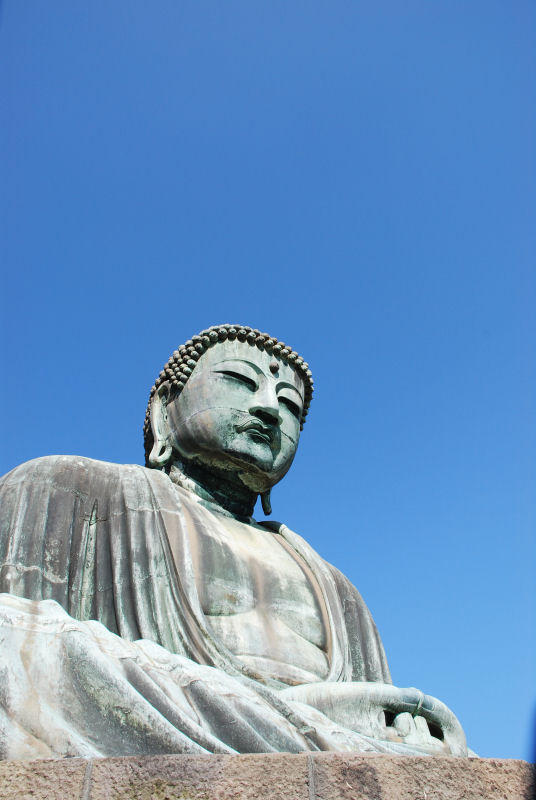
Gifts That Cost Nothing

“By taking the time to stop and appreciate who you are and what you’ve achieved – and perhaps learned through a few mistakes, stumbles and losses – you actually can enhance everything about you. Self-acknowledgment and appreciation are what give you the insights and awareness to move forward toward higher goals and accomplishments.” ~ Jack Canfield

“It’s one of the greatest gifts you can give yourself, to forgive. Forgive everybody.” ~ Maya Angelou

“Too often we underestimate the power of a touch, a smile, and a kind word, a listening ear, an honest compliment, or the smallest act of caring. All of which have the potential to turn a life around.” ~ Leo Buscaglia

Listening is one of the best gifts you can give another person. In fact, it’s so important that I think I’m going to make it my word for next year.

I learned to listen from my father. He was a the greatest listener I have ever known. When I did something wrong, instead of punishing me right off, he’d sit down with me and say, “Now tell me what you were thinking when you did that?” And he’d listen. I don’t remember the punishments, I remember that he cared enough about me to listen to my side of the story and then gave me guidance about how I might change my behavior in the future.

The other way I learned to listen was by being an actor. Countless actors have said that the best tool in the actor’s toolbox is listening. An actor listens to their fellow actors in a scene and then they have to decide how to react or respond given their character’s background and emotional bent.

Listening in real life is sort of the same thing. It’s an interaction between two or more people that involves many more layers than just the words being spoken. There are the nonverbal clues, and trying to understand the intention of the person speaking, then deciding how you feel about that.

Let me give you an example. The other day while planning to make homemade tomato soup, I pulled the bag of tomatoes out of the freezer and left them in the sink. Barry put them in the fridge later that day. A day or two later, Barry said to me, “Be sure to drain the tomatoes before making the soup,” to which I replied looking him straight in the eyes, “I’m not stupid.” Well, as you can imagine that set of a little bit of a heated discussion.

Later I sat down to think about what had happened and how I could respond differently. This is what I came up with. Barry’s intention wasn’t to belittle me in any way. He’s not like many of the men in my religious studies program, or the men who thought I needed to change my major, or men I’d worked with on my various jobs, or on projects at church. I tried to tell him that, when he said those kinds of things to me, what I heard was that he thought I was not capable of critical thinking. Of course, that’s not how he feels at all. He’s just detail oriented and wanted to be sure the soup turned out the way we like it.

After I processed those thoughts, I remembered something Wayne Dyer used to say, “We can decided whether or not to be offended.” I was allowing what had happened to me in the past affect my response to Barry, when really I should have just said, “Thanks. I thought of that.” and moved on.

I bring all this up because this week three things happened in the discourse about sexual harassment. First, Rose McGowan attacked Meryl Streep in public for not supporting other women who had been abused in various ways by Harvey Weinstein, Matt Damon made a statement making suggestions about the same issue, and Jody Foster made similar statements on Stephen Colbert.

What Jody Foster said makes so much sense. Women need to tell their stories and those stories need to be listened to and believed, but there comes a time when we need to allow men into the discussion. We need to take a look at where we’ve been, where we are now, and where we want to go in relations between women and men. And we have to do that together. From what I’ve read, Matt Damon was trying to do that, but a Twitter storm of condemnation was aimed at him. And as for Rose McGowan, I think she was wounded so badly by Harvey Weinstein that she needs our support until she has a chance to heal.

I understand what it feels like to be so hurt that you can’t see straight. It’s happened to me. And while I was in that wounded state, I was completely unreasonable. To me the world was a hostile place and almost everything anyone said to me I viewed as an attack. There are lots of wounded people, both men and women, all around the world. We have to listen to their stories, because as Oprah has said, “People just want to be heard.” And as we listen, we have to refrain from judgment. Just being a witness is sometimes enough to help a person start their healing journey.

Then, once those who have been abused have had a chance to heal and feel more safe, then we can begin to have productive dialogue about how to fix male/female relationships.

These steps can apply to any public discourse as well as one-on-one relationships. I’ve lived through the process myself. One the greatest gifts I have ever received is to have someone listen to my story with complete support and without trying to fix or judge me. I’m grateful to all those people who let me be a mess for a while and loved me anyway.

Thanks for reading. I appreciate your likes and comments.

Lucinda Sage-Midgorden © 2017

Lucinda is the author of The Space Between Time, an award finalist in the “Fiction: Fantasy” category of the 2017 Best Book Awards. It’s a historical, time-travel, magical realism, women’s novel, and is available in all ebook formats at Smashwords, and print-on-demand at Amazon and other fine book sellers. To join her email list, click here. She will never sell the names on her list.

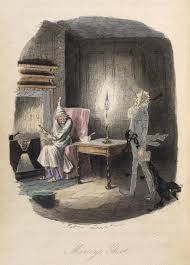
When Your Story Takes a Different Direction

“The characters won’t do what I want.” ~ Charles Dickens, The Man Who Invented Christmas

“Wherever my story takes me, however dark and difficult the theme, there is always some hope and redemption, not because readers like happy endings, but because I am an optimist at heart. I know the sun will rise in the morning that there is a light at the end of every tunnel.” ~ Michael Morpurgo

“Every story I create, creates me. I write to create myself.” ~ Octavia E. Butler

“After nourishment, shelter and companionship, stories are the thing we need most in the world.” ~ Philip Pullman

I used to think that writing was a matter of sitting down and letting the story pour forth in it’s completely finished form. Boy was I wrong!

When I began writing the book that became The Space Between Time, the story was going to be about the loving relationship between a daughter and her father in the years leading up to the Civil War. My initial inspirations were my relationship with own father and my pioneering ancestors. It was going to be a fictional chronicle of the wisdom my father had shared with me over the years.

I began writing the book after one particular visit when I knew that my father’s health had taken a definite downturn. That was in 1998 or ’99. But I had to stop writing because I began teaching full-time. When I picked up the book again in 2010, the story wanted to go in a different direction. Time had changed crucial elements about my story since my father had been dead for six years. Morgan now had to deal with the death of her father, and since her mother was also dead, she had an opportunity to build an new life. The link between Morgan and her father was not broken, but the talks I had envisioned had to be altered. Now she remembered things he taught her, and occasionally he came to her in spirit form when she needed him.

As I worked on my book, there came a point when I had written all I knew how to write about Morgan’s life. Something was nagging to be included in the story, but what it was was not quite clear to me. Then as I’ve written in previous posts, the inspiration came from another author. Originally I had thought that Morgan would be the main character and her life would somehow be aided, or intertwined with someone in our present time, but I couldn’t see or hear the story of the character in the present. It was as if I knew the character was there, but she was behind a veil, or off having ice cream, or hanging out with friends. Whatever she was up to, she wasn’t available to tell me her story.

However, when the fellow author suggested I intertwine the present timeline with the past, I knew he was right. That’s when Jenna began to reveal herself to me. Her life had been shattered too just like Morgan’s, only for her it happened all in one day. Her fiancé broke off their engagement, her mother died in a car accident and she lost her job. She needed to rebuild her life. As I listened to Jenna, I realized I was writing about the time when I lost a most beloved teaching position. Because of our connection, Jenna needed to be the main character. Once she told me that she would find the journals of her three-times great-grandmother linking their experiences, I was filled with all kinds of new story possibilities for both of my heroines.

Later, of course, another writer friend helped me by suggesting I spread out Jenna’s self-awakening more slowly. This forced me to remember how I had managed to rebuild my life. As I dredged up old memories, I used them to enhance the link between Jenna and Morgan as they helped each other through all kinds of challenges.

I’ve had friends and family, who have read the book, ask me how I came up with all the details of my story. What I tell them is that I did it a little at a time. For me, writing is a little bit like a scavenger hunt. (Do they have those any more?) I get a snippet of story and work on it until it feels like it’s done, at least for the present. Then another snippet comes to me usually just as I’m waking up in the morning, and I begin working on that new section, and on it goes until I have a finished draft.

When I finished the rough draft of The Space Between Time, I thought I was finished with Jenna and Morgan’s story. However, it wasn’t long before a new segment of their story nagged at the back of my mind and the sequel, Time’s Echo was born.

To tell you the truth, where the ideas for these books came from is a bit of a mystery. I mean, for a long time I wanted to be a writer, but I didn’t know how to put my ideas into a coherent form. Nevertheless, once I got the concept for The Space Between Time, it simmered on the back burner of my mind, even when I was extremely busy teaching. Finally the day came when the stew was ready to be served and I started writing. Now that it’s finished, I’m in a little bit of awe of how my writing process has evolved and that the ideas in this book have led to the next book. And not only that, I have ideas for books of different kinds.

I have to say I’m hooked on this wonderful creative process. Now I write not only to make sense out of my own life, but to see where my imagination will take me. So, the moral of this post is that I have to keep writing.

There are many stories to be told by me, and other people, which means there are lots of different stories to be enjoyed. So, help your favorite storytellers by spreading the word about their work. Believe me, the creators will be grateful you did because, the main challenge for an author is to get their story noticed.

Thanks for reading. I appreciate your likes and comments.

Lucinda Sage-Midgorden © 2017

Lucinda is the author of The Space Between Time, an award finalist in the “Fiction: Fantasy” category of the 2017 Best Book Awards. It’s a historical, time-travel, magical realism, women’s novel, and is available in all ebook formats at Smashwords, and print-on-demand at Amazon and other fine book sellers. To join her email list, click here. She will never sell the names on her list.

Planting Seeds

Seth MacFarlane at ComicCon

“Evolution doesn’t care whether you believe in it or not, no more than gravity does. I want to rekindle excitement over what we’ve achieved as a species with the space program. We can’t afford to regress back to the days of superstition.” ~ Seth MacFarlane

“Actors are agents of change. A film, a piece of theater, a piece of music, or a book can make a difference. It can change the world.” ~ Alan Rickman

“I regard the theatre as the greatest of all art forms, the most immediate way in which a human being can share with another the sense of what it is to be a human being.” ~ Oscar Wilde

I’m an eternal optimist. Even when things are going really badly, after I’ve allowed myself to feel horrible, I look for the good things that can come out of the seemingly terrible situation. During this trying year, I’ve been thinking a great deal about how change happens one small step at a time.

The other night, Barry and I watched the final episode this season of The Orville. It was created by Seth MacFarlane, one of many TV shows he’s been involved with. It’s so similar to Star Trek that Barry and I sometimes get it mixed up with the other franchise, except that the crew of the Orville are wacky and make big mistakes that somehow turn out surprisingly well. It’s a wonderful mix of funny bits and poignant themes.

In the episode we watched the other night, the Orville was on an exploratory mission and came across a planet they witness phasing into our universe. A small group goes to investigate. But the shuttle is forced to land stranding them for a time. Kelly Grayson, the second officer, goes exploring and finds people living there at an early stage in their development. The rules of the Planetary Union state they must not interfere with primitive cultures. Nevertheless Commander Grayson is accidentally revealed to a group of children and makes the mistake of using a devise to heal a cut on a little girl’s forehead. This is witnessed by a small group of adults.

The shuttle crew makes it back to the ship safely. Then they are surprised when the planet phases out of their universe. Captain Ed Mercer omits Kelly’s mistake from his official report. They were once married, and are thinking of getting back together, so he tries to protect her career. However, when the planet phases back into their universe eleven days later, the crew discovers that advances have been made. The culture is now at a stage of development several hundred years in the making. Their civilization has developed to an era comparable to our middle ages, or renaissance. However, when the crew goes down to assess the damage done, they find that the people of the planet worship Kelly as a god. Captain Mercer has to admit to their commanding general the mistake that was made and the general orders them to stay to discover just how this exposure affects the cultures on the planet. Even though the crew attempts to fix the initial mistake, the people in power have other plans.

In the end, Captain Mercer sends down an artificial life form to observe while the Orville stays until the culture on the planet is at a stage equivalent to their own. At the end of the episode, in a visit from leaders of the planet, the crew is relieved to find that all is well despite the earlier contamination. Even though the people went through some extremely difficult times, their culture thrives with not only advanced technology, but spirituality as well.

When Barry and I finished watching the episode, we agreed it was a hopeful take on how even if things look bad now, the human race is evolving. That’s one of the things I love about this kind of entertainment. It can show you how far we’ve come in spite of all the difficult times, and it helps us imagine where we might end up.

So, even though the headlines often concentrate on negative events. I’m turning toward hope instead and remembering that I’m just here planting seeds. I won’t be here to see the harvest, but the good things I do now added to other seeds will reap a harvest of wonderful things for future generations.

Thanks for reading. I appreciate your likes and comments.

Lucinda Sage-Midgorden © 2017

Lucinda is the author of The Space Between Time, an award finalist in the “Fiction: Fantasy” category of the 2017 Best Book Awards. It’s a historical, time-travel, magical realism, women’s novel, and is available in all ebook formats at Smashwords, and print-on-demand at Amazon and other fine book sellers. To join her email list, click here. She will never sell the names on her list.

Questions I’ve Had for a Long Time

Hypatia, Greek Alexandrian Philosopher

“I hate to hear you talk about all women as if they were fine ladies instead of rational creatures. None of us want to be in calm waters all our lives.” ~ Jane Austen, Persuasion

“There are two powers in the world; one is the sword and the other the pen. There is a great competition and rivalry between the two. There is a third power stronger than both, that of the women.” ~ Muhammad Ali Jinnah

“I do not think, sir, you have any right to command me, merely because you are older than I, or because you have seen more of the world than I have; your claim to superiority depends on the use you have made of your time and experience.” ~ Charlotte Brontë, Jane Eyre

“These days, however, I am much calmer – since I realized that it’s technically impossible for a woman to argue against feminism. Without feminism, you wouldn’t be allowed to have a debate on women’s place in society. You’d be too busy giving birth on the kitchen floor – biting down on a wooden spoon, so as not to disturb the men’s card game – before going back to quick-liming the dunny. This is why those female columnists in the Daily Mail – giving daily wail against feminism – amuse me. They paid you £1,600 for that, dear, I think. And I bet it’s going in your bank account, and not your husband’s. The more women argue loudly, against feminism, the more they both prove it exists and that they enjoy its hard-won privileges.” ~ Caitlin Moran, How to be a Woman

As I woke up this morning I was thinking about my new novel, Time’s Echo, with the main theme of women fighting for their rights. Then I saw the new Time cover with “Person of the Year”, which this year is actually all The Silence Breakers. The cover has several women on it who have blown the whistle on how men in power abused them. I gave a little cheer, as I do every time a woman speaks up and people believe her.

Those two things brought up lots of old questions that I’ve been asking since I was harassed for choosing religious studies as my major forty-one years ago. I wanted to know then, and I still want to know, what makes men think they have the right to tell me what to do with my life? And that’s just one little part of my internal feud with the male dominated societies we live in.

It’s not just men, of course, who want to make themselves feel more secure by trying to control their outer world. We all do it and I don’t understand why. Well, that’s not exactly true. I do understand why we do it. We do it because we’re afraid, and because it’s easier to blame something or someone outside ourselves than to do the work necessary to make a real and lasting change in ourselves. Some people think it’s just too much work.

But, at what point did we assume that we know what is best for other people and try to get them to live their lives as we would prescribe?

Maybe it’s a silly exercise, but for some reason I feel like I can’t go on with my book until I can pinpoint the moment we, as a species, went off the rails. My ultimate goal for Time’s Echo is to not only write about what is wrong with female/male relationships, but to suggest some solutions as well. I know – it’s just a novel. But for some reason I can’t proceed until I can offer some hope.

In my imagination I go back to the beginning of the human race and see women taking roles that their brains are programed to perform, and men doing the same thing. Men and women worked as a team. But then something happened and men decided that they needed to take over and control everything including women. What made women agree to this clearly unhealthy and detrimental situation?

I’m only an amateur student of history and brain research, but even I can see that men’s and women’s brains work differently. (See, Men are Mars, Women are from Venus for a clue.) I don’t need to enumerate those differences that have been coming to light over the last century or so. But this is what I think might have happened. Women were so busy taking care of the children, managing everyday tasks like, foraging for edible and medicinal plants, cooking, making a home and clothing, taking care of the children, and tending the sick and wounded, that they allowed men to take on the more aggressive tasks of brining home food from the hunt, building homes and community structures, and protecting the family group. Over time somehow men thought their tasks were more important. I mean their brains were wired for conflict and protection which in my mind, naturally led to possession. Maybe women were too busy to notice this subtle shift from team player to dominator until it was too late. And women being decidedly less aggressive, allowed men to take on this new role. But I can also imagine that ancient women might have looked on this new kind of man, as immature. “Oh, they’ll grow up soon and we’ll be able to be full partners again.” Meanwhile the drive to produce children was strong in both men and women, so an uneasy alliance was formed. That was many, many centuries ago. Women are still waiting for men to grow up.

Not long ago I turned on the TV and the DVR was set to my favorite station, TCM. A movie was in progress. A husband and wife were having a discussion. The wife was packing to leave. The husband said, “I don’t understand. Why are you leaving?” To which the wife replied, “Oh, Bob, what a child you are.” Bob’s response is the part that made me stop what I was doing and get info on the movie. He said, “Of course, I am. All men are children. They like to play and chase toy balloons.” The name of the movie is Madam Satan (1930), a title I hate, by the way. But that little bit of dialogue made something click in my head. Women want true partners not only in marriage but in all aspects of life, but sometimes don’t find them. They marry little boys who are chasing balloons, and other bits of fun, which makes them too busy to be true partners. It happens that way in business too. And in those situations, women are left to pick up the pieces.

I don’t want you think that I hate men. I was raised by an amazing father who was mature, loving, responsible, respectful, and who understood human nature. I was also fortunate to be surrounded by other great men. I married one. These men gave me hope that one day, the child/men were going to finally grow up. Thankfully, we’re finally seeing it happen.

Men have ruled the world for centuries, but I can’t put all the blame on them. For whatever reason, we women have allowed this situation to be perpetuated. And our efforts to gain some measure of autonomy has twisted us in weird ways. I’m writing in generalities here, which is always dangerous, but nevertheless, I believe my observations to be accurate for at least some women. We women became expert manipulators. We learned how to make men think they came up with some great ideas, in other words the “woman behind the man” concept. We have become competitive with each other over the “best” men, or life situation. We’ve hidden our intelligence. We’ve allowed men to use and abuse us to maintain security, all of which has shattered our collective feelings of self-worth. Of course, there have been women who have not allowed men to dominate their ambitions, or take away their power. They stand out as fantastic examples for the rest of us. I think those women helped the rest of us wake up to all the possibilities we have been missing out on.

Thank heaven there is now a definite change in long held attitudes. It’s going to take us a very long time to unravel our old ways of thinking and discover new ways to relate to each other.

But this is what I’d like to see happen from this day forward: More cooperation and less competition between men and women in government, business, and all aspects of society. I want more women in leadership positions so we can have discussions about how to come up with real solutions to all of our world problems. I want every person to have a roof over their heads, food on the table, education, access to health care, and a job they can be proud of. I want us to respect each other. Making that dream come true probably won’t happen in my lifetime. That doesn’t matter. I’ll keep hoping, writing, and working for that outcome anyway.

Thanks for reading. I appreciate your likes and comments.

Lucinda Sage-Midgorden © 2017

Lucinda is the author of The Space Between Time, an award finalist in the “Fiction: Fantasy” category of the 2017 Best Book Awards. It’s a historical, time-travel, magical realism, women’s novel, and is available in all ebook formats at Smashwords, and print-on-demand at Amazon and other fine book sellers. To join her email list, click here. She will never sell the names on her list.

Movies That Imitate Life

Charles Dickens

“The whole difference between construction and creation is exactly this: that a thing constructed can only be loved after it is constructed; but a thing created is loved before it exists.” ~ Charles Dickens

“I never could have done what I have done without the habits of punctuality, order, and diligence, without the determination to concentrate myself on one subject at a time.” ~ Charles Dickens

Last Sunday my husband and I drove two hours to Tucson to see The Man Who Invented Christmas. I don’t know why the local theaters weren’t showing it, but we were determined to watch this movie that I am sure will become a holiday classic since it is about how Charles Dickens came to write A Christmas Carol. My favorite scenes all have to do with how Dickens found inspiration in everyday encounters.

In the movie, his last three books have flopped. He’s strapped for money and needs a hit, but he doesn’t have a wisp of an idea. Then one night he overhears the new Irish maid telling his children stories about how on Christmas eve, the veil between our world and that of the spirits is thin enough to allow them to slip through to our side. That sets Dickens’ imagination whirling and the idea of new story is born.

After that Dickens picks up bits of real dialogue, he meets people who inspire characters, and he comes upon situations that inspire events for his novel. But the most intriguing element of the movie is how Dickens and the characters talk to each other. As Dickens is trying to finish the last chapter, he wants to leave Scrooge as an unrepentant miser. His characters “won’t do what I want them to.” They rebel. They keep telling him that Scrooge can be redeemed. Even his Irish maid tells him that the end of the book needs to be hopeful. That’s when we get a glimpse into Dickens’ childhood and how his life inspired his stories and activism on behalf of the poor.

His father was an upper class working man, but he had no idea how to manage money, and so was arrested and put into debtors prison, along with his family. Charles, however, was forced to work in a boot blacking factory at the age of twelve. The conditions in the factory were harsh and Dickens never forgot what it was like to lose everything and be treated as if he were a commodity. So, as he’s writing A Christmas Carol, he must face the fact that he has never forgiven his father for that humiliation.

I know that every author has their own method and personal viewpoint. Charles Dickens wrote his books in serial form, changing his characters and plots as he heard his friends and readers talk about the latest installment. However, he started with a firm beginning middle and end in mind. And because of his childhood experiences, almost all of his books had to do with the inequity between the rich and poor.

Sometimes I wish I was more like Dickens. When I began writing The Space Between Time, I only had a vague idea of my characters, themes, and where I wanted my story to end up. I don’t have conversations with my characters, as the movie portrays Dickens doing. But, I do get ideas just as I’m waking up, or some little snippet of plot will slink by me as I’m doing something else. Sometimes I get inspiration while I’m driving. When that happens I tell the ideas to stay put so I can write them down, or commit them to memory for later use. But like Dickens, my past and how I feel about it, is all part of my written work. I think it must be that way for all authors.

I can’t say I’ve ever had writer’s block, as Dickens does in the movie, at least not yet, thank heaven. But there are times when I know that where the story and characters want to go isn’t quite ripe yet. So I have to let the ideas simmer on the back burner of my mind. Or maybe it’s more a matter of me giving up resisting where the characters need to go. While writing The Space Between Time, I wanted to make my characters perfect, spiritually awakened people. But we all have those dark places inside that we must face to get through to the light. For me, dredging up the dark emotions are the hard days of writing. Fortunately I have good writer friends who keep reminding me that the best stories show the character’s struggles before they find a happy plateau.

Not being a person who plots out every event in the book is sometimes a pain. But that’s just not my personality. When I began writing this first novel, part of my vague idea was to have two intertwining timelines, but when I picked it up again after several years, I couldn’t figure out how to do it. Then a fellow author encouraged me to go with my first instinct. On the drive home I just said to the universe, “Okay, I want to tell the story of a character in the present and have her discover a character in the past. As a result they learn from each other. How do I do that?” And as I was approaching the San Pedro River, the idea came to me. Jenna’s life would be shattered. She’d find Morgan’s journals and enter her consciousness. From that moment on, idea after idea flowed to me as the story developed. I was energized again.

A similar thing happened with Time’s Echo, the sequel novel I’m working on now. Again the story in the past came to me first. I knew I wanted Morgan to become involved in the Suffrage Movement, but what was happening with Jenna in the present wasn’t clear to me. I wanted her to have some kind of awakening and become involved in advancing women’s rights, but just what was going to motivate her to do that wasn’t clear. That was in 2014. I began writing Morgan’s portion of the book and waited for events or inspiration to come to me about Jenna. I mean, I had been harassed in college and in the work place, but none of it seemed immediate enough to propel Jenna into activism. Inspiration and recent events collided with a vengeance. We’ll see how real life events help me write more of Jenna’s awakening. Like Dickens, everything that comes into my sphere of awareness is fodder for the stories I want to tell.

I hope you will go see The Man Who Invented Christmas. Even if it is fantasy, it’s satisfying to think that Dickens came to understand and forgive his father. The movie is filled with hope that if we forgive, we can find joy in life and change those around us.

Thanks for reading. I appreciate your likes and comments.

Lucinda Sage-Midgorden © 2017

Lucinda is the author of The Space Between Time, an award finalist in the “Fiction: Fantasy” category of the 2017 Best Book Awards. It’s a historical, time-travel, magical realism, women’s novel, and is available in all ebook formats at Smashwords, and print-on-demand at Amazon and other fine book sellers. To join her email list, click here. She will never sell the names on her list.