Keeping Characters in Hot Water

A Woman
A Woman

Before I go on with this post, I must say something about the latest shootings in Orlando and New Mexico. Each time something like this happens, I’d deeply affected by the horrific events. This is what I can do. I have and will continue to petition my legislators to vote on gun control and I will vote for people who support such legislation. I also send out love to the entire planet when I meditate. Some people say that’s a wimpy way to try to change the world, but since science has proven that what we think creates our reality, I believe that envisioning a loving world is a powerful tool to facilitate the change we want to see. Each individual that turns away from hate and fear toward love send ripples of love out into the universe. When we heal ourselves, we help heal the world. That’s what I hope my readers get from my novel and the journeys of my two main characters.

Since the last two posts from The Space Between Time have included  scenes from Morgan’s timeline in the past, this week I thought I’d include one from Jenna’s timeline in the present.

When I started this novel, I wanted to have two intertwining characters who learn from each other and heal themselves along the way. Morgan’s timeline came to me first, and I got stuck there for a while. But through a series of events which are too complicated to write about here, I finally connected with Jenna, a woman in the present who is trying to put her life back together.

In this scene, Jenna is confronted by her ex-fiancé, who broke off the engagement in the first chapter.

* * * * *

That night Jenna slept better than she had in ever so long and when she awoke, she knew what she wanted to do. Writing had always been a solace, so that’s where she would begin. Only this time, she’d take her cue from Morgan and begin by sorting out her feelings in a journal.

Grabbing her purse and keys, she opened the door and ran into Sam.

“Hi Babe.”

Her stomach clenched, “Sam! What in the hell are you doing here?”

Leaning on the door jamb so she couldn’t get out of the house, he said. “You hung up on me, Babe. I needed a chance to explain,” Jenna wasn’t fooled by the look of mock contrition on his face.

“About what? That you were cheating on me? And don’t call me Babe.” She pushed him out of the way. Then shut and locked the door. She brushed past him starting for her car wishing this encounter would soon end. But Sam’s car was parked behind hers. She’d have to deal with him.

Knowing he’d trapped her, he smirked. “I always call you Babe.”

Jenna turned walked up to him and put her face close to his. “I’ve told you time and again I don’t like it when you call me that.”

Surprisingly he took a step back. “I don’t remember that.”

“Of course not, because you never listen.”

“Now, Babe,” The look on Jenna’s face made him amend his approach. “I mean Jenna, aren’t you gonna let me talk to you?”

Oh, if only he’d go away! Keeping her eyes on his face and putting her hands on her hips, she said, “What for? You said it yourself. Neither one of us was happy, so it’s over.”

Pulling himself taller to pretend confidence, he said, “I know I said that, but, I’ve been thinking. I might’ve been wrong.” He had that I’m-innocent-of-whatever-you-think-I’ve-done look on his face she’d learned to hate long before the break-up.

She looked at him, trying to formulate the response that would make him leave. The moments slowed. For the first time she noticed muddy waves emanating from and around his body. Her instinct was to back away from the unwanted onslaught of his murky energy, but before she could do so, it touched her own energy field. She nearly fell over as dark self-doubt swept over her. The image of a wounded wolf flashed through her mind. Somehow she knew exactly what had happened that brought him to her doorstep. “Ah, what happened, Sam? Did she leave you? I know you hate to be alone.”

The dark energy was sucked into Sam’s body and he stuttered “I – I don’t k-know what you’re talking about. There’s never been anybody but you.”

“Oh? But, you know, I heard her in the background when we talked on the phone!” She faced him square on, “Now, please get in your car and go back to L.A.”

Suddenly Sam took Jenna by the arm, and clamped down hard, “It was a one night stand thing. I was hurt that we broke up.” Dark gray and muddy brown energy shot out at her again. This time she thought to shield herself and her own aura in red, orange, and yellow shot out to block what was coming from him.

Gasping from the pain, she tried to get her arm free. “You were hurt? Oh, yeah, I see that now. You’ve been wounded from the very beginning, but I was too dazzled by the bling to notice. Now let me go!” They struggled. Sam grabbed for Jenna’s other arm. She tried to back away, and slid on a mossy patch on the sidewalk forcing her to sit on a porch step.

Just then an unmarked police car drove up. Sam’s back was to it as Detective Spade got out of the car, assessing the situation and putting his hand on his gun.

Walking toward the struggling pair, Detective Spade said, “Let go of her, Sir!”

Sam turned around, still holding onto Jenna’s arm. “Who are you to interfere in a private matter? She’s my fiancée,” Sam said as Jenna continued to struggle to get her arm free.

Advancing on Sam with his hand still on his gun, Detective Spade said, “That’s not what I heard, Sir. Now back away from her.”

Sam puffed up like a rooster in the ring, but he let go of her arm. Jenna moved away. He turned toward Detective Spade saying, “What you gonna do, shoot me?” Jenna heard the fear underneath the bluster for the first time. With a snarl, Sam said, “We’re having a private conversation. Do you mind?”

Detective Spade had stopped a few feet from Sam. “It didn’t look that way to me, Sir. Is that true Miss Holden?”

“Miss Holden? So, you’ve met before. Who is this? Your new boyfriend? You didn’t waste any time,” Sam said with a sneer.

Detective Spade was surrounded by a clear yellow and green aura. He was relaxed, though cautious. Jenna knew she could trust him, but Sam was getting angry. She saw the wounded wolf image surrounded by dark fog emanating from him again, and knew if she didn’t do something he’d become dangerous. She saw that Detective Spade knew it too.

She took a few steps closer to him. “Sam, are you drunk or something? He’s a police officer, and he’s got a gun. Do you want to get arrested? What’ll that do to your precious career?” Sam’s countenance changed, and the swirls of muddy energy retreated close to his body.

Now that she looked more closely at him, Sam looked a little unsteady on his feet. She hadn’t smelled alcohol on him, though, so it must be drugs.

Taking a deep breath, Sam said. “I’ve been on the road for twenty hours with not much sleep before that. I guess I’m crashing from the wake-up pills,” he said as he sat abruptly onto a porch step.

Taking his hand away from his gun, Detective Spade gently took a hold of Jenna’s arm and moved her behind him. “I’ll need to see those pills, Sir. Are they in your car?”

“Yeah, go ahead. You won’t find any drugs. They’re the over the counter kind,” Sam said as he ran his hands through his hair, then deflated like a balloon and rested his head on his arms.

“Is the car unlocked?”

“Yeah,” came the muffled reply.

Detective Spade looked over at Jenna and indicated with the jerk of his head to follow him as he went to Sam’s car. He kept his eyes on Sam. She opened the driver’s door and moved back so Detective Spade could investigate. He’d put on latex gloves, pulled the trunk release, examined the open briefcase that sat on the passenger seat. The pills were in the briefcase. After searching the car and trunk, he approached Sam. “You’re telling the truth, at least. Did you read the instructions, you’ve got to be careful not to take too many of these things. How many did you take?”

Not lifting his head, Sam said, “I don’t know, one or two whenever I got tired.”

“Just as a precaution, I’m going to take you to emergency to get you checked out.” Detective Spade took Sam by the arm and led him to the police car. Miraculously, Sam didn’t object. Putting Sam in the front seat, he turned to Jenna. “Is it okay if we leave his car here?”

“Sure, I’ll move it. I was on my way out. Does he have his wallet?”

“I got it out of his briefcase. The keys are in the ignition. Do you want me to make sure he doesn’t bother you when he comes back for his car?”

The adrenaline was beginning to wear off and Jenna was feeling shaky. She tried to lighten the atmosphere by saying, “Feeling protective, Detective?”

“It’s my job, Ma’am,” His handsome face lit up in a big smile.

Smiling back, Jenna said, “I’m much obliged to you, Sir, but I think I’ll be fine.”

* * * * *

Thanks for reading and your comments. Feel free to share with your friends and family.

Lucinda Sage-Midgorden © 2016

Writing Emotions

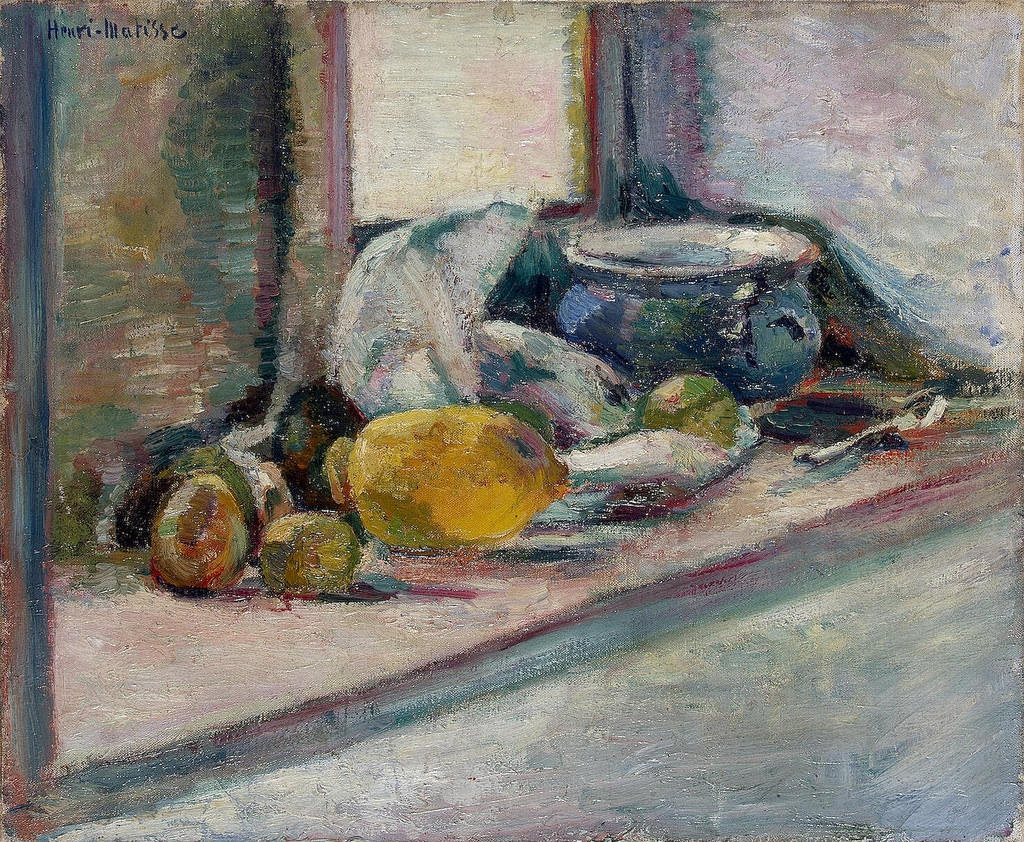
Henri Matisse - Blue Pot and Lemon
Henri Matisse – Blue Pot and Lemon

“I do not literally paint that table, but the emotion it produces upon me.” ~ Henri Matisse

“I love writing. I love the swirl and swing of words as they tangle with human emotions.” ~ James A. Michener

“The best and most beautiful thing in the world cannot be seen or even touched. They must be felt with the heart.” ~ Helen Keller

I love books that move me to tears, or laughter, or foreboding. That’s how I want to write, but often, like this morning, I wake up with the certain knowledge that I’ve failed on a certain scene and must go back to rework it.

When I’m trying to write the physicality of emotions, how my body would feel if I were in the character’s situation, I find myself in a quandary. As an actor/director I know about body language and facial expressions. They convey our inner states of being, but an actor doesn’t necessarily need to experience the bodily reactions when they are supposed to be demonstrating strong emotion.

I’ll tell one short story to illustrate what I mean. The first play I directed as a public school drama teacher was Our Town. The actor playing George Gibbs could not cry in the crucial scene near the end of the play. So, I told him to lay over his wife’s grave on his forearms, head down, and move his shoulders as if he were weeping with the appropriate crying sounds to go with the action. It worked! We cried during rehearsals and the audience did during performances.

But you can’t fake emotions in a novel and describing them is something I struggle with as I’m sure many authors do. I’m going to include a portion of the scene here that I was thinking about this morning. I made a few changes but it will undoubtedly need more work. You can tell me what you think.

* * * * *

Once Jenna had read those words something was pulling her into a vortex of swirling energy. Panic overtook her but no matter how hard she struggled, she could not free herself. Her mind was paralyzed with fear. Though her present life was a mess, it was familiar.

As her vision cleared, the calming voice of the woman came to her, All is well. “Fine for you to say!” She was not prepared for this experience but she was trapped. The one thing that came to her paralyzed mind was something her father used to say, “The only way out iss through.” She would have to trust. That was difficult for her. However it was her only option. She took a deep figurative breath, and allowed the mists to engulf her.

When they cleared, She was standing in an old style kitchen. There were three women working there wearing Civil War era dresses like her apparition’s. Somehow Jenna knew this was Morgan’s home and who these women were. It was the day of Morgan’s father’s funeral. Jenna’s writer’s curiosity supplanted the panic of only moments before. Looking up from her task, Morgan’s best friend Emma said, eyes dancing, “We’re here if you need us.”

Jenna had only a moment to comprehend that her consciousness had merged with Morgan’s as she said, “Thanks.” Emma’s motto was, “Why put off until tomorrow what you can do this minute.” Morgan knew she was right. She couldn’t put off the confrontation any longer. She walked to the door of the small sitting room where her aunt sat fuming.

Looking at Veronica’s stoney face at the funeral, she was glad her father had decided to keep his illness from her. They’d sent the telegram informing Veronica of Thomas’ death the day before the funeral. When she arrived just in time for the service, storm clouds filled her eyes and each word she spoke was covered in ice crystals.

Morgan paused outside the sitting room to gather her thoughts with sweaty palms and a roiling stomach, before facing the ogre. Veronica was nothing like Morgan’s mother Julia who had been loving, open minded, fair and generous. Morgan always thought of her mother as the perfect representation of pink, lavender and green, caring and restful.

Veronica was made of different colors. She was gold, silver and shimmering diamond. Lovely to look at, but cold and hard-hearted. She wanted riches, power and position. That’s what she got when she married into Boston’s highest echelons.

Morgan took a deep breath hoping to regain her ability to think as she opened the sliding doors of the sitting room.

“So, you and your father decided to deceive me,” Veronica said with malice. “How do you think this will look when my friends back in Boston hear that you did not tell me of Thomas illness? Don’t you think I had a right to know? After all, I am family.”

Morgan felt a shiver run down her spine. Jenna understood very well how she felt. It had been the same for her when interacting with Fletcher and Mr. Dayton, but they weren’t family, and she didn’t have to associate with them any longer.

Morgan squared her shoulders. “Father wanted us to be left in peace, to spend what time we had together uninterrupted by fussing nurses, which you no doubt would have insisted upon.”

Veronica sniffed. “Your father never knew what was best for you. I’m sure he did this to spite me because I wanted to take you away and give you every advantage he couldn’t.”

Morgan crossed the room and stood in front of her aunt. “Aunt Veronica, father was a good and kind man who loved me very deeply. He knew that I’d be just another bobble for you to polish and have admired.”

At this statement Veronica bristled and lost control of herself. “Morgan, you are too independent by half. I see now that your father has taught you too much and not had a thought for your future. If he’d cared about you, he never would have raised you to think like a man nor would he have involved you in this underground railroad nonsense.”

Morgan gasped. How had her aunt found out about that?

A malicious smile spread across Veronica’s face. “Ah, you’re surprised I knew about that. Your father exposed you to filthy, shiftless slaves who ran away shirking their duty to their masters. Any number of terrible things could have happened to you because of your father’s thoughtlessness. I intend to change your foolish notions by taking you back to Boston with me and see that you’re properly looked after by marrying the right sort of man. I will brook no refusals. You’re not getting any younger, you know. Go upstairs this instant and pack your things. We’re leaving on the evening train.”

Deep calm swept over Morgan. Ignoring the bait her aunt wanted to distract her with, she spoke softly. “No, Aunt Veronica. I am not going with you.”

* * * * *

Thanks for reading and sharing with friends. Feel free to leave a comment from a reader’s point of view.

Lucinda Sage-Midgorden © 2016

My Process is Backwards

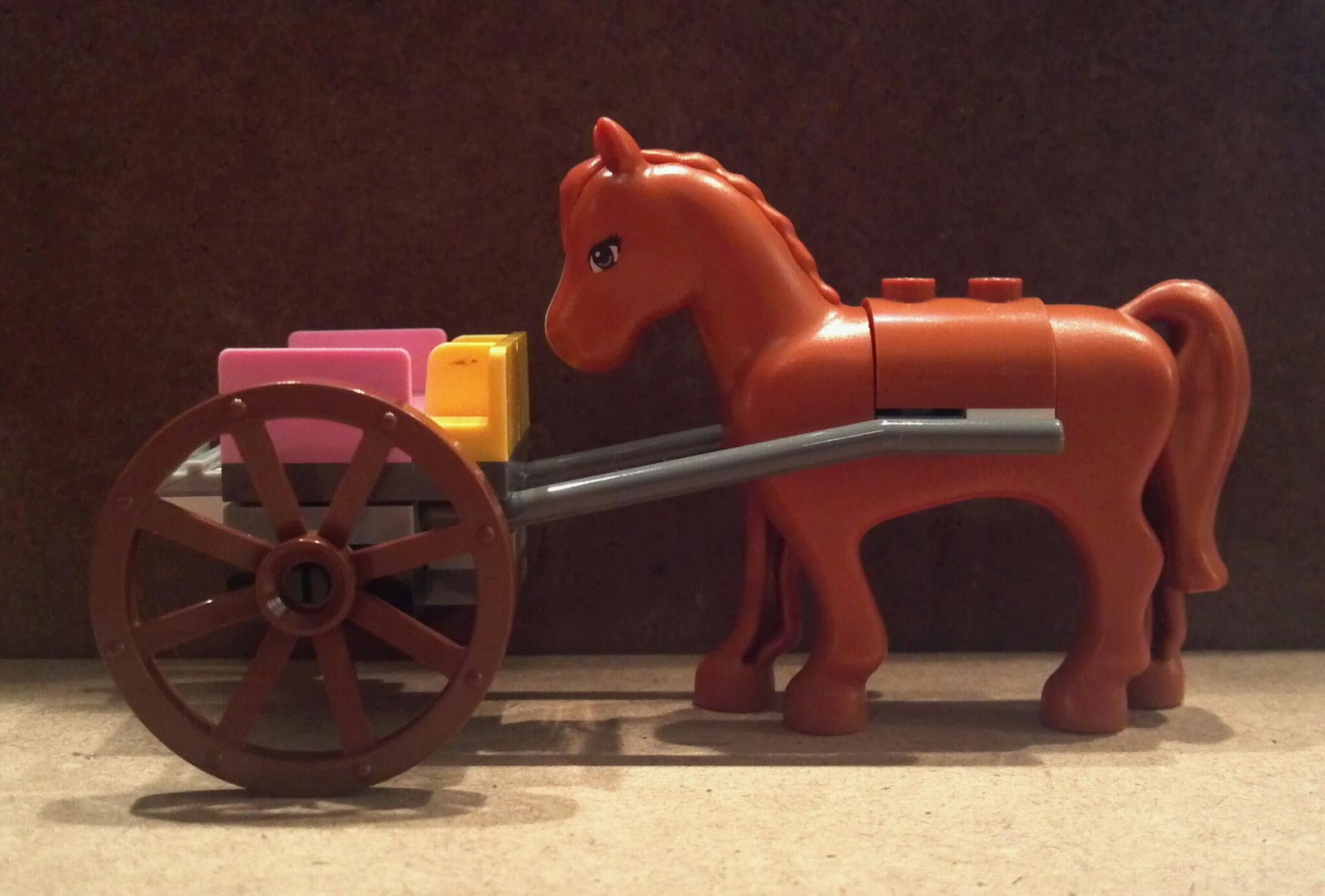
Cart - Before - Horse
Cart – Before – Horse

The other day I was thinking about my writing process and I realized that I do it backwards to the conventional wisdom. When I get an idea, I sit down and begin writing. I don’t do an outline, or any research. I get my ideas down on paper and it’s only as I write that I see the shape the story is supposed to take. If I need to do research, I do it on the fly, and I don’t apply a plot outline until after I’ve finished the first draft.

Some of you may think I’m weird but as I was considering my process it occurred to me that the reason I write in this way might be because of my theatre background. For many years I analyzed plays from an actor/director point of view. I was handed a script and discovered the shape of the story and character arcs from the finished product. For that reason, I find it difficult to create the plot outline from scratch before writing the story that is in my head. In a way, this is very inconvenient because I find myself waking up in the morning realizing I left out a vital part of the story. I must then go back and rewrite that scene I worked on the day before, and I may have to do that four or five days in a row before I’m satisfied with it. When the first draft is completed, I go through the manuscript dropping out scenes that slow down the story and creating new scenes that add to building the suspense in the plot.

Many writers advise newbies like me to keep writing the first draft without going back to revise because it slows down the process. We have the opportunity to make changes when the rough draft is finished. Maybe they’re right. All I know is that if I don’t get the improvements down on paper when they occur to me, they sit in my head clogging up my creative flow until I add them to my story. This does slow me down a good deal, but it’s my process. At some point I will change my method, but for now I’m stuck writing backwards.

I have never been a big believer in one right way to do anything. It’s true that there are as many ways to create a piece of artwork as there are people to create them. So my writing advice is find the method that works for you and expand upon it. If you attend writer’s workshops or take creative writing classes, remember, the method of writing that the instructor is proposing is their method. It doesn’t have to be yours and don’t let them bully you into thinking you are doing it wrong. There are no rights or wrongs when it comes to creative thinking. In fact it’s the people who think outside the box who come up with the best stories, theories, inventions, or artwork.

Having written that, I thought I’d include a portion of a new scene in my novel that I added in my latest round of revisions. It’s one of those scenes that I had to work on for several days before I felt it had all the elements it needed. I will no doubt do more work on it after I get comments and do more revisions, but for now, I’m happy with the way the scene turned out.

The set up: The Space Between Time is a time travel story of sorts. Jenna Holden in the present finds her three times great-grandmother’s journals. When she begins to read them, she enters her great-grandmother, Morgan’s consciousness. For her part, Morgan slowly becomes aware of Jenna’s presence and takes comfort in it as she travels from Vermont to become a teacher in Southern Oregon. The year In this scene is late fall 1859. Morgan is facing the town council, school board, and other town organizations on charges of indecent behavior. This fracas is lead by banker, Herbert Perry who does not keep it a secret that he does not like Morgan. This is Morgan’s explanation about what happened.

* * * * *

Charles cut him off by saying, “I agree with Mrs. Cobb. Let Miss Carlyle tell us what happened.”

Though Morgan was warmed by Charles support, he was only one man. Rage licked through her veins as she studied Herbert’s bloated face. He looked like the slugs that left slimy trails on her sidewalk. Resentment clamped its icy fist around her heart. Why does he hate me so? Getting herself under control, she cleared her throat and said, “I’ll be happy to respond to the charges.” Charles sat down. She stared into Herbert’s cold eyes for a few moments gathering her strategy. The silence lengthened and as he was about to speak, she cut him off by saying, “However, first I’d like a few questions answered. Mr. Perry is it not true that you have disliked me from the moment I stepped off the wagon train?”

Herbert glared at her, “What does that have to do with your conduct last night?”

“It has everything to do with why you’ve accused me of misconduct.” Again he was about to speak but she went on. “Isn’t it true that your first words to me had to do with the fact that you thought it inappropriate that since I was an unmarried woman, I should have an entire house to myself?” He started to speak, but again, she proceeded as if she were a lawyer interrogating a witness. “However, wasn’t the building of the house suggested by Mr. Evans and Mr. Pendleton, and was duly approved by the school board before my arrival?” She didn’t give anyone time to answer before continuing, “In addition, can you deny that every time I attempt to withdraw money from my account, which is legally and rightfully mine since I have no living male blood relatives, that you force me to produce the notarized letter from my lawyer, of which you already have a copy, stating that I am to be given complete control of my account? And, unlike other members of the community, I must wait an entire month before you will release the funds to me?” At this question, the women behind her gasped, while the men mumbled and shuffled their feet.

Mr. Wheeler startled everyone when he spoke up. “Yes, that is true. Miss Mancruso, who also has an account, receives her money on the day she fills out the withdrawal slip.” Morgan was grateful that Mr. Wheeler had spoken up. He had whispered those facts to her upon her second attempt to withdraw money from her account. Attention shifted from her to Herbert who turned his venomous gaze upon Mr. Wheeler. He, however, was unperturbed. She was sure he’d lose his job over the revelation.

“Thank you, Mr. Wheeler. I may need your testimony if I notify my lawyers of what has taken place today.” Herbert’s face looked like mottled stone. Morgan went on. “I wonder, if I were a man in this situation, would we be having this inquisition?”

“But you are not a man,” said Herbert, “and women must be held to a higher standard.”

“Why, may I ask?”

“Because it was Eve who ate of the fruit and led Adam to sin. Women must redeem themselves.” said Herbert lifting his chin. Some men nodded in agreement but most of them sat as still as statues.

“And that is an account of the creation of the human race written by a MAN in a culture where women were property, much like they are today.” She paused to let what she had said sink in. “As you well know from my credentials, among the subjects my father taught me were biblical criticism, world history, and world religions. The bible is one of only a few such accounts where the woman is to blame for a moral fall from grace. Many other religions revere the feminine aspect of God.” This statement created another stir in the room. “That having been said, I cannot help that I was raised for half my life by a man who taught me to think like a man. I can’t go back and unlearn what my father taught me, nor do I have any desire to do so. However, I have always followed a moral path as evidenced by my behavior since arriving, and by the references which I sent with my application. Yet at my first assumed offense, you decided that I should be sacked.

“However, to get to the point of this meeting, this is my side of what happened last night. When I discovered that neither the O’Days, or the Jeffries could attend my dinner party, I did as my friends have testified, I consulted not only Mr. Jeffries, but Mrs. Cobb. They both approved of my plans. We had our dinner at which we conversed, and played a game. Nothing more, so, I can only conclude that you have a personal dislike for me and have brought forward this vendetta for reasons of your own. I surmise this from the fact that you frequently come to the school to observe my teaching.” She had not mentioned this fact to the other school board members. Charles directed his disapproval in Herbert’s direction.

Before she could continue, Herbert sneered, “And it is evident by your teachin’ that you are an abolitionist. Ah am not sure that is the kind of teacher we want.”

Charles spoke up. “Herbert, Oregon is a free state, albeit a white one. What Miss Carlyle believes about slavery is her own business as is yours, I might add. I’ve had no complaints from any parents about her spreading her personal views and since you have no children in school, you have no right to harass her by showing up unannounced in her classroom. You jeopardize your seat on the school board. But that is a matter to be dealt with at another time. Miss Carlyle, will you please continue.”

She paused looking at Herbert, who had turned a dark shade of purple. Taking a look around the room she continued. “Ladies and gentlemen, I am perfectly willing to resign my position if that is your wish. However, I will not leave Table Rock City. I have funds elsewhere and can live very comfortably working with Mr. Evans at the paper and doing all I can to contribute to the growth of this community. You may get rid of me as a teacher, Mr. Perry, but I will still be a thorn in your side.”

By the end of her speech, Herbert’s jaw seemed made of stone. He was about to speak, when Arthur stood. Charles said, “Arthur, I hope you can bring some wisdom to these proceedings.”

“I hope I speak for others here when I say that I think Miss Carlyle acted in a most considerate manner last evening. She was deliberate in seeking advice from more than one quarter as to the appropriateness of having dinner alone with three bachelors, all prominent and respected members of our community, I might add. As Miss Carlyle has pointed out, it is no secret that you, Herbert, have not approved of her since she arrived.”

Arthur took a deep breath and continued. “May I also say, that she has been an asset to our town and our children. If we condemn her and release her from her position, it will take a great deal of effort to find a replacement with as wide a range of knowledge. I for one want her to remain in her post.” Turning to Charles, Arthur asked, “Is it appropriate to call for an indication of support for Miss Carlyle by a show of hands?”

Charles smiled as if he thought it good that for once someone else was taking the lead. “It is entirely appropriate. Before we call for a show of hands, does anyone have have anything else to add?”

The atmosphere in the room had changed markedly and it appeared that Herbert was resigned to his defeat for the present. After a considerable pause, Charles surprised everyone by adding, “Ladies, I would like you to vote as well. If you are in support of Miss Carlyle retaining her post as teacher of our school, please raise your hands.” A majority of hands went up immediately, others more slowly.” With a wicked smile, Charles said, “Those who do not support Miss Carlyle, raise your hands as well so she knows her accusers. Mr. Cobb and four older men looking over at Herbert, slowly raised their hands. Herbert only glared.

“Support carries for …”

Just then Emmet burst into the room. His clothes were covered with dust as if he’d been riding full tilt from his ranch. “What is this I hear about sacking Miss Carlyle?” His face was contorted in anger and his voice hard as rock. “If one of my hands hadn’t heard what Herbert said to her at church and told me, you would have cut me out of adding my two cents worth.” He looked around and saw for the first time since his entrance, that the room was full to bursting.

“We’re not sacking Miss Carlyle, Emmet. This is not an official meeting of any of these bodies, though we are keeping a record of what is said and done for future reference.”

“Well, why meet then?”

“To clear the air and see how to proceed,” said Charles.

“Well, I still wish someone had sent for me. I’d have things to say in her defense. Have you voted yet?”

“Yes. We’ve decided by majority vote to support Miss Carlyle which means no further action will be taken against her.”

“Good.” He put his face near Herbert’s. “Thwarted again, Herbert!”

* * * * *

I hope you enjoyed that scene. Thanks for reading. Feel free to leave a comment from a reader’s point of view. Also feel free to share with a friend.

Lucinda Sage-Midgorden © 2016
Deleted Scene from The Space Between Time

April Morning Rose
April Morning Rose

“For where all love is, the speaking is unnecessary.” ~ Diana Gabaldon, Outlander

“When I look at my life and the lives of my female friends these days – with our dizzying number of opportunities and talents – I sometimes feel as though we are all mice in a giant experimental maze, scurrying around frantically, trying to find our way through.” ~ Elizabeth Gilbert

In celebration of the fact that I have now finished another round of revisions of The Space Between Time, I thought I’d post a small section that I liked but had to remove because it no longer fit. I got this idea from Diana Gabaldon, the author of the Outlander books. I follow her on Facebook and every once in a while she will post a small segment of the book she’s working on, or maybe from one of her previously published books. I think it’s fun to read the snippets and try to figure out the rest of the plot from that one little section.

To set this up, Jenna Holden has recently suffered several losses. Her fiancé, Sam, broke off their engagement on the same day that her mother died. She lost her job and suffers other threats to her happiness, but one ray of hope is Miles Jackson (Jack) Spade, a detective in her hometown. He comes along just as Jenna is beginning to put her life back together. So here goes. I hope you enjoy this little section.


Seeing the distress on Jenna’s face, Jack hugged her and said, “I can tell you they’ve had a hard time finding anybody who believes you are guilty and I’m not sure the evidence jives either. Then the incident with your car threw them for a loop. They’re tight lipped but they were very interested in our suspect. The captain offered to help them. They, of course, gave the usual, we’ll-call-you-if-we-need-you response. One good thing, the captain doesn’t see anything wrong with my continuing to see you. That is if you want to.” The look on his face was one of boyish hope.

Jenna smiled, “Sure, if you don’t mind dating a suspect. I’m getting to like you Detective Spade.”

A big smile spread across Jack’s face, “And I you, Miss Holden.”

“Now let me finish getting ready. Have a seat. I’ll hurry.” Her hair was still wet from her shower and she was only dressed in her robe.

“Oh just throw on some jeans. We can have dinner at my place, if that’s okay. I’d like to cook and have an intimate dinner with you.”

“I’d love that.” She gave him a peck on his mouth and ran upstairs. When she came down in her old jeans and a T-shirt that read, “Save the Spotted Owl,” she put her hand on her hip as if she were walking the runway at a fashion show.

Jack laughed, “You look great. Love the T-shirt. Do you like Mexican?”

“Love it,” she said.

“Good. I make great chicken enchiladas.”

Jack and Sam were complete opposites. With Sam she had to look like a fashion plate at all times. Jack cared more about who she was inside rather than her outward appearance. It felt good to know she didn’t have to play a part to be with Jack.

“You’re beautiful.” he said, reaching out to brush her face with a finger, sending shivers down her spine.


Who can resist a man who cooks? I hope you enjoyed that little teaser.

Thanks for reading. Have a meaningful Memorial Day weekend remembering the loved ones who have passed. Their love lives on.

Lucinda Sage-Midgorden © 2016

How Writing Is Like Life

April Morning Rose
April Morning Rose

“That’s why I write, because life never works except in retrospect. You can’t control life, at least you can control your version.” ~ Chuck Palahniuk, Stranger than Fiction

“I have spent a good many years since – too many, I think – being ashamed about what I write. I think I was forty before I realized that almost every writer of fiction or poetry who has ever published a line has been accused by someone of wasting his or her God-given talent. If you write (or paint or dance or sculpt or sing, I suppose), someone will try to make you feel lousy about it, that’s all.” ~ Stephen King, On Writing: A Memoir of the Craft

“If something inside of you is real, we will probably find it interesting, and it will probably be universal. So you must risk placing real emotion at the center of your work. Write straight into the emotional center of things. Write toward vulnerability. Risk being unliked. Tell the truth as you understand it. If you’re a writer you have a moral obligation to do this. And it is a revolutionary act – truth is always subversive.” ~ Anne Lamott, Bird by Bird: Some Instructions on Writing and Life

Today I’m feeling reflective. I finished yet another round of revisions to my novel, The Space Between Time. I’ve been working on it for six years this summer, more if you count the months I spent on it in 1999 when I first began writing it.

Eight years ago when I quit teaching to write full-time, the first thing I did was take a writing course. I wanted to be a writer, but I lacked experience. My degrees are in religious studies and theatre not creative writing. But I felt drawn to writing so I took the course to help get me started. I nearly quit after that course.The instructor said that my writing was guarded. She suspected there was deep feeling behind what I had written but I needed to strip away the layers and get down to the raw emotions that I was trying to express. After I recovered from my hurt feelings, I made that my goal. I reminded myself what I told my students, that it takes time to learn a new skill. After all they didn’t learn to walk the first time they got up on their feet. So, I did as I had told them, I began writing every day. That was the only way I was going to be able to peel away the layers.

Over the years I’ve come to discover that my writing was guarded, because I had spent a lifetime hiding my true feelings. It wasn’t that I didn’t have deep emotions, quite the contrary. It was that for the most part, I didn’t express them. However during a particularly painful time in my life, I used journaling as a way to heal. Three years ago when I began this blog it was another attempt to become more vulnerable in both my writing and in my personal life.

Many years ago, Mary Manin Morrissey, said something in one of her sermons that has been of great comfort to me. Life is like a spiral. When something happens to us we do the most healing we can in the time period right after the incident. Then at some point, the issue will circle back around and we get a chance to do more healing work. The problem, or wound, will continue to circle around until we’ve completed the work. We get many chances to improve our lives when whatever it is we’re working on comes back around. Writing is like that. We write the first draft, but the work is not finished. We must allow the characters and story to circle back through our consciousness so we can see new facets, deeper emotions and nuances of motivations. That’s why revising is so important.

During this latest round of revisions, I have finally allowing my characters to make mistakes, be vulnerable, to feel pain, be confused, and to not know how to find their way. I think I still have a way to go before they are well rounded and more like real human beings, but it feels good to be digging deeper into how they cope with their pain and their mistakes.

The thing I’m most grateful for about being a writer is that I’ve become more vulnerable. It’s helped me dismantle the walls I hid behind thinking that they would both protect me and keep me from making mistakes. Writing has helped me accept myself as a flawed human being who is just trying to figure out how to live and connect with those around me. It’s allowed me to learn through my characters and thus discover my own personal truth.

Like what Stephen King expresses in the above quote, sometimes I feel apologetic that it is taking so long to finish this book. However, I don’t feel like I’m wasting my God-given talent. And as the Anne Lamott quote states, I’m using my talent as God intended to write toward vulnerability and to tell the truth as I understand it. The way I, and all artists do that, is to plumb the depths of their humanity to bring some reflection of themselves to light. I think we need more people to do that and that’s why I’m proud and excited to be able to do this work.

Thanks for reading. Feel free to share with a friend or leave a comment.

Lucinda Sage-Midgorden © 2016