Things I Learned from My Father part 2 – Kindness

Dad and me on Easter Sunday

“No act of kindness, no matter how small is ever wasted.” ~ Aesop

“My religion is very simple. My religion is kindness.” ~ Dalai Lama

“Here are the values that I stand for: honesty, equality, kindness, compassion, treating people the way you want to be treated, and helping those in need. To me those are traditional values.” ~ Ellen DeGeneres

The other day I was trolling Facebook and saw a video that fits perfectly something I learned from my father: it’s important to always be kind and give people the benefit of the doubt. My dad was almost always kind to others. He rarely lost his temper even at home, even when people were in his face challenging, or yelling at him.

But back to the video. In it a man with a “Trump Supporter” T-shirt and a sign that asked for hugs was standing outside a Bernie Sanders rally. He had a camera crew with him, so I don’t know if he was a real Trump supporter, or someone doing a social experiment. In any case as the rally ended and people poured out, he held up his sign asking for a hug. Only one person said, “F**k you.” Many people walked by without saying a word, but once the first person gave him a hug, many others followed. One woman even said, “Oh, you poor guy.” There was one man who wasn’t sure he wanted to give this Trump supporter a hug, he kind of hemmed and hawed, but finally he approached and gave the best hug. At the end of the video the young man said something like, “See we can overlook our differences and find common ground.”

In this season of so much controversy, I’ve been doing a lot of thinking about what my dad taught me about being kind.

The summer between my sophomore and junior years in high school, we moved from Wilbur, Washington to a five acre lot, twelve miles south of Spokane. There I was starting at a new country school that just happened to be rivals with the school I had been attending. The students at the new school were much nicer to me than the ones at the old had been when I started school there. That was wonderful, but church wasn’t so wonderful. My father was a progressive thinker in every aspect of his life. The members of the three congregations in Spokane were mostly conservative which as they got to know my father caused some real problems for our family.

At various times my father was, the district wide youth leader, and later pastor of our congregation. As youth leader, he wanted to broaden our experiences, so he did things like start a “Coffee House” in the basement of our congregation every Friday or Saturday night. We drank soda or tea, ate cookies or popcorn and had an open mic where people could sing, or recite or read what they’d written. We were encouraged to invite our friends. The atmosphere was dark with candles on the tables which made it feel very intimate. We kids loved it. The parents did not. We were, of course, chaperoned, but that didn’t matter. There was an uproar that inappropriate things were happening at the coffee house and the experiment was shut down.

Then dad started a program with the local mental hospital. Those of us who attended their monthly socials, would just talk to the inmates of the hospital, play games or read to them, or maybe dance with them. But again, people objected. Why should we be subjected to those unsavory people in the mental hospital? Maybe the parents were jealous. My father was very popular with the younger generation. Whatever the case, our trips to the hospital stopped.

When my father became pastor of our congregation, he started a relationship with the minister of the Baptist church a few blocks away. The congregation was made up of mostly black people and the two ministers cooked up a scheme where the two congregations would get to know each other so we could do some community outreach together. Unfortunately, that too fell flat.

Each of these attempts by my father to help get us out of our insular activities and worship, caused great anger toward him and our entire family. My parents received hate mail and terrible phone calls from congregation and district members. Though my parents tried to shield us from the controversy, I was old enough to catch snippets of conversations that gave me a pretty clear picture of what was going on. My father was considered a rabble rouser and many people didn’t like him. There were times when I witnessed people confronting him at church. No matter what they said or how they treated him, he was always kind.

Witnessing the way my father interacted with people left a deep impression on me. I asked myself how he was able to stay so calm and return hatred with kindness? One thing I noticed was that after such confrontations, he’d go to his bedroom, or some other quiet place to be alone for awhile. When I took up this same practice, I found that it helped me in my attempts to be kind to others.

I’m not perfect. There are times when I feel overwhelmed by emotions I don’t understand and I want to make nasty comments either in person, or on social media. But that would only escalate an already volatile situation. When I feel strong negative emotions, I follow what I learned from my father, I go to a quiet place, write down my feelings and meditate to calm myself. I wish we taught those skills in our schools because if we did, we might have a more peaceful world. I’m grateful I learned them from my father.

Thanks for reading. Feel free to leave a comment, or share with a friend.

Lucinda Sage-Midgorden © 2016

Things I Learned from My Father

James Calvin Sage
James Calvin Sage

“Here is my secret, A very simple secret, It is only with the heart that one can see rightly. What is essential is invisible to the eye.” ~ The Little Prince

“We are approaching a new age of synthesis. Knowledge cannot be merely a degree or a skill … it demands a broader vision, capabilities in critical thinking and logical deduction without which we cannot have constructive progress.” ~ Li Ka-shing

“Responsibility to yourself means refusing to let others do your thinking, talking, and aiming for you; it means learning to respect and use your own brains and instincts; hence, grappling with hard work.” ~ Adrienne Rich

“Critical thinking is thinking about your thinking while you’re thinking in order to make your thinking better.” ~ Richard W. Paul

Yesterday, March 8, would have been my father’s 86th birthday. I still miss him though it’s been twelve years since his death. He was my mentor, and on this anniversary of his birth, I’d like to share some of the wonderful things he taught me.

First and foremost was to Question everything. My father was extremely intelligent, even though he had to drop out of school. His teachers called him lazy, and told him that he’d never amount to anything. Boy were they wrong. It’s amazing the extent of influence one person has on the world.

After years of struggling, my dad discovered that he had dyslexia, which was unheard of in the 1930s and 40s when he was in school. But by the time he had a label for his condition it didn’t matter because he had taught himself how to read. And what he read about was history and historical places. He loved biographies like those of the Founding Fathers. When my brother and I began college he read philosophy and theology, which was what we were studying. In fact, dad was interested in everything, especially what was going on in the present. “It’s history in the making,” he’d say. So, of course, he read news magazines, the newspaper and watched both the early and late news every night. And he questioned all of it.

He taught me never to assume that I understood what someone was saying or writing. We each attach different meanings to the same words. So, I should analyze information by asking lots of questions. He taught me this, oddly enough, by watching movies with me. When I was a teenager, we’d stay up late on weekend evenings watching and discussing old movies. We’d talk about the plot and characters, their motivations and what we thought the theme might be. Every question he asked me sent me to a deeper level of thinking.

Because he watched movies with me, I began to watch the news with him. I’d ask him questions like, why the police were beating the peaceful demonstrators, or why people were killing black people who wanted equal rights, or why we were fighting the Viet Nam War, and he would say things like, “People hurt others because they’re deeply wounded themselves. They’re scared.” “Scared of what?” I’d ask. “Scared of losing their way of life,” he’d answer. Another thing he used to say was, “People who are in great pain don’t know what they’re doing. They just want to feel better. They think hurting someone else will get rid of their pain, not realizing that one violent act leads to another.” So I began asking lots of questions no matter what I was listening to, or reading, or who I was interacting with.

When I became a public school teacher I learned that asking questions is called the Socratic Method. It’s the method Socrates used to help his students learn to think. Thanks to dad, it’s the way I teach, it’s the way I live my life.

Asking questions about why people do what they do is a particularly valuable tool for me in my day to day life. It’s extremely important to ask what a commentator, a politician, a TV ad, or a writer means by the words they use in their news and TV shows, ads, articles, movies and books. When I ask questions, it causes me to take a deeper look and helps me understand someone’s intent, or their motives. When I have a clearer picture, I’m better equipped to make decisions, and understand my family, friends, students and colleagues in a way I might not have realized had I not asked questions.

This method has also helped me a great deal as a writer. Because as I ask questions about the challenges I face in my personal life, what I learn becomes part of my novel or these blog entries. I’m mining my own life to help me convey complex undercurrents of thoughts and feelings that are pushing their way to the surface of my consciousness hoping to be expressed. I don’t always understand what wants to come forth until I begin writing.

Asking questions has helped me in other ways as well. There have been times when some tragedy happens and because I’ve asked lots of questions for so long, I can make connections between historical events and what’s happening in the present moment. What looks like chaos is really an opportunity for all of us to grow.

Hmmm, I took up so much time on this first important thing I learned from my father, that I didn’t have time to write about the other wonderful things he taught me. I guess I’ll have to turn these posts about my dad into a series. I’m happy to take another look at what he taught me and share it with you. I’ll probably gain some new insights by doing that which is a good thing. Thanks, Dad.

Thanks for reading. Feel free to leave a comment or share with a friend.

Lucinda Sage-Midgorden © 2016

Empathy and Mean Memes

Hands of different races

“When you show deep empathy toward others, their defensive energy goes down, and positive energy replaces it. That’s when you can get more creative in solving problems.” ~ Stephen Covey

“The struggle of my life created empathy – I could relate to pain, being abandoned, having people not love me.” ~ Oprah Winfrey

“I always think that if you look at anyone in detail, you will have empathy for them because you recognize them as a human being, no matter what they’ve done.” ~ Andrea Arnold

About a week ago I saw this meme on Facebook. “Unpopular opinion: We are not all equal. I worked my ass off to get where I am, I deserve what I have, I shouldn’t have to give up what I’ve worked for to make things equal.” ~ Whisper. When I read this meme, I found it disturbing on several different levels. First of all, it shows a lack of empathy, which I believe to be extremely important in human relations. Second of all, the writer assumes there is not enough abundance to go around which I believe to be completely untrue. We just need to spread the abundance around so everyone has enough.

The other day I was at Target before going to teach my evening class at the college. I couldn’t help but overhear a conversation between the man in front of me and the cashier. The customer said that he hoped the cashier’s shift was nearly over, to which the cashier replied, “Nope. I don’t get off until 9:00 tonight … four more hours. And I’m tired. I just came from my other job.” Of course the customer commiserated with the cashier which affected me deeply. I nearly cried. What must that young man’s life be like? Does he have any down time at all? Or is his life going from one job to the next just so he can survive. How horrible. It’s like he’s condemned to a living hell.

We often make the assumption that people who are poor are lazy. I don’t believe that’s true as evidenced by the cashier at Target. It takes a great deal of effort for the less fortunate to make ends meet, which leaves little time for additional education, or looking for a better job, or having fun with family and friends.

When I overheard the conversation in Target, I thought again of the above meme. The writer assumes that some people are more deserving than others. I don’t believe that to be true. We all come from the same place and our country is founded on that very idea. In the second paragraph of the Declaration of Independence, Thomas Jefferson wrote, “We hold these truths to be self-evident, that all men are created equal, that they are endowed by their Creator with certain unalienable Rights, that among these are Life, Liberty and the pursuit of Happiness.” I think what Thomas Jefferson meant was that every single person born on this planet is seen by the Creator as having the same value to every other person, and that VALUE has nothing to do with what we own, the job we have, how hard we work, or anything else which is visible. Our value is something intangible, known to God and only minimally to ourselves.

Most of us are incapable of seeing another person’s or even our own true self. We have no idea who they or we are beyond the tangible things we associate with personhood. That’s the tragedy humans have been trying to overcome since we became the human race. The have nots feel their worth instinctively, while the haves sometimes arrogantly assume they have more worth than anyone else. We hold so tightly onto what we have because we’re afraid of losing it. But our country was founded on the idea that if we share what we have with each other, we all become richer. It has been one attempt to give everyone a chance to be free to navigate their own path and to fulfill their personal destiny. It hasn’t been a perfect experiment as we all know. However, I think, perhaps, we are in a new era of attempting to reset the balance so that everyone can thrive and find their perfect life. It seems to be happening in various ways all over the planet, people standing up for their rights and doing things that change our perspective of what it means to be a person of worth.

In my opinion the solution to our current financial, political, and religious imbalance is to share what abundance we have with each other, to be open and try to understand one another. Compassion and empathy are things each of us can learn. Now when the world is in such turmoil it seems a particularly good time to dedicate ourselves to cultivating both empathy and compassion. It doesn’t take much, just do what Harper Lee wrote in To Kill A Mockingbird. “You never understand a person until you consider things from his point of view – until you climb into his skin and walk around in it.”

Thanks for reading. Feel free to leave a comment or share with a friend.

Lucinda Sage-Midgorden © 2016

Thank You Harper Lee

To Kill A Mockingbird book cover

“Success should always call for showing greater kindness, generosity and justice; only people lost in the darkness treat it as an occasion for greater greed.” ~ Cyrus the Great

“Words, in my humble opinion, are our most inexhaustible source of magic.” ~ Dumbledore, Harry Potter and the Deathly Hallows Part 2

“You never really understand a person until you consider things from his point of view–until you climb into his skin and walk around in it.” ~ Harper Lee

As most of you know, Harper Lee died this past week. Until last year, her reputation as a world class author rested on one book, To Kill A Mockingbird. I haven’t yet read her latest book, Go Set A Watchman, its on order, but if I rely on the description, it rounds out the maturation of the character of Scout. She learns some things that change her perspective of her childhood, her life and her community. To me that’s what life is all about, learning and growing, accepting the good and the bad without judgment.

In my estimation, having even one book so widely read and acclaimed is quite an accomplishment. Harper Lee’s book lays open the human condition for us to examine. She, like all authors, allows us to climb into the skin of the characters and walk around in them for awhile. Most of us don’t get to make that large an impact on the world, but that doesn’t matter. As another famous author, George Eliot, wrote of her main character Dorothea Ladislaw in the final passage of her book Middlemarch, “Her finely-touched spirit had still its fine issues, though they were not widely visible. Her full nature, like that river which Cyrus broke the strength, spent itself in channels which had no great name on the earth. But the effect of her being on those around her was incalculably diffusive: for the growing good of the world is partly dependent on unhistoric acts; and that things are not so ill with you and me as they might have been, is half owing to the number who lived faithfully a hidden life, and rest in unvisited tombs.”

Each person touches so many other lives. We’re often carelessly wrapped up in our problems that we act in ways that we might not choose if we were thinking clearly. We forget that we have an effect on those around us. Perhaps that’s all part of our drive toward learning as well. For making mistakes with dire consequences can wake us up and cause us to be more conscious from then on. Every interaction plants seeds. Seeds of thought, seeds of emotions, seeds for good or ill.

Often as I’m sitting at the computer writing, I wonder if what I’m writing will touch anyone’s heart and I think of all the writers throughout the ages, known and unknown who recorded their experiences because they had to, because something inside called out to be expressed. For one reason or another, some work is never discovered and read. However, I like to think that nothing is ever lost and what those authors wrote is out there in the ethers somewhere and we are affected by the insights they expressed.

That’s why I write. I know that I may never be a famous world class writer like Harper Lee, but if I learn something vital about what it means to be human from my experience of writing, then I’ve lived faithfully. My hidden life as a writer will add something to the whole of humanity in some mysterious way and that is enough.

I am grateful that Harper Lee wrote To Kill A Mockingbird. She helped so many people on levels seen and unseen. I’m equally grateful that many other writers dare to expose their deepest insights so the rest of us can examine ourselves at a safe distance. What we read doubles our chances for growth as a human race.

Thanks for reading. Feel free to leave a comment or share with a friend.

Lucinda Sage-Midgorden © 2016
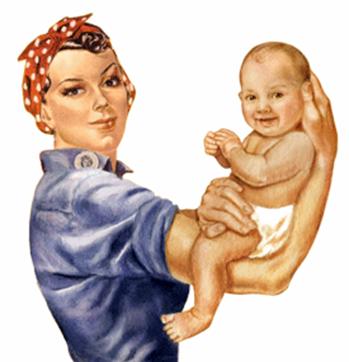
Feminist Traitors?

Working Mom
Working Mom

“Solitude is strength; to depend on the presence of the crowd is weakness. The man who needs a mob to nerve him is much more alone than he imagines.” ~ Paul Brunton

“There’s just as many different kinds of feminism as there are women in the world.” ~ Kathleen Hanna

“My feminism is humanism, with the weakest being those who I represent, and that includes many beings and lifeforms, including some men.” ~ Sandra Cisneros

I came home from teaching on, 2/11/16, and my husband was watching the pundits dissect the Democratic debate. I sat and listened for a while, and then was shocked when they mentioned the disparaging comments by Gloria Steinem and Madeline Albright chastising young women who don’t support Hillary. I’m a Baby Boomer who doesn’t support Hillary, at least right now, and I was disturbed. I had to go listen to what they said but had to stop listening when Madeleine Albright said, “Just remember, there’s a special place in hell for women who don’t help each other.” All night I dreamed about this situation and the next morning I sat down to write the post for this week. Needless to say it was filled with angry retorts. When I calmed down, I realized that true feminism isn’t about yelling and calling each other names. It’s not about coercion, or emotional blackmail.

Even though I was extremely disappointed that two such outstanding members of the feminist movement had lost sight of what it is women have been fighting for, I had to allow them the benefit of the doubt. We learn from our mistakes and maybe given the negative reaction to their statements, they’ve learned something. In any case, they are entitled to their opinions.

To me, feminism is all about empowering women to make their own choices, on any issue they face. Gloria Steinem has even said, “After feminism, I suddenly realized (sic): not everyone has to live the same way. Imagine that!” They don’t have to think the same way, or even vote the same way either.

Fortunately, Hillary stated during the debate that she thought women should be able to choose any candidate, even if it wasn’t her. I liked that and I will definitely vote for her if she gets the nomination. But for now, Bernie’s plans and policies are more in line with the changes I want to see happen in this country. Because I support a man, doesn’t mean I’m not a feminist. I guess what it means is that I’m a humanist. I’m for the advancement and enlightenment of all humanity.

Often when I write these posts I feel like I’m a broken record writing about how we’re all in this together and we should be working on ourselves so that all of humanity can expand. Today I have to confess that many times I’m trying to get you, my readers, to see things my way and act accordingly. That’s not ethical. We all have an inner journey that is ours alone. No one should interfere with that. So, I’ll continue to share my thoughts. If they touch you and spur your thinking, great. If not, that’s great too.

Thanks for reading. Feel free to leave a comment or share with a friend.

Lucinda Sage-Midgorden © 2016