On Creative Criticism

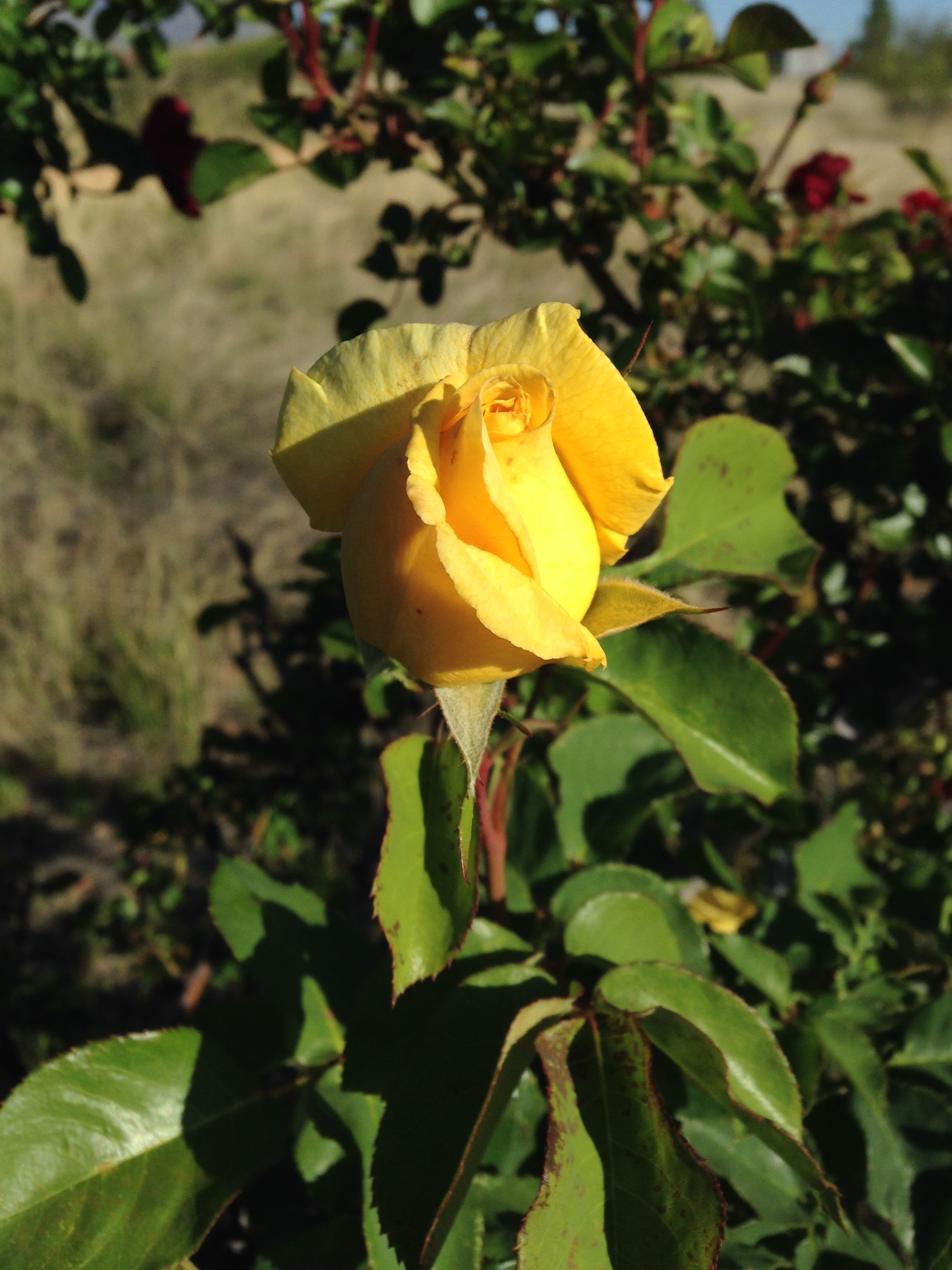
April Morning Rose
April Morning Rose

“I much prefer the sharpest criticism of a single intelligent man to the thoughtless approval of the masses.” – Johannes Kepler

“The final proof of greatness lies in being able to endure criticism without resentment.” – Elbert Hubbard

“Criticism, like rain, should be gentle enough to nourish a man’s growth without destroying his roots.” – Frank A. Clark

After five years of working on my first novel, The Space Between Time, I felt I needed to have some help identifying places where it needed to be tightened up, scenes dumped, or characters clarified. I needed a second, third or more set of eyes to help me improve upon what I’d written. Having someone critique your work is a scary proposition. I don’t think I’m alone in feeling this way. It’s scary but it’s necessary. At least it is for writers.

There are several things to consider when you send your work out for critique. The biggest thing you have to keep in check is your ego. This is a hard one, believe me. An artist puts their heart and soul, and a great deal of time into the thing they’ve created. A writer friend of mine, who is one of the people I asked to critique my book, spent twenty years working on her first novel! (Shameless promotion here: The novel is The Sweet Trade by Debrah Strait and well worth your time reading. It’s about five boys in the Caribbean in the mid-1600s who are tragically orphaned. After being sold into indentured servitude, they must become pirates to survive. The twenty years Debrah spent on writing it make it a treasure for the reader. You can find it at Smashwords, Amazon and other books sellers.)

Anyway, back to my friend Debrah, it took her an extremely long time to finish her book because she had a full-time job. She told me that when she thought it was finished, she sent it out to publishers and entered it in contests. Each time she got comments back, the advice she got for changes were sometimes things she didn’t want to hear. Boy could I relate to that one. But she said she took time to consider the changes that were being suggested. She compared them to the story she was trying to tell. In her heart she knew which suggestions were right and those are the changes she made.

As Debrah and other writers have said, sometimes people try to belittle you with their comments. Who knows why they do it. Don’t listen to them! But the bottom line is that not even all friendly suggestions you get for changes will add to what you’re trying to do. So you have to consider each correction carefully and use only those that enhance the message you’re trying to convey with your story. Which leads to the next thing to consider when evaluating criticism: You are the expert!

This is your work of art. Only you know what you want your audience to get out of the piece. You are the one who sits long hours crafting each character and each thing that happens to them. You’re the one who contemplates your story while you’re doing something else. Only you, know what it is that’s trying to come through to be manifest as art. Since this is the case, once you’ve given your work to those you trust, you must keep your own counsel about which suggestions you’ll use and which you’ll let go.

Keeping your own counsel brings us full circle back to the ego. Our ego thinks it’s in control of everything we do. It sees criticism as attack. It’s important to keep in mind that’s usually not the case with your friends, family and other writers, especially writers. They know exactly how vulnerable you’re feeling. At least that’s what I’ve found. Letting go of your ego is a goal you accomplish a little at a time. But like anything that makes us grow, there will be times when we feel pain or discomfort. However, a great thing will happen if you choose vulnerability. You’ll find cheerleaders, people who see potential in your work and who will help you feel good about making necessary changes.

I’m grateful for all the people who’ve read and commented on my manuscript. They were taking a risk that I would get mad and never speak to them again. Fortunately that wasn’t the case and I’m ready to move on to the next phase of revising and polishing my novel.

Thanks for reading and feel free to leave a comment.

Lucinda Sage-Midgorden © 2015

Facebook
Twitter
Goodreads
LinkedIn

On Empathy and Courage

Welcoming Jean
Welcoming Jean

“If you want to awaken all of humanity, then awaken all of yourself. If you want to eliminate the suffering in the world, then eliminate all that is dark and negative in yourself. Truly, the greatest gift you have to give is that of your own self-transformation.” – Lao Tzu

“You never really understand a person until you consider things from his point of view … Until you climb inside of his skin and walk around in it.” – Harper Lee

“When you show deep empathy toward others, their defensive energy goes down, and positive energy replaces it. That’s when you can get more creative in solving problems.” – Stephen Covey

“You think your pain and your heartbreak are unprecedented in the history of the world, but then you read. It was books that taught me that the things that tormented me most were the very things that connected me with all the people who were alive, or who had ever been alive.” – James Baldwin

I had a very different blog post in mind for today, but in light of all that’s going on around the world, I have to return to an idea I write upon often in my posts. That is: that the only way to heal the world is by healing ourselves first.

With the riots going on in Baltimore, the terrorist threats around the world, the battle over rights for the poor, gays, and women we’re living in the middle of a war zone. Our instinct is to wall ourselves off, attack before being attacked and blame people and societal forces for all the bad things that happen to us personally and out in the world. The answer to solving our problems, however, is to do the opposite of what we’ve always done. We must learn to be empathetic.

Perhaps I’m an advocate for using empathy as a healing tool because I’m an empath. I was born that way so I can’t help it. But I’m with Neil deGrasse Tyson, empathy can be taught. You don’t have to be born that way. He advocates teaching empathy as part of our school curriculum. It’s the only way we’ll change the world for the better. For those of us who are adults, we’ve got to teach ourselves how to climb inside another person’s skin and walk around in it for awhile. Choosing to be empathetic takes courage.

My first reaction to the riots in Baltimore when I heard about them, was to condemn the rioters. But then I reminded myself to step back and try to understand why they feel so much rage. I could condemn anyone who turns to violence rather than looking for common ground to solve the issues but like my Dad used to say, “People who lash out at others are in so much pain they think that attacking others will help them get rid of it.” The thing is, that never works. I know because I’ve attacked people thinking the attack was deserved and that I’d feel better afterwards but I always felt worse.

There’s a great quote from the movie Ben-Hur that illustrates why violence never works. (I love picking up little gems of wisdom from movies and books.) Esther, the woman Ben Hur loves, says to him, “I know there is a law in life, that blood gets more blood as dog begets dog. Death generates death, as the vulture breeds the vulture!” We know that violence begets more violence, but for some reason we don’t stop ourselves. We attack others in big and small ways insanely thinking that we’ll get rid of our rage, that people will listen, that things will change for the better. The only way things will get better is if we feel empathy for others, forgive and stop attacking.

Healing is about forgiving ourselves and everyone we think injured us. Forgiveness is letting go of blaming and needing apologies. Forgiveness is about seeing the light of God in another person even if they can’t see it in themselves. We have to allow ourselves to understand that every human being longs for complete love and understanding just like we do. The best way to get that love and understanding is to give it away to others then it will come back to us.

I know it takes courage to go against the majority way of thinking. I know it’s scary to show empathy to a person who is in a great deal of pain and who might lash out. But the alternative is for violence to escalate. I’m tired of that, aren’t you? We’re at a turning point and only you can decide what you’ll do.

Lucinda Sage-Midgorden © 2015

Facebook
Twitter
Goodreads
LinkedIn

To Risk or not to Risk

Earth from the Moon
Earth from the Moon

“Never cut a tree down in the wintertime. Never make a negative decision in the low time. Never make your most important decisions when you are in your worst moods. Wait. be patient. The storm will pass. the spring will come.” – Robert H. Schuller

“You’ve done it before and you can do it now. See the positive possibilities. Redirect the substantial energy of your frustration and turn it into positive, effective, unstoppable determination.” – Ralph Marston

“I write about the power of trying, because I want to be okay with failing. I write about generosity because I battle selfishness. I write about joy because I know sorrow. I write about faith because I almost lost mine, and I know what it is to be broken and in need of redemption. I write about gratitude because I am thankful – for all of it.” – Kristin Armstrong

This weekend I attended a practice workshop put on by a friend of mine. It was a vision workshop and she’s just beginning her new coaching business so she invited a few friends to be her guinea pigs. I’ve attended these kinds of workshops before but it was good to be reminded that we can create the life we want first by visualizing it then by taking action.

I thought I had the process down after practicing the steps for seven years, but now I’m coming to the culmination of a long project in which I am deeply invested. I’m ready to send the baby out into the world and I’m anxious. My first novel, The Space Between Time is about to be criticized not only by friends and family but by people I don’t even know.

I’m not new to being criticized. Working in the theatre you get criticized by the director, and even the audience. The process of putting a play together is about six weeks long and the work is intense. I never minded getting notes from the director. If the audience didn’t like the play, or if we got mixed reviews, I was sad, but there was always the next production and a new start. Not to mention, theatre is a collaborative art, so if the production doesn’t live up to the highest expectations, it’s usually a combination of factors that contribute to the failure. Because of that I didn’t feel as personally responsible.

Writing, on the other hand, is a solitary endeavor and I think that’s why I’m feeling so anxious now just as I’m getting comments from friends and fellow writers. I started this book in 1999, set it aside until 2010 and have been working steadily on it ever since. If it’s a flop, it’s all my fault and no one else’s.

One thing we didn’t talk about in that vision workshop was how to pick yourself up from a colossal failure.

I’ve had plenty of minor failures in my lifetime but I’ve never had as much on the line as I do now. I’ve never felt completely invested in anything as I feel with this novel. The thought that is making me anxious is that now I know writing is my life’s purpose, what happens if I fall flat on my face?

After years of spiritual searching and learning, I know one thing for sure. I’m not alone. God is always there for me and I’m safe no matter what. Just today I have to remind myself of that fact about every few minutes. I know that I’m not what others think of me. I’m the being God created and nothing can change that even if my book flops and no one reads it.

On the other hand, though it’s a paradox, I feel confident that this book is good. That there will be people who will be touched by it and that’s why I felt compelled to write it.

So, I’m scared, and excited to put the finishing touches on my work and send it out into the hands of those who need it. If it’s a failure, or if there is just a lukewarm response to it, I’ll be sad, but I’ll be able to take what I’ve learned from writing this novel and put the lessons to work as I write the next one. I’m not going to let one setback keep me from doing what I love doing. Since that is the case I will definitely write another novel. Actually, I’ve already started it.

For all of you who are scared to try to go for that big dream, I understand. It’s not a comfortable feeling being where I am now, but this too shall pass. I weigh what I’m feeling now against not even trying to make my dreams come true and my stomach sinks. I could hate myself, shrivel up and not even try. But that outcome is much worse than failing at making my dream come true and I’d rather take the big risk and fail than never to have tried.

Thanks for reading and feel free to leave a comment.

Lucinda Sage-Midgorden © 2015

Facebook
Twitter
Goodreads
LinkedIn

Self-love, Helping, and Dreaming

Dad, Lucinda, Mom
Dad, Lucinda, Mom

“Remember, if you ever need a helping hand, it’s at the end of your arm. As you get older, remember you have another hand: the first is to help yourself, the second is to help others.” – Audrey Hepburn

“There are some who bring a light so great to the world that even after they have gone, the light remains.” – Unknown

“You should take some responsibility for the way you present yourself. But you should not be hung up on your looks, whether you are ugly or handsome, because it isn’t an achievement.” – Christopher Reeve

Today’s post is kind of a jumble in my mind so I’m not sure how much sense it will make.

First of all, I’m in the final stages of finishing my first novel. Because of that I’ve been thinking a great deal about what will happen after it’s published and out in the world. I’ve been thinking about what will I do if no one buys my book or what will I do if lots of people buy it? What do we do when our dreams come true?

Which brings me to the second thing I’ve been thinking about, helping others. Since I’m older now and have learned a few things, I feel a great desire to be of help to others. But I’ve been thinking, is there ever a time when giving assistance to a person who needs it is not a good idea? And what constitutes help? Are we enabling someone’s addiction to be helpless if we give help over a long period of time?

The third thing I’ve been thinking about which ties the first two things together is self-love. Can we do anything significant with our lives without loving ourselves first?

What precipitated this seemingly disjointed series of thoughts was a conversation I had with someone over the weekend. They wanted me to apologize, again, for something I’d done to hurt another person. And I got to thinking about people who think that happiness and self-love come from outside themselves. In the above mentioned incident, I did apologize. But the person I spoke to thought I needed to continue to apologize over and over again so that the person in question could feel better.

People who require multiple apologies for the same incident are, in my estimation, insecure and lack self-love. I know from experience that on the one hand I was suspicious of assurances from outside and on the other craved attention to bolster my withered sense of self. Someplace deep inside I knew that I was the only one who could choose to do the work to believe in myself. As I began the work toward loving myself, I let go of the need for approval from others. I was able to let go of imagined or real hurts and forgive.

It has taken years of work to fully love myself and now that I do, life is opening up for me in a most profound way. Once I accepted that I was a good person no matter what, I realized that every issue I faced in life lead back to my ability or inability to love myself.

Okay, self-love is good but how does self-love connect to being there for others. I believe that we are best able to help others when we feel secure in knowing who we are and when we know that security doesn’t come from outside ourselves. There are those who help others from an ego perspective. They want to look good so they offer help in order to be seen to be doing good. But how long are they able to maintain their good works? Eventually the ego tells them that they are in a dangerous situation and that they are jeopardizing their own safety and security. Then to save themselves, they stop helping saying that continuing to help will encourage the one being helped to becoming dependent.

Now here’s a curious thing. Sometimes people with poor self-esteem just need a cheerleader, someone who will be there for them without any expectations or demands. It’s amazing how just loving someone can help them heal. The best cheerleaders are those who’ve gone through similar situations as the person they are helping and can say, “See, I did it. So can you.” It’s the same for all of us. Once we’re on our way to loving ourselves our minds are open to creating bigger and more wonderful dreams.

Deepak Chopra says, “If you want to do really important things in life and big things in life, you can’t do anything by yourself. And your best teams are your friends and your siblings.” In other words we all need help from time to time. There is no shame in asking for it, and at some point we’ll all be able to give help where needed.

So to bring this full circle, everyone deserves to love themselves, have their dreams come true and then offer the wisdom they’ve gained along the way to help others. In my opinion everyone is valuable enough to garner help from someone and in turn give it to others.

Feel free to leave a comment.

Lucinda Sage-Midgorden © 2015

Facebook
Twitter
Goodreads
LinkedIn

The Hard, but Satisfying Part of Writing

My copy of Outlander

“What underlies great science is what underlies great art, whether it is visual or written, and that is the ability to distinguish patterns out of chaos.” – Diana Gabaldon

“Character, I think, is the single most important thing in fiction. You might read a book once for its interesting plot – but not twice. – Diana Gabaldon

“Humans aren’t as good as we should be in our capacity to empathize with feelings and thoughts of others, be they humans or other animals on Earth. So maybe part of our formal education should be training in empathy. Imagine how different the world would be if, in fact, that were ‘reading, writing, arithmetic, empathy.’ “ – Neil deGrasse Tyson

As most of you know, I’m working on my first novel, The Space Between Time. Because of that, I’ve been reading voraciously. Some years ago, someone mentioned the Outlander series to me. For some reason I got the wrong impression about their subject matter, so I wasn’t eager to read the books. However, a few months ago someone else mentioned the books and my interest was peaked. After reading the first in the series at the end of last year, I was hooked and bought the first seven of the books of the series with an Amazon gift card that I got for Christmas.

The thing that I love about Diana Gabaldon’s books is their density. Almost everything that happens and everything that the characters say, even the minor ones, is memorable and significant. She doesn’t use pedestrian language. Granted the main part of the books take place two hundred or more years in the past, but still, her writing is beautiful. I’m envious and inspired.

I write all of that to make a point about one particularly controversial scene in Outlander, the first book, which got me thinking about my own work. Claire, the main character, has been transported two hundred years in the past and though she’s assimilated fairly well, at one point she violates some code of conduct. She has no idea that she’s stepped way out of bounds given the time she’s landed in, and how much danger she’s brought upon herself and her cohorts. Jamie, Claire’s new husband, must impress upon her the transgression she’s committed. The way he does it is to spank her with a strap. It was a shocking scene to read from a twenty-first century point of view. But what I marveled at was Ms. Gabaldon’s courage in writing it. When I read it I was in the scene but also I wondered if she had a difficult time writing it. Reading that scene made me compare this scene to a couple in my book that were particularly challenging for me to write.

While working on my own book, I was sometimes surprised by my character’s actions. In one such scene one of my characters commits suicide in a very gruesome way. I remember being shocked when I wrote it. I didn’t know it was going to happen. And when I wrote it, I looked at the way I’d written the lead in and aftermath and realized that I hadn’t set up the events very well. I hadn’t done the scene justice at all. Rewriting that particular section wasn’t easy and it took several versions before I felt happy with that portion of the book. I’m sure it’s this way for other writers too. Very few scenes just roll out of our minds, through our fingers and onto the page in the exact way they will appear when the book is published.

What I’m learning as I continue to revise my manuscript, is that the exquisitely written work of Ms. Gabaldon must have been crafted one sentence at a time through numerous rewrites. Writing is a little bit like mining. We have to dig deep into places we’d sometimes rather not go. It’s a painstaking process. I had to do that with my character Chloe. She lived in a very dark place. Every work of art contains large parts of the artist’s heart and soul. After all, we’re trying to interpret the human experience so it can be felt by another. When we touch someone with our work, that’s a sacred moment. One the receiver will never forget.

I’ve been touched by art in ways that will stay with me always. Like the effect of being inside the exquisite architecture of Notre Dame in Paris and seeing the statue of Joan of Arc, or the Van Gogh and Picasso paintings in the Van Gogh museum in Amsterdam, and so many other beautiful pieces of art. It’s like the artwork speaks to me and I see the world in a different way. Great books affect me the same way, as if my heart is touched by the feelings of the characters and the artist as they created the work. Somehow, I understand humanity better. My outlook is larger and more expansive.

I don’t know if my book will touch people that way, but that’s my goal. Maybe it will never happen, but I want people to be thinking and talking about my posts and books long after they’ve read them as people are doing with Diana Gabaldon’s books. To have a positive affect on other people through my writing is, in my estimation, a great goal.

Thanks for reading. I appreciate your comments.

Lucinda Sage-Midgorden © 2015

Facebook
Twitter
Goodreads
LinkedIn