“We gain strength, and courage, and confidence by each experience in which we really stop to look fear in the face…we must do that which we think we cannot.” –Eleanor Roosevelt
“Far better is it to dare mighty things, to win glorious triumphs, even though checkered by failure…than to rank with those poor spirits who neither enjoy nor suffer much, because they live in a gray twilight that knows not victory nor defeat.” –Theodore Roosevelt
“Competition has been shown to be useful up to a certain point and no further, but cooperation, which is the thing we must strive for today, begins where competition leaves off.” –Franklin D. Roosevelt
This weekend my husband and I binge watched The Roosevelts: An Intimate History. We were struck with how similar events during Franklin D. Roosevelt’s Presidency are to events that have happened in the last few years, and are still happening today. Isn’t that always the way, though. Even in our personal lives. We repeat lessons until we pay attention to what we need to learn from them.
The events we’re living with right now are so bleeping uncomfortable. Add to that the personal struggles each of us are going through and it’s no wonder we’re all freaking out a little bit. However, you may think I’m weird, but, for the most part I’ve learned to welcome challenges.
In my personal life, when I’m feeling uncertain or fearful, I know I’m getting a huge blessing. The Universe is telling me there is something extraordinary I need to be looking at. If I heed the call instead of poking my head in the sand, I’m always rewarded.
Right now the challenges I’m facing all have to do with the publication of my first novel, The Space Between Time. I’m in new territory here. I’ve never written a novel before and something tells me my life will be irrevocably changed when the book comes out.
Part of the reason I feel this way has to do with something that happened one day shortly after I made the decision to quit teaching. I was cleaning up my room at the end of the school year, thinking about my decision to teach one more year. But as I was packing, the thought came to me that if I chose I could trust the Universe and quit at that very moment. Instead of squashing the possibility, I considered it, which brought a flood of what I can only describe as ecstasy. I knew without a doubt I was on the right path. That I was supposed to take this step into being a writer. The extraordinary thing about that feeling was it lasted through the rest of my packing, and the hour drive home.
It ended up that I chose not to quit that day. I took my signed contract to the school district office on the deadline day with a little bit of a heavy heart. But, that last year of teaching was amazing, and I don’t regret my decision. However, ever since my extraordinary experience, I’ve had this feeling that no matter what, I’m meant to be a writer. Every morning when I wake up I know I get to do this amazing job and I feel immensely blessed.
That doesn’t mean that thinking about all the possibilities of my future as a writer doesn’t make me crazy sometimes. I’m an introvert, so the thought of attracting even a little bit of attention is daunting. But I’m building a new life for myself, like my two main characters in my novel, Jenna in the present, and Morgan in the past. I’m choosing to step out of my comfort zone following where Spirit leads me. I wouldn’t change my decision to become a writer for the world.
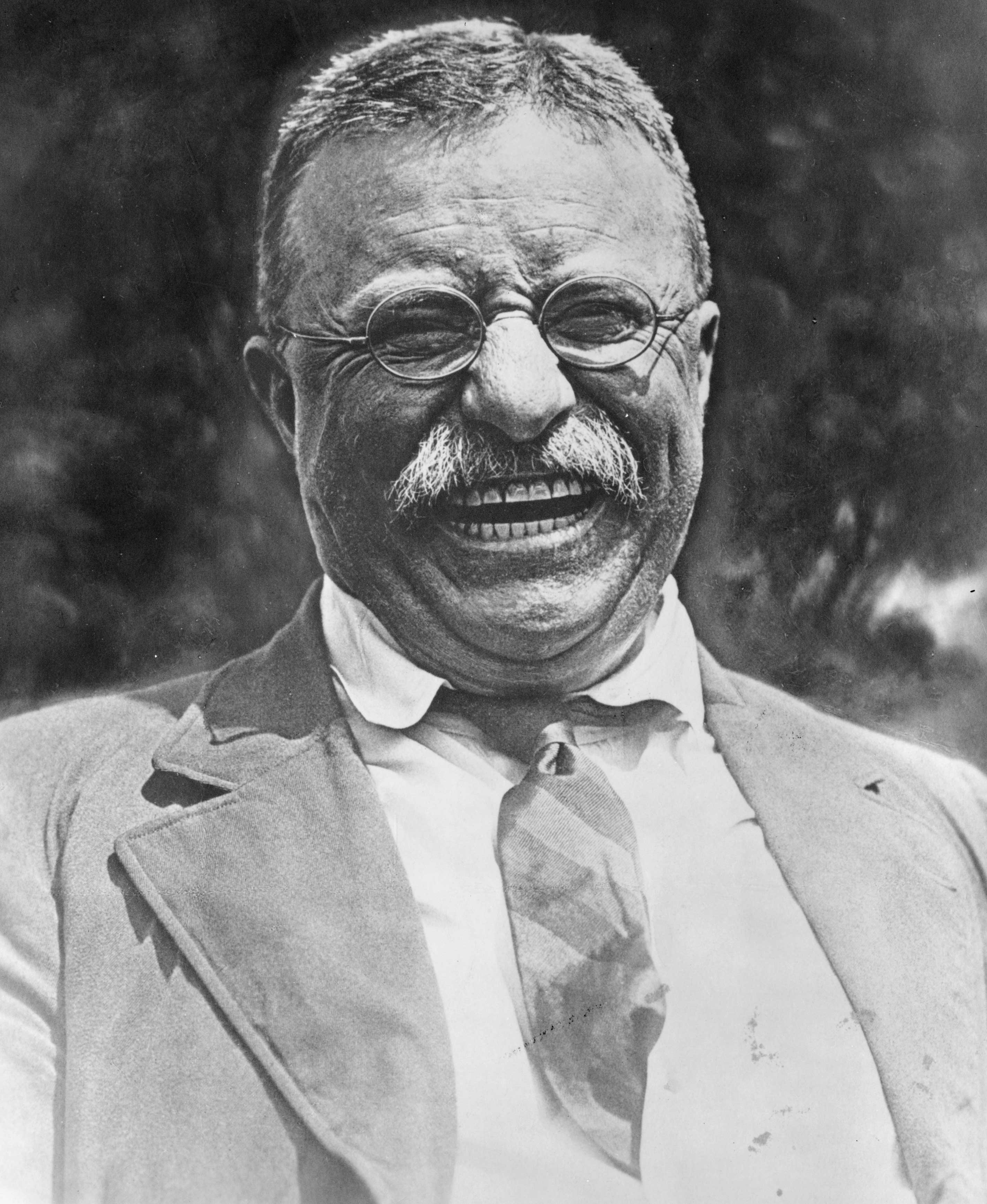
Theodore Roosevelt
That brings me back to Theodore, Eleanor and Franklin Roosevelt. They are fantastic examples of people who looked for and followed their calling. They weren’t perfect people. They each suffered great tragedies in their lives. But they didn’t let those stop them from embracing life to the fullest. They did the very best they could with the life they had. That’s what I want to do. I want to do the best I can with this life I have, because doing that will influence someone, maybe a lot of someones. And isn’t that why we’re here? To make connections with, learn from, and inspire each other?
“Don’t get me wrong, I admire elegance and have an appreciation of the finer things in life. But to me, beauty lies in simplicity.” –Mark Hyman
“Simplicity is the glory of expression.” –Walt Whitman
“I continue to be drawn to clarity and simplicity. ‘Less is more’ remains my mantra.” –Stephane Rolland
When I was growing up, we didn’t have lots of luxuries. I can’t say I missed them. We had plenty to eat and roofs over our heads. (We moved a lot.) My parents didn’t dabble in the Stock Market. They were just making a living to support us. Life was pretty simple. I didn’t know anything different. I was comfortable. That’s all that mattered.
During college, I took theatre classes. Celia Schall, one of my mentors, always said to her actors, “Less is more.” As an actor, I understood what that meant, but not so much in living. I wanted to have the big house, the nice car and financial freedom. However, when Barry and I got married, even though we both worked, we struggled. We struggled to keep up with everyone else.
It wasn’t until much later that I realized, we struggled because first, we set our sights on having all the stuff the advertisers said we needed, and second, we thought that’s what we were supposed to do. We thought we needed to have certain “things” to make us happy. Boy were we wrong. Happiness grows out of choosing to be happy, and for being grateful for what you have. It has nothing to do with owning the prescribed number of possessions.
At some point, we chose to live a simplified life. Barry and I decided not to go for all the trappings for which everyone was pining. Some of the choice to live simply was made for us, because we didn’t have a six-figure income, but another part of our decision had more to do with not wanting to hop on the merry-go-round of acquiring so many things to take care of and protect. Don’t get me wrong, we still have a lot more things than we’d like. It’s easy to get caught in the trap of accumulating stuff.
Most of the time, we don’t think the way we live affects other people, so I was surprised when my in-laws said, “We admire the simple life you two have chosen to lead.” Wow. I didn’t think anyone had noticed. That made me want to continue to put value in intangibles rather than in material things.
Our version of living simply is to cook at home most of the time, drive hybrid cars, recycle as much stuff as we can, to refrain from buying all the latest gadgets, and to pay for the minimum channels on the TV. We’re not big consumers. I think those ads where women have to check their shopping site every morning, or have shopping competitions are ludicrous. Capitalism is on it’s way out. We’ve got to come up with a new economic model.
To help create a new personal economic model, and become financially independent, we’re paying off all our credit card debt, which means we live within our means. Using things until they are worn out instead of getting the latest fad item. Soon we’ll make changes to our home to make it more energy efficient so the utility company can pay us, instead of the other way around. But the biggest lesson of all is that gratitude is a powerful tool toward living a happy and fulfilling life. No matter the amount of things I stockpile, they can’t make me feel better about myself.
I wonder where we got the idea that external things are the key to happiness?
About a week ago, a friend of mine pointed out in a response to a post that Americans consume most of the world’s resources. She’s right. We do. That’s not good. Perhaps the economic downturn of the last few years has helped us wake up to the fact that we can do with a lot fewer possessions. I mean we can’t take them with us. It’s not the possessions that make life worth living anyway. It’s what we give of ourselves, it’s the connections we make, the love we share. It’s the lovely moments with friends and family. It’s the moments of helping others that we take with us.
Here’s a link to an article, “Living cheap is the new green,” that will help you get started if you want to live more cheaply and simply.
I’m grateful that I’ve chosen to live a simple life. Now I’ve got to go clear out some more clutter.
“What separates us from the animals, what separates us from the chaos, is our ability to mourn people we’ve never met.” ― David Levithan, Love Is the Higher Law
“Time is too slow for those who wait, too swift for those who fear, too long for those who grieve, too short for those who rejoice, but for those who love, time is eternity.” –Henry Van Dyke
Tomorrow is the thirteenth anniversary of 9/11. There’s been a bit of traffic on the social networks about the attacks with people reminiscing about their experiences and what they learned from the events of that day. I was deeply touched by a heart wrenching article by a journalist who interviewed the husband of one of the victims on flight 93 a few days after the plane crashed. He was remembering how open the husband was with his feelings of loss and grief. He was deeply touched when the husband asked him if he wanted to listen to the wife’s last messages. Her voice was calm and full of love.
At the end of the article the author stated that he believes good always overcomes evil, and he enumerated the various times in history when good has prevailed. But now, he pointed out, we’re facing a new threat from ISIS. His focus was on all the things going on in the Middle East. In doing so, he missed a big problem right here in this country.
Understandably the events of that terrible day sent us into shock, grief and fear. For those of us who were old enough to remember, the images of that day and the emotions we felt are seared into our memory. We will never forget them as long as we live. I want to say right now that I honor all those who died, whether they were in the planes, buildings, or trying to save people. But I feel like we’ve let the fear and confusion of that day rule our choices. We’re not as tolerant as we used to be.
Okay, I know I can put a positive spin on any situation. If you’ve been reading my blog this past year and a half, you know that. But as I wrote in my last post, we’ve come to a dangerous crossroads in this country. The evil isn’t only in the Middle East, or in the conflict between Russia and the Ukraine. It’s here in our cities and towns. We’ve let fear co-opt our better judgment in many ways. At least some of us have.
In recent weeks police departments armed with military gear, have attacked peaceful demonstrators protesting against racially motivated police attacks. They’ve arrested fast-food workers, who, again, were demonstrating peacefully trying to get their companies to pay them a living wage, and we continue to have a whole section of the Republican Party treat our President and anyone who doesn’t think like they do with blatant disrespect.
I didn’t like President Bush. I thought he was a terrible President, but I didn’t blast him publicly. He was the President, and I kept my mouth shut, except in private conversations. Now days it seems like bashing the President and his policies is a game of one-up-manship. It’s just one indication that some people have closed their minds and are increasingly hateful and intolerant.
Those who criticize the President, and who advocate using extreme force against our citizens, are proving to me that we’re dangerously close to a Nazi Germany type climate operating right here in the U.S., and I think it all started on September 11, 2001. We got so caught up in protecting ourselves, that it’s had unexpected consequences. I believe many people live in the fear that we’ll experience another day just like that one, even though it was thirteen years ago and the world is a very different place now.
Go back to our Constitution and take a good look at the rights it gives us as citizens.
Amendment I states:
Congress shall make no law respecting an establishment of religion, or prohibiting the free exercise thereof; or abridging the freedom of speech, or of the press; or the right of the people peaceably to assemble, and to petition the Government for a redress of grievances.
Amendment IV states:
The right of the people to be secure in their persons, houses, papers, and effects, against unreasonable searches and seizures, shall not be violated, and no Warrants shall issue, but upon probable cause, supported by Oath or affirmation and particularly describing the place to be searched, and the persons or things to be seized.
Admittedly I’m not an expert on the Constitution of the United States. But, it seems some people’s rights have been seriously violated of late. Those who have acted against the Constitution have acted out of fear. I know from personal experience that fear can rule your life to such an extent that you are able to twist authoritative documents to support your position no matter how paranoid or hateful your position may be. There are sectors of our society that have become so focused on self-preservation, that they are willing to do anything to protect themselves. They can’t see that they’ve gone over to the dark side and are violating the rights of others.
I agree with that journalist who remembered the interview so long ago that still affects him to this day. Good does always overcome evil. But good has to be awake and paying attention or things can get out of hand. I think we’ve come to the point where we’re in danger of evil getting a strong foothold. If it does, we’ll have a very difficult time overcoming it.
How do we overcome the extremists who are so full of fear that they can’t see straight? This is a secret they can’t understand, “…the energy of a loving thought is enormously more powerful than that of a negative one.” –David R. Hawkings, M.D., Ph.D., Power VS. Force. And as he points out on page 282 of his book, one individual who calibrates at the level of 300 counterbalances 90,000 individuals who calibrate below 200. Of course, the higher your calibration, the higher the number of people below 200 you counterbalance.
Trying reason with the extremely fearful won’t work, nor will resisting what they’re trying to do. The only thing that will work is to practice meditation, self-discipline, and love. Cleaning up our issues, releasing our fear and learning to love ourselves and others will help set our country and the world on a new path away from fear and hatred. That’s how we shrink evil. That’s how we heal the world.
“Darkness cannot drive out darkness: only light can do that. Hate cannot drive out hate: only love can do that.” ― Martin Luther King, Jr.
I’m not sure this post will make sense to anyone but me. However, I’ve got to write down my thoughts and feelings to make sense of them.
Almost every day, I find new reasons to be disturbed about the way women and minorities are being treated in this country and around the world. In fact my feelings run the gamut between irritation to down right rage when I hear the latest news. I know it’s not good to hold onto those feelings. They’re jarring to my calm, so I’m resolved to understand why we’re experiencing a new surge in human rights problems. I can’t just sit by and watch it happen. I want to figure out what I can do about it. Recently, I had some aha moments that I’d like to share.
This past week my book club group was discussing The Invention of Wings by Sue Monk Kidd. If you haven’t read it, I highly recommend it to both men and women. It’s about the Grimké sisters, two almost forgotten figures in the Abolitionist and Suffrage movements. As always our discussion turned to current events. One woman said, “It feels like we’re going backwards.” I had to admit it does feel like we’re going backwards. However, I know from my study and personal spiritual practice that’s not possible.
As I was contemplating our discussion, three ideas came my way that are helping me articulate what I’ve been struggling to understand for many years.
A few days before our book club discussion I saw an article or poster on Facebook stating that the outside has traditionally been men’s domain, therefore any woman who crosses paths with men in what they consider their domain is fair game for interference of some kind. The men who think this way, assume they can stop the woman, harass her, or do any number of other unpleasant things with her they like. After all, they OWN the out of doors, that gives them permission to do anything they please. I think this applies not only to the way men treat women in THEIR space, but how white men feel toward and treat minorities as well.
This mindset is centuries old, you understand, so it’s ingrained as just the way things are. There are some otherwise perfectly nice men who don’t see why women get upset at cat calls, or a hand around their waist. They don’t understand that what they’ve just said is a racial slur. Many men do understand this, but some are just doing what they’ve been taught. Often If someone pointed out their bad behavior, they’d be appalled to think that they weren’t considerate and understanding. They’d deny it, of course, but who knows what seeds can be planted in their minds when they see the affect their behavior has on someone else.
Another day I saw a post on Facebook that pointed out that men think that they are the ones who make women fully women by having sex with them. Like they were gods and could dictate who was to become a full human being! I guess to these men, sex is like laying claim to the woman, who then belongs to him exclusively. As if a woman couldn’t possibly be a person in her own right without the approval and protection of a man.
Everything on this living organism we call planet Earth has the right to self-determination without interference from another being. Sex is a biological function. It has nothing to do with personhood. Nor is it a reason to make women inferior to men, or to fight over her with another man.
Ever since I was a little girl, I just couldn’t swallow the interpretation of the creation story in the Bible. The story that is used to put women in the inferior position, because supposedly Eve was the one to break God’s law and eat the fruit of the tree of knowledge. In my mind her curiosity was and is a vital part of being human. Also in the story is the implication that men are superior because Adam was created first with God creating Eve from his rib. It’s obvious to me that a man included that in the story in an effort to blot out the fact that the pre-historic cultures worshipped the Goddess. Societies during that time were organized around a mostly feminine in approach to living and surviving. When the tide began to turn toward male dominated societies, men wanted to prove they were more favored by God, by telling the creation story skewed toward male dominance. (Riane Eisler’s book The Chalice and the Blade is an eye opening account that gives archeological evidence of the change from female to male dominated societies.)
The third idea, though not new, came my way in an interview that Mastin Kipp had with Caroline Myss, author of Anatomy of the Spirit, and Sacred Contracts. In the interview she said that we are addicted to Darkness. We long to live in the light, but darkness is so familiar to us, that we cling to it afraid to give it up. Because we choose to live in the dark, we often do things to benefit ourselves, for which others pay the price. When we’re in the dark, we’re motivated by greed, or self-preservation, or fear. I knew exactly what she was talking about, because I suffered from the unethical actions of someone else. The person who maneuvered me out of a beloved job, wanted it for herself. I was in the way of what she wanted. So, thinking only of herself, she made sure I lost my job. We hear it all the time. “I didn’t mean anything personal by it. It was just business.” That kind of thing happens among family and friends as well. And I’ve been just as guilty of doing it as those who’ve done it to me. No wonder there are so many walking wounded.
I know from personal experience that deciding to live in the light is a scary thing. When I made the decision to come out of the dark, I didn’t know what to expect, or what it would feel like to live within the light. When I fully embraced the light, I had to take responsibility for my actions. I couldn’t make excuses for hurting others any longer. I couldn’t claim, “The devil made me do it”. There were times when I wanted to go back into the dark. But once you’ve taken a step forward, it’s nearly impossible to go back.
Even though most of us have been living in the dark for centuries, we’re now coming out into the light. There have been great teachers and enlightened beings who have shown us the way, but because what they’re trying to get us to see is beyond our five senses, it’s been difficult for us to grasp the true meaning of their teachings.
For those of you who are rational, let me reference a book I read several years ago that shows scientifically how humans have been awakening. The book is Power VS. Force: The Hidden Determinants of Human Behavior by David R. Hawkins, M.D., Ph.D. Reading it changed my life and my perspective of events that have taken place in the world. I’m not a scientist, but let me explain the book by saying that each person, society, religion, and anything that exists vibrates at certain levels. Hawkins has learned how to measure these vibrations, which he calls calibrations. Most of humanity calibrates at a fairly low level. People like Jesus, Buddha, Gandhi, and other enlightened people calibrate at levels as high at 1,000. In the last chapter of the book Hawkins writes that in the mid-1980s, the calibration for humanity took a sudden jump from 190 to 207. It may be even higher now. A person or organization that calibrates below 200 can’t tell the difference between a truth and a lie. They are living in deep darkness. They are so frightened of those of us who calibrate above 200 that they do terrible things thinking their actions will protect them in some way. The people who have committed unthinkable acts in the past, and who are in the news of late, calibrate at very low levels.
So how do we combat the mistreatment of women and minorities? We can point out in loving ways the error in the thinking of the one doing the mistreatment. Here are some examples of what I mean.
Once I needed some repair work on my car. The technician came out and greeted me with, “Hello Sweetie. What can I do for you?” I have to admit I was a little miffed. But I said as calmly as I possibly could, “First of all. Don’t call me Sweetie. I’m someone’s sweetie, but not yours.” He looked startled, but said, “Okay. What can I do for you?” Then I proceeded to tell him what I needed in as businesslike manner as possible. I hope he thought twice before calling the next woman, “Sweetie”.
Another thing we can do is to stand with someone who is being harassed. It doesn’t take much to stop a bully. You can merely say, “Stop harassing this person”, or you can just look at them with a neutral face. It’s a technique I used in the classroom to get students to do what they were supposed to be doing, and it worked beautifully, because I wasn’t fighting with them. I was just helping them choose to do what they already knew they should be doing.
Also, when you stand by the person that’s being harassed, others may find the courage to join you, because one courageous person can help others make up their minds to do the same thing. Standing up to a bully is showing real power in the face of external force that is based on fear. As Hawkins writes, “Ignorance does not yield to attack, but it dissipates in the light and nothing dissolves dishonesty faster than the simple act of revealing the truth. The only way to enhance one’s power in the world is by increasing one’s integrity, understanding, and capacity for compassion.” When we stand up for the rights of others, we’re shining a light on erroneous attitudes and actions.
I have a small circle of influence in my every day life. However, when I’m teaching I try to create a safe environment in which students can flourish. If one student tries to treat another badly, I point out the behavior and try to establish a safe learning environment again. Every little effort toward the light helps create a wider field of awakening for every living thing on this planet.
Thanks for reading. I know my musings are sometimes convoluted and hard to understand. However, writing this blog helps me make sense of the world around me, and what I can do to make it a better place in which to live.
“Studies have shown that 90% of error in thinking is due to error in perception. If you can change your perception, you can change your emotion and this can lead to new ideas. –Edward de Bono
“If the doors of perception were cleansed everything would appear to man as it is, infinite. –William Blake
“There is no truth. There is only perception.” –Gustave Flaubert
Do you do what I do? Do you get ideas in your head about your circumstances and think they’re written in stone, that they can’t change? I do that all the time.
Recently a wisp of an idea flittered through my head during my meditation. It was fleeting like smoke, but tendrils of it remained. The next day more tendrils stuck and after a few days of this, I understood the full blown idea. I’d been holding on to thoughts about my life circumstances that weren’t true.
Wow. What an idea. In my mind I’d accepted certain “truths” about my life, my talents, and my chances for success. I’d done it so much that the realization was a little bit like a splash of cold water in the face.
My husband and I have been discussing a move to another state for quite some time. In my mind certain steps had to take place before we could even consider making such a move. But on that particular morning when all the tendrils coalesced, I knew that the “truth” was that I was the thing blocking the fulfillment of that dream. We could have been living in our new home long ago, if I hadn’t put a kibosh on it by thinking that there were obstacles in the way.
Let me put it another way. If I’d kept the picture of what I wanted in my mind, and not thought of anything else, the Universe would have conspired for me and we’d be living in our new home by now.
I’m reminded of a story about Walt Disney. He saw Disneyland completed in his head long before the first shovel hit the ground. As he was struggling to make his dream come true, someone said to him something like, “Since it’s so hard, why don’t you give up. Maybe it’s not meant to be”, to which he said. “It already exists in my mind.” He also said, “If you can dream it, you can do it.” As we all know, not only Disneyland, but Disney World both exist and millions of people have fun with their families every year.
So, I’ve decided that I’ve got to change my mind about limitations, and believe that I can do what someone else might call impossible.
This applies not only to the move my husband and I want to make, but to other things as well. Like finding an audience for my books. Other artists have done it. They wanted to be writers, painters, dancers and just kept dreaming that they would be able to do what they loved and make a success of it. They dreamed they’d find people who believed in them. Little by little it happened. In the end, they got to live the life they wanted. Those are the people we look up to, and want to emulate.
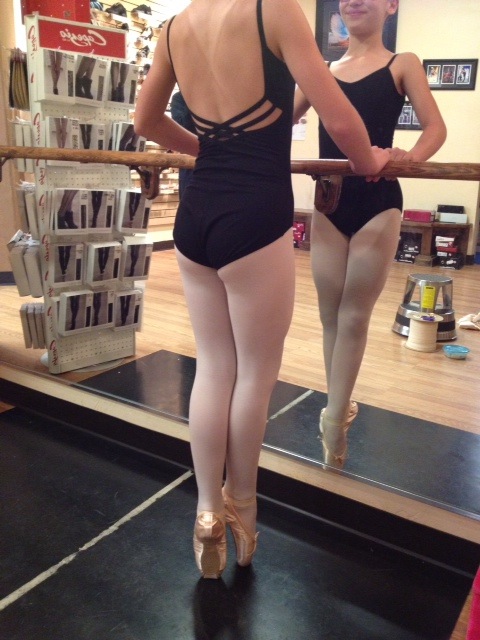
One of my greatest inspirations in this regard, is my youngest niece. Since the age of three, she’s wanted to be a ballet dancer. That’s not an easy profession. It takes years of hard work and training with no guarantee that you’ll be able to get hired. She not only wants to be a ballet dancer, she wants to do it in Paris!
Her parents are very supportive and never tell her to make a back-up plan. In fact they moved the family to a city where she can get the best training, and possibilities for auditions. Every once in a while when she complains about missing something else that might be fun, my sister will say to her, “Are you sure this is what you want to do? Because if you don’t, you can stop and do something else.” So far after nine years, she still loves dancing more than anything else. To help her improve the vision of her dreams, she has posters of Paris on her walls, she’s taking French in school; she’s going all out to think only of seeing the life she wants to live.
Now that I’m breaking down some of those old walls in my thinking that have kept me from my dreams, I’m visualizing the life I want to live. And one of the things I’m visualizing is going to Paris to watch my niece dance and while I’m there having book signings and speaking engagements about my writing process.



 Sage Woman Chronicles