Reinforcement is Good

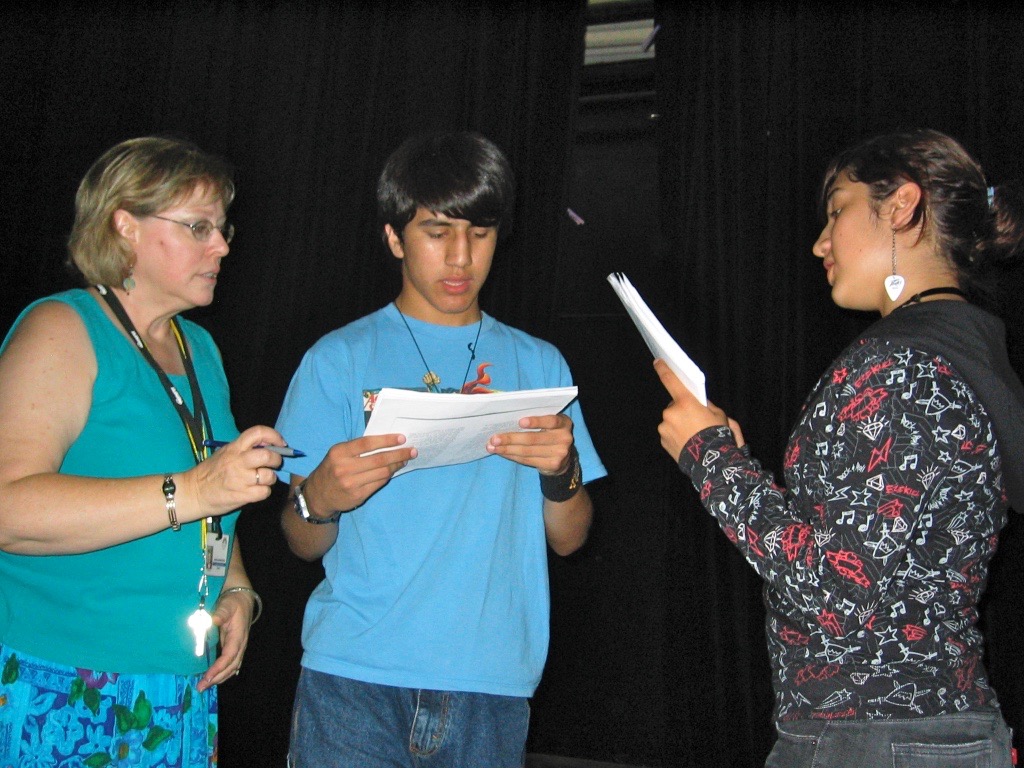
In rehearsals for *The Tavern*

“Properly used, positive reinforcement is extremely powerful.” ~ B. F. Skinner

As I wrote in the post last week, I attended a writer’s celebration sponsored in part by the local community college where I teach. It was a fun event. The guest authors were amazing. I enjoyed Ann Garvin’s workshop so much that I attended two sessions even though they contained the same information.

Ann was engaging and funny. I’m assuming her books are too given the title of her most recent book, I Like You Just Fine When You’re Not Around. She’s written several books and the thing I loved right off the bat was her willingness to tell us that she didn’t really know how to write a good book until after she finished her fourth. It was then she realized the things she was going to teach us.

Much of what Ann and the other writers taught was information I already knew. For example, even if you’re writing nonfiction, you have to tell a story, otherwise, as Ann puts it, you’re reading the manual to your newest household appliance. Even though I already understood that, it was great to be reminded to engage my readers with stories. I’m working on doing that here more and more.

Another reminder was, when writing fiction, you have to figure out what your character wants and let them fail, and fail, and fail, until eventually they get what they want, or what they want changes and they get that instead. But the most important thing is your characters need to be flawed. That’s one of the hardest things for me to do. I want to think of myself, and by extension by characters as perfect, enlightened beings. Of course, none of us is perfect. So, that reminder was something I needed to hear to help me as I write my current novel.

Ann’s method of writing a novel is almost the same method actors use to create their characters. Actors and directors have to figure out what the characters want, and the tactics they use to try to accomplish their goal. That was a big relief to me, because I don’t have an MFA in creative writing. I was happy to learn that neither does Ann.

Even though I don’t have degrees in English, I am a big story nerd. I love listening to people tell about their personal triumphs and tragedies. I love analyzing books, documentaries, and movies. I learn something when I pay attention to how the people or characters are affected by the things that happen to them and what they learn along the way.

Sometimes I wonder what the purpose of my passion for story telling might be. I mean, I’m not saving someone’s life. And yet, maybe storytellers do save lives in a way. We can help change the world by examining how characters react to what happens to them.

Alan Alda expressed exactly how I feel about story telling during his acceptance speech for the SAG Lifetime Achievement Award earlier this year. “I see more than ever now how proud I am to be a member of our brotherhood and sisterhood of actors. When we get a chance to act, it’s our job, at least in part, to get inside a characters head and to search for a way to see life from that person’s point of view, another person’s vision of the world. And then to let an audience experience that. It may never have been more urgent to see the world through another person’s eyes than when the culture is divided so sharply. Actors can help at least a little, just by doing what we do. And the nice thing is, it’s fun to do it.”

I think storytellers of all kinds do that same thing. We try to get into other people’s heads and hearts and share their stories. Consuming those stories gives us a chance to expand our world view just a little bit. And I don’t know about you, but I need to see the world from different perspectives so I can contribute to positive change.

I want to suggest one example of a series that has changed my perspective about relations between blacks and whites in this country. Barry and I have been watching the PBS series, Reconstruction by Henry Louis Gates Jr. The Reconstruction period in U.S. history is one not covered very extensively in school. I certainly didn’t know much about it. The Civil War ended, there was Reconstruction to help rebuild the South and then we had the Civil Right’s Movement. That’s all I remember from my school history lessons. The history books didn’t cover all the years in between Reconstruction and the Civil Right’s Movement. Something must have happened, but I didn’t even question the fact that there had to be more to the story than that.

The stories of how many former slaves became politicians, business and land owners, and journalists is inspiring. And then to have their gains slowly chipped away by whites who didn’t believe blacks were real human beings, is heartbreaking. The story of Reconstruction shows me that our problems over race in this country are much more complicated than I ever imagined. I’m grateful for the opportunity to learn about this crucial time in history, and how the attempts to equalize the black and white races succeeded at first and then, for the most part, failed. This documentary series showed me that we have a lot of work to do yet before we can truly call our country a melting pot. And the sad thing is that what happened with the former slaves is repeated over and over when people from other countries immigrate here. It’s difficult to acknowledge that many white people fear losing their dominant position and that is one of the biggest things that drives discrimination.

It might not seem like the story of the Reconstruction era relates to the book I’m writing now about the Suffrage and current women’s movements, but discrimination plays out the same way no matter which group is being oppressed. The dominant group do everything they can to hold on to their power.

Ann Garvin says, “Write ‘in scene’ so your readers can feel the emotions of your characters.” That’s one of the most important things writers can do, help the audience empathize with their characters. My readers and I can’t change unless we open ourselves up to new experiences, even if it’s only by reading a book or watching a movie.

Thanks for reading, liking and commenting. And welcome to my new followers. If you celebrate Passover or Easter, I hope you discover new and inspiring things in those historical stories.

Lucinda Sage-Midgorden © 2019

Lucinda is the author of The Space Between Time, an award finalist in the “Fiction: Fantasy” category of the 2017 Best Book Awards. It’s a little bit like Outlander in that it’s a historical, time-travel, magical realism, novel. Only Jenna joins consciousness with her three-times great-grandmother, Morgan, instead of traveling physically. She is able to come back at intervals and apply what she’s learned to her own life situations.

The Space Between Time is available in all ebook formats at Smashwords, or you can find the ebook at iBooks or Barnes and Noble. If you prefer a physical copy, you can find a print-on-demand version at Amazon. Stay tuned for news on the audiobook version Lucinda is working on. To join her email list, click here. She will never sell the names on her list.

Sometimes the Story has a Mind of Its Own

My Mug Reminder

“You have to write the book that wants to be written. And if the book will be too difficult for grown-ups, then you write it for children.” ~ Madeleine L’Engle

“We write to taste life twice, in the moment and in retrospect.” ~ Anaïs Nin

I admire writers who plot out their entire book and then stick to their outline as they write. For them adhering to a schedule and using spreadsheets to track their progress ensures they finish their book. I admire that, but my brain doesn’t work that way.

When I’m in the flow, I get snippets of ideas for my projects. They come at odd times, just as I’m waking up, when I’m in the shower, or while I’m cooking. I have a general idea of the themes I want to express in my work, but writing for me is a little bit like driving at night. I can only see what’s lit up by my headlights. I used to feel bad as if my process is not as good as those who plan, and plot and don’t waver. I used to compare myself to other writers but I’ve been changing my perspective this year. So I bought the above mug to remind myself to be myself no matter what I’m doing.

It’s hard to admit sometimes, but the inspiration I get is so much better than my original ideas. To maintain the flow, however, I have to make sure I write every day. If I don’t the inspiration faucet doesn’t work. If I take a break for longer than a few days, inspiration flows off to some other creative person’s well and it takes a while to get my creative plumbing working again.

During the fall, I loaded myself up with so many endeavors that I wasn’t working on Time’s Echo and when I got back to it months later, I sat and looked at the page feeling lost. I wasn’t sure where the story wanted to go next. To prime the pump, I wrote for half an hour or so everyday. I am happy to say that the faucet is working again and I’m waking up with new ideas on a regular basis.

I don’t know if this is true for other writers, but I love being home in the quiet working on my blog or book. I don’t like showing my work until I feel it’s ready to be shared for critique. That means, the work has gone through several revisions before anyone else sees it. I used to feel bad about this. It’s one of the reasons why I quit attending writing critique group. Most of the time I didn’t have anything to submit for critique and the group got so large, reading everyone else’s work took away from my own writing.

Now that I’ve been writing for almost eleven years, I understand my writing process. It’s okay to keep my own council about the piece I’m working during the early stages because my personal muses help me shape the story as it wants to be told not as someone else wants to impose upon it. But I’ve also realized that I need to be open to learning new things about writing.

The college where I teach has what they call a writing celebration every spring. I went once a few years back and was disappointed, but I think it was only in its infancy then. This year they have some interesting guest writer/presenters. Still, it took me a long time to decide to register for the event. It’s this weekend. I’m still tempted to shut myself up with my novel as I’ve been doing for many years now. For an introvert, that’s so tempting. But I think it’s time to meet other authors and hopefully pick up some important writing tips that I didn’t learn because my degrees are not in English.

No matter where I get tips for improving my writing, I intend to continue to let the stories I write lead me in unexpected ways. Some writer said, “I write to figure out what I’m thinking and feeling.” That’s me and I like it that way.

I’ll let you know if I had any profound realizations as a result of attending this conference.

Thanks for following, liking and commenting. Welcome new followers. I hope you are able to enjoy warm weather this weekend.

Lucinda Sage-Midgorden ©2019

Lucinda is the author of The Space Between Time, an award finalist in the “Fiction: Fantasy” category of the 2017 Best Book Awards. It’s a little bit like Outlander in that it’s a historical, time-travel, magical realism, novel. Only Jenna joins consciousness with her three-times great-grandmother, Morgan, instead of traveling physically. She is able to come back at intervals and apply what she’s learned to her own life situations.

The Space Between Time is available in all ebook formats at Smashwords, or you can find the ebook at iBooks or Barnes and Noble. If you prefer a physical copy, you can find a print-on-demand version at Amazon. Stay tuned for news on the audiobook version Lucinda is working on. To join her email list, click here. She will never sell the names on her list.
What Writing Has Taught Me

All the Love and Support We Need

“I spent a lot of years trying to outrun or outsmart vulnerability by making things certain and definite, black and white, good and bad. My inability to lean into the discomfort of vulnerability limited the fullness of those important experiences that are wrought with uncertainty: Love, belonging, trust, joy, and creativity to name a few.” ~ Brené Brown

My husband and I had an intimate conversation the other day on the way home from the memorial for a fellow writer. I met Cappy about eight or so years ago through a writer’s group she and her best friend Ross started. Cappy always had a smile on her face, her critiques were kind, but insightful, and enormously helpful. When I talked with her one-on-one, she was genuinely interested in what I had to say. She didn’t talk a lot about herself, but if you asked, she was happy to share insights she’d learned from her experiences.

The way I really got to know Cappy was from reading her memoir, Love Life, With Parrots. Her openness about all aspects of her life made me realize that I’m a guarded person and thus a guarded writer. And that’s what my husband and I were talking about, how I wished I could be more open like Cappy. Her open, welcoming nature left an indelible impression on those she met.

I must acknowledge that I come by my caution honestly. My father and mother were/are both introverts. My father, in particular, was a very private man. The way he shared his values with us was through the discussions we had about the media we consumed, or about things that had happened to us at school or church. I know that he had a very deep and active spiritual life because of the sermons he preached, but he hardly ever shared how he felt about the experiences themselves.

As a result, I followed his example. I kept my thoughts to myself most of the time because I was sure I would cause shock and controversy if I shared the commentary running through my head. In fact, I did cause a huge controversy in college when I wrote an letter to the editor of our newspaper after the campus minister preached a sermon about love right before Valentine’s Day. His thoughts reinforced traditional doctrine, but in my opinion his view of love was severely constrained, which I pointed out in my letter. Why hadn’t I kept my thoughts to myself? But good things came out of that controversy. I should have learned that sometimes rocking the boat is a good thing. However, I was extremely uncomfortable with the personal attacks and attention and so went back into my shell.

Fast forward to 2008 when I decided to become a writer. Up until that point I had kept a personal journal in which I was completely open about my dilemmas, failures, relationship issues, and aha moments. But, when I began writing for public consumption, I found ways to conceal my true thoughts and feelings. Fortunately, someone pointed that out, and encouraged me to pull back the layers to reveal how I truly saw the world. Wow! That challenge was the most frightening thing I’ve ever had to face. I didn’t want to do it, yet I knew if I was going to affect people with what I wrote, I’d have to.

Sharing my true self was extremely difficult at first. It has become easier over the six years of writing this blog but I’m not a completely open book yet. And in a way, maybe that’s a good thing. Brené Brown says it’s important to be selective when sharing our deepest thoughts and feelings. We need to protect ourselves from energy vampires and human werewolves who take pleasure in ripping people apart. On the other hand, being open like Cappy was by revealing personal insights can be of enormous help to those who read the work.

Since attending Cappy’s memorial, I’ve been doing a great deal of self-examination with regards to my life and work. The area I tend to protect most is my spirituality. I have a difficult time sharing with people that I’ve had many spiritual experiences. Silly as it may sound, until recently I felt a bit ashamed of this aspect of who I am. I felt different from everyone else because it seems to me spirituality is not accepted as an integral part of every day life. If you’re spiritual you must live in special communities and never partake in ordinary activities. But as my sister says, “It’s just one way of living.” Spiritual people do not have to be saints. They can be your next-door neighbor, your garbage man, or your boss. As a spiritual person, I struggle with the same fears and challenges as everyone else on this planet. It’s just that I know I’m not alone. I’ve got lots of assistance to help me work though any problem.

Being a person who has regular spiritual insights, I’m sensitive to the shifting energy of our times. Just lately I’ve felt an extreme tension between the way we used to operate in the world and what I think humanity is evolving into, which is a more spiritual approach to life. And this tension has affected how I feel about the business side of writing. I want more people to read my blog and books. I would love to have a steady stream of income from what I write. But I cringe at doing the promotion and marketing. I swing back to the idea that maybe it’s enough to just create the work because any act of creativity affects the energy that connects us all. And I ask myself, do I shy away from doing more aggressive marketing because I don’t see that as spiritual? I guess I’m going to have to wrestle with this issue for a while.

In any case that brings me back to Cappy. She left behind a great deal of written work. She didn’t make loads of money from selling it, but she didn’t let that stop her from creating it. Ross announced at the memorial that he and Cappy’s husband are going to compile her poems, essays and stories into new works of art that can be shared. So, even though Cappy is no longer physically with us, her insights and particular observations about life are going to live on. That makes me very happy because her vision of the world was unique and beautiful.

Maybe that’s the most important thing about being human, we leave ripples of influence behind us. They may not be works of art, but our interactions with others influence the future in ways we can’t possibly foresee.

Thanks for reading. Welcome to my new followers. I hope you have meaningful interactions with friends and love ones this weekend.

Lucinda Sage-Midgorden ©2019

Lucinda is the author of The Space Between Time, an award finalist in the “Fiction: Fantasy” category of the 2017 Best Book Awards. It’s a little bit like Outlander in that it’s a historical, time-travel, magical realism, novel. Only Jenna joins consciousness with her three-times great-grandmother, Morgan, instead of traveling physically. She is able to come back at intervals and apply what she’s learned to her own life situations.

The Space Between Time is available in all ebook formats at Smashwords, or you can find the ebook at iBooks or Barnes and Noble. If you prefer a physical copy, you can find a print-on-demand version at Amazon. Stay tuned for news on the audiobook version Lucinda is working on. To join her email list, click here. She will never sell the names on her list.
Perception

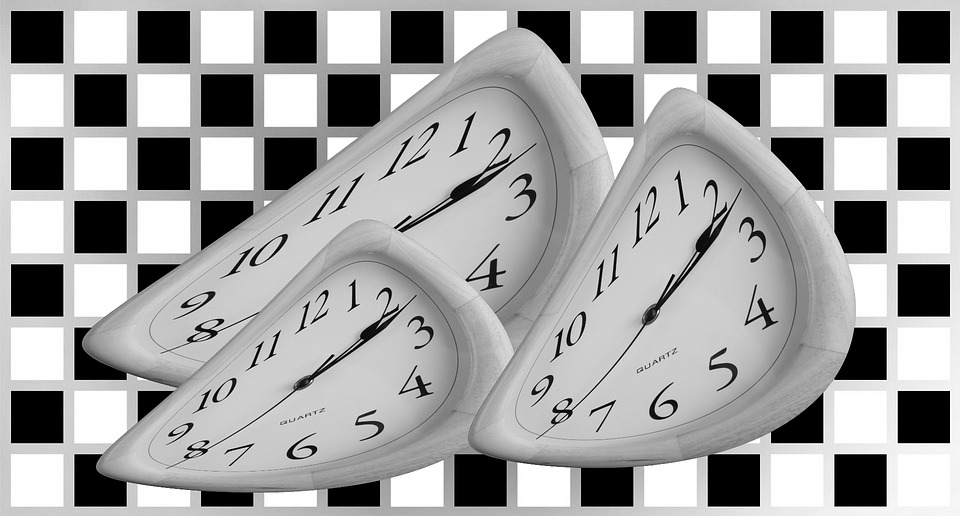
Bending Time

“Our minds influence the key activity of the brain, which then influences everything; perception, cognition, thoughts and feelings, personal relationships; they’re all a projection of you.” ~ Deepak Chopra

I’m happy to say that I’m getting back into the creative flow writing my second novel. The other day as I was thinking about my storyline, a major character/plot point occurred to me and it has to do with perception.

Morgan’s daughter, Georgiana, is not happy about her mother’s involvement in the suffrage movement. She’s convinced her mother’s frequent absences prove her mother doesn’t love her. Even when Morgan takes her along on the trips, Georgiana holds on tenaciously to her point of view. Her feelings about her mother are not true, but she derives pleasure by enumerating her mother’s shortcomings. This gives me an opportunity to give Morgan some depth. She makes parenting mistakes trying to change Georgiana’s mind. It’s a big step for me as a writer. I tend to want to make my main characters perfect.

We make incorrect assumptions in real life too. We get a bit of information and assume we have the whole story. Over time our assumptions become solidified if they are never challenged. In my opinion, it’s good for us to have our beliefs and assumptions turned upside down every once in a while, either by others or by our own efforts to expand our perspective.

Here’s a real life example. A week ago Robert Mueller released his report on the Russia investigation to the Attorney General William Barr. Emotions are still running high about the fact that AG Barr released a four page statement to Congress based on an over 300 page report. Some people are getting upset while others are gloating about the results. At first I had a particular reaction too, but then I remembered, we don’t have all the facts yet. And it’s best to suspend my assumptions until all the details of the report are revealed. This is not the only time I’ve had to stop myself from an over the top reaction to an emotional situation.

And I had an even more personal real life example this week. A charge appeared on my bank that I did not make. It was for a relatively large amount of money. I was tempted to get bent out of shape about it, but after calling the bank, I felt better. They were helpful in resolving the issue. It wasn’t worth getting upset about. It was just one of life’s little glitches.

One of the best things I’ve learned to do in a crisis is to take a breath, and try to relax. I can’t find solutions to my problems or consider that my assumptions are wrong when I’m upset. I know that’s hard when our cherished beliefs are challenged and our world is turned upside down. But none of us can avoid facing life altering challenges. Since that’s the case, we might as well do the best we can to embrace what comes.

There is a new movie coming out on April 5th that illustrates what I’m trying to say. The title is The Best of Enemies starring Sam Rockwell and Taraji P. Henson. It’s based on a true story of school integration in Durham, North Carolina in 1971. The segregated black elementary school burns down. Ann Atwater, trying to get the white school to admit the children of her community, faces off against C.P. Ellis, the Exalted Cyclops of the KKK in his district. I tried to find the original trailer, where the real C.P. Ellis says something like “We believe things and then one day we find out they aren’t true.” I wish I could give an exact quote, because his statement made me sit up and say, “Well, that true life incident shows there is hope for us all and that’s the kind of movie I want to see.”

I’ve seen other real life stories that give me hope. On the most recent CBS Sunday Morning, there was a segment about a man who was so damaged by his military tours in the Middle East, that he was planning to blow up the local Muslim center. But something stopped him. He decided to go to the center and see if he could find good reason to support his hatred. But instead he found understanding, acceptance, and love. He’s now a Muslim convert.

It’s real life people like these that remind me to not let my emotions get the better of me, to take a step back and examine the truth of what I thought I knew. This is something I think we all need to do right now with people all over the world so sharply divided. But I know how difficult it is to take out our beliefs and examine them. I know because I’ve had to do it more than once. During those times I felt fragile and barely able to cope with even the most mundane tasks. And I got angry easily. However, I didn’t let all those messy feelings stop my process.

Okay, I’m kind of going on into pseudo-therapist mode here. Forgive me. Theatre people are amateur psychologists after all. I guess authors are too, which brings me back to my novel. I’m so grateful that my muse gave me the idea for Georgiana to be a problem child. Though I’m sensitive and it’s hard for me to write, I know from experience that none of us can grow without embracing life disruptions. And to tell the truth, my life would be boring if I had the same routine and the same mental constructs I had when I was much younger. I’d much rather embrace change.

That’s all for today. Welcome to my new followers. I hope you continue to get something out of this blog. Feel free to leave a comment. I appreciate them very much.

Happy weekend to you all.

Lucinda Sage-Midgorden ©2019

Lucinda is the author of The Space Between Time, an award finalist in the “Fiction: Fantasy” category of the 2017 Best Book Awards. It’s a little bit like Outlander in that it’s a historical, time-travel, magical realism, novel. Only Jenna joins consciousness with her three-times great-grandmother, Morgan, instead of traveling physically. She is able to come back at intervals and apply what she’s learned to her own life situations.

The Space Between Time is available in all ebook formats at Smashwords, or you can find the ebook at iBooks or Barnes and Noble. If you prefer a physical copy, you can find a print-on-demand version at Amazon. Stay tuned for news on the audiobook version Lucinda is working on. To join her email list, click here. She will never sell the names on her list.

This Thought and That

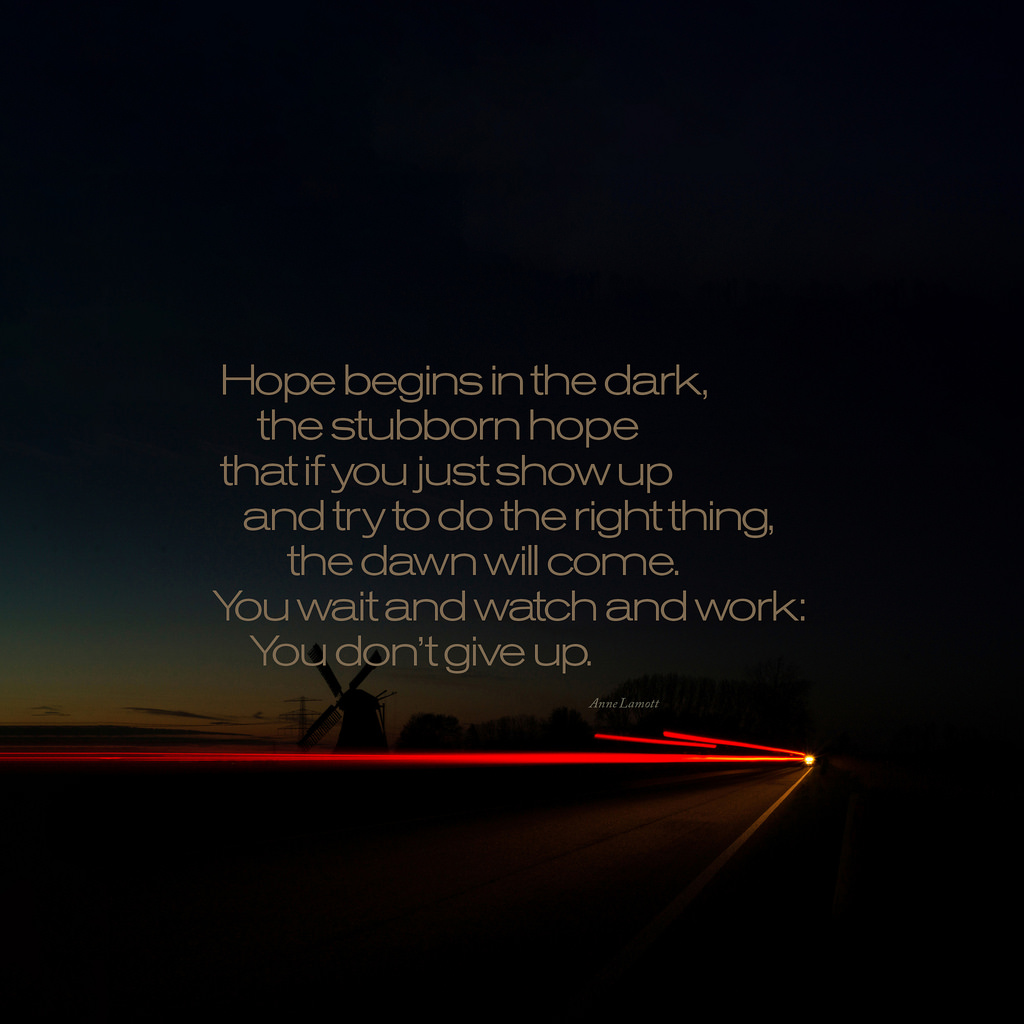
Anne Lamott Quote

“I react very badly when mediocrity throws a tantrum of entitlement.” ~ Lee Siegel

It’s been one of those discombobulated days where nothing I planned to do turned out the way I wanted it to. That’s not necessarily a bad thing. It makes me go with the flow, a reminder I need often. So, what I had planned to write will have to wait until another day, because it requires much more thought than I’ve got time for today.

This week I finished reading The Casual Vacancy by J. K. Rowling. In my opinion it’s a rather bleak book. There aren’t very many likable characters in it, and yet I’m glad I read it because it shows the wide gap between the haves, in this case the middle class members of Pagford in Southern England, and the have nots, the poor people who live in the Fields, a neighborhood within the Parish jurisdiction.

Rowling begins her story with the death of Barry Fairbrother, a Parish Council member. This leaves a casual vacancy which needs to be filled. At the time of his death, the council had been sharply divided about what to do with the Fields, give it back to Yarvil to clean up and manage, or to keep as part of their parish. We see the effect Barry had on various members of the community. Many people liked and depended upon him. He championed the poor people of the Fields and tried to help lift up as may people as he could. As the story progresses we find out that Barry came from a poor family himself. Because someone helped him dig himself out, he had dedicated himself to do the same thing.

On the other hand, many members of the community have no idea just how devastating poverty can be, and how hard it is to rise above it. To them Barry was an obstacle to getting what they wanted, to be rid of a segment of the population that besmirched the reputation of their community. These are the petty, vapid, vicious people who think that those who live in the Fields are lazy, drug users, or dealers who have no desire to better themselves.

Even though it was a difficult book to read, it pointed out one fact to me. It is extremely difficult to understand the experiences of people who are vastly different from myself. Unless I am able to sit down one on one with someone to hear their story, or read first hand accounts of what they have experienced, imagining what they are going through is extremely difficult.

I don’t want to be like the small minded people of Pagford who hold righteously to their assertions about the people living in the Fields. Scientific studies are showing that poverty isn’t just a choice people make. After a while, it becomes part of the DNA passed down generation to generation. The attitudes of poverty are also passed down. So, the children grow up thinking they will never be able to make their lives better. Those are extremely difficult bonds to break.

Though for the most part, I’ve been fortunate to have a roof over my head and food on the table, there have been times when money was extremely tight and I held my breath praying we’d be able to make it through to the next paycheck. Those times help me have more sympathy for people whose circumstances are far more dire than mine ever was.

In any case, reading this book has made me do some self-examination about my own assumptions and attitudes. For that reason, I’m glad I read the book. Shaking up long held beliefs is always a good thing and I’m on a bit of a mission to do that this year.

Thanks for reading, liking and commenting. Welcome to my new followers. I hope you all have a wonderful weekend.

Lucinda Sage-Midgorden ©2019

Lucinda is the author of The Space Between Time, an award finalist in the “Fiction: Fantasy” category of the 2017 Best Book Awards. It’s a little bit like Outlander in that it’s a historical, time-travel, magical realism, novel. Only Jenna joins consciousness with her three-times great-grandmother, Morgan, instead of traveling physically. She is able to come back at intervals and apply what she’s learned to her own life situations.

The Space Between Time is available in all ebook formats at Smashwords, or you can find the ebook at iBooks or Barnes and Noble. If you prefer a physical copy, you can find a print-on-demand version at Amazon. Stay tuned for news on the audiobook version Lucinda is working on. To join her email list, click here. She will never sell the names on her list.