“One of the most sincere forms of respect is actually listening to what another has to say.” ~ Bryant H. McGill
“I’m a very strong believer in listening and learning from others.” ~ Ruth Bader Ginsburg
“After nourishment, shelter and companionship, stories are the thing we need most in the world.” ~ Philip Pullman
I’ve been thinking a great deal lately about my love of stories and how I can use that passion to help people. Story telling is central to the subjects I’ve been teaching for years, but I’ve felt like I need to break out of my old routine and use my passion in a new way. But how? What would that look like? Then I got a bright idea.
My youngest sister and I often reminisce about discussing movies with our father and how that taught us a great deal about how to deal with life issues. As I’ve been thinking about my passion for stories, I got the idea that my sister and I could write a guide for parents and teachers about using movies to help children deal with the things that happen to them every day.
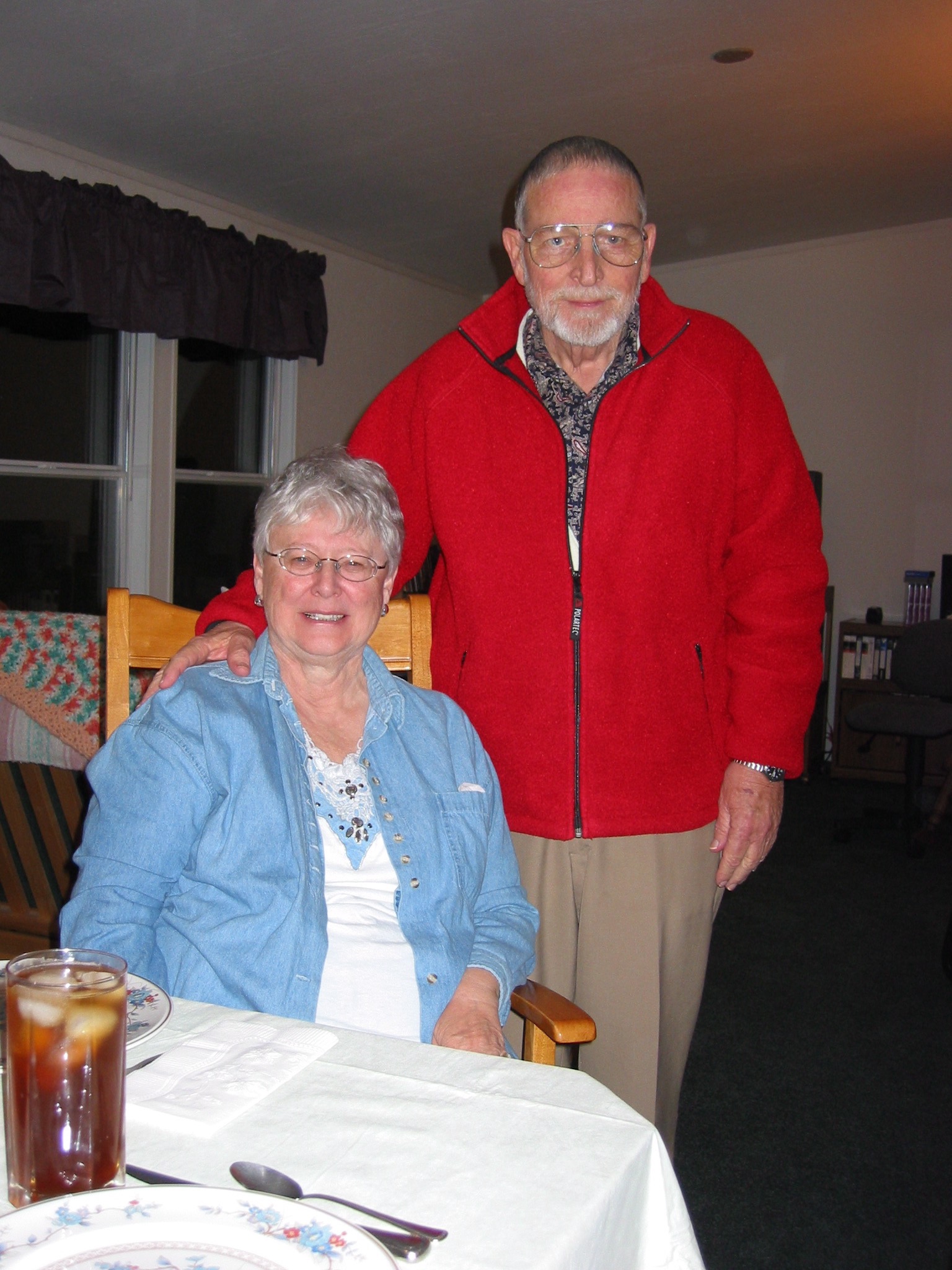
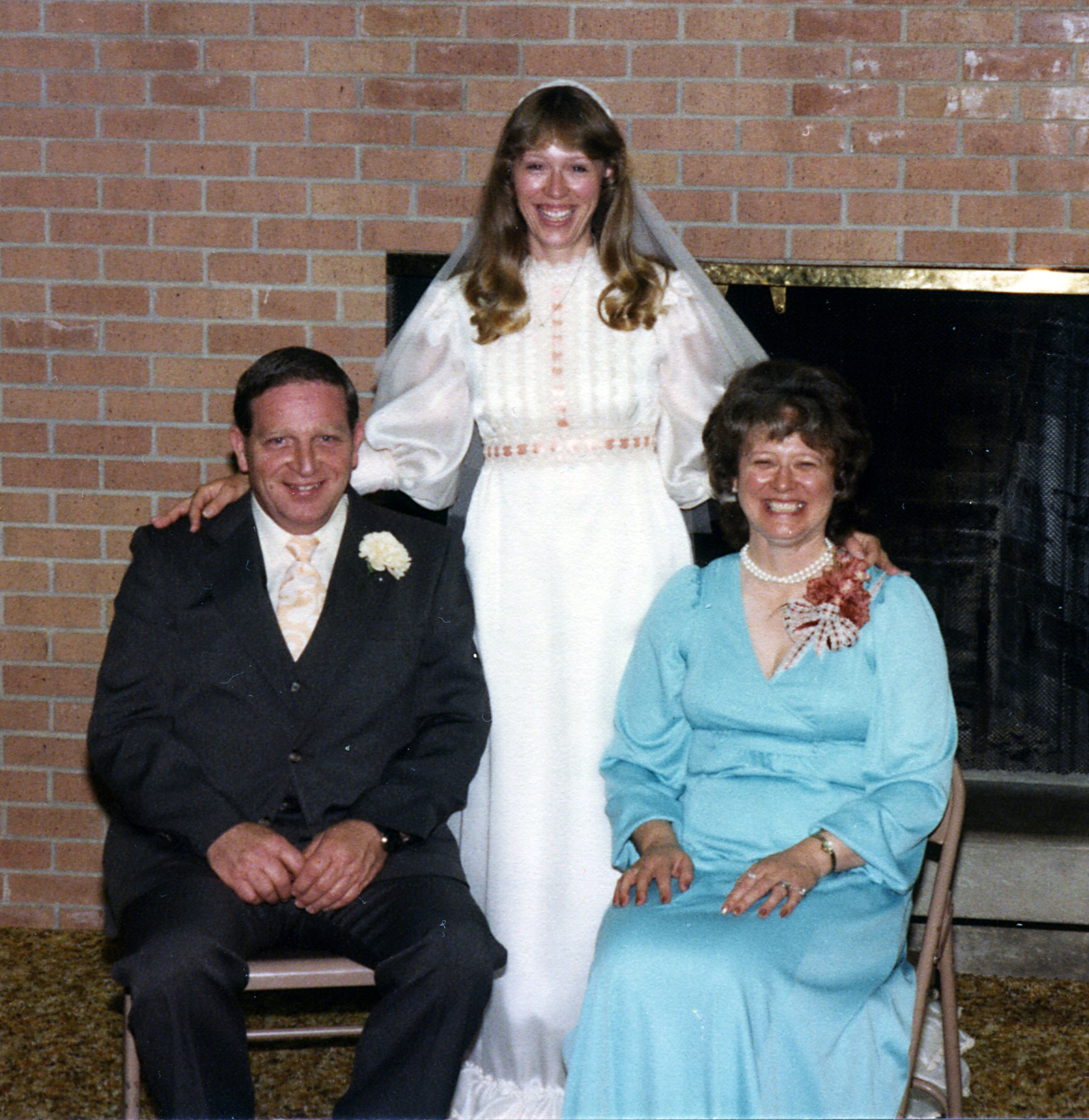
As I’ve been thinking about how to structure the book, so many memories have come to mind. One of the most meaningful things I learned from those movie discussions that my father, and sometimes mother, had was that my opinions were important to them. I felt like they wanted to know who I was and what I thought.
Now I don’t want you to think I had a perfect family. We had our problems, just like every family does. But it helped me find confidence in myself to know that my parents listened to my side of any situation that arose. They taught me how to communicate effectively by practicing good communication skills with me and discussing movies was a big part of that.
I want to cry when I hear parents say to their children, “Shut up and listen to me.” I think Oprah is right, every person just wants to feel like they are heard. Watching a movie is a fun activity and a great way to give each member of the family a chance to give their opinions about something non-threatening.
So, my sister and I are going to begin working on this book this week. I’m sure it will take us awhile to finish even though it’s going to be short. Perhaps the first tip in the book will be: Use movie discussions to listen to your children.
I’ll probably be trying out other ideas for the book in this blog. You can tell me what you think.
About that, I’ve decided to cut my blog back to one post a week again since my life has become extremely busy. I want to make time for the projects that have been shoved out of the way. I’ve chosen Saturday as the one day, so I’ll write a post on Saturday October 20, then every Saturday after that. I hope you stick with me.
Thanks for reading, liking and commenting. I appreciate it.
Lucinda is the author of The Space Between Time, an award finalist in the “Fiction: Fantasy” category of the 2017 Best Book Awards. It’s a historical, time-travel, magical realism, novel, and is available in all ebook formats at Smashwords, or you can find the ebook at iBooks or Barnes and Noble. If you prefer a physical copy, you can find a print-on-demand version at Amazon. Stay tuned for news on the audiobook version Lucinda is working on. To join her email list, click here. She will never sell the names on her list.
I’m working on the audiobook for a friend of mine, Debrah Strait, who is having some health issues and can use a boost in sales for her middle grade book, The Dragon’s Gold, and completely forgot to write a blog post for today. The work is fun, but consumes a lot of time with both recording, then editing each chapter.
As I’ve been reading not only my book, but Debrah’s, I have decided that this is something I would like to do for other writers. I know how difficult it is to write the book then, do all the work of the audio version as well. During this process I’ve learned a lot about time management, and am still learning how to get all the tasks that I set for myself completed. I see this as a fantastic opportunity to keep track of the time it takes to not only read, but edit the book, which in turn should give me an idea of how much to charge for my services.
Something really great happened in the last few days. I asked my fellow No Pants Project participants for advice on becoming an audiobook reader and got some wonderful ideas about where to submit my name and samples of my work. Once I get Debrah’s book, The Dragon’s Gold finished, I’ll have a better idea of where to look for clients.
Watch for a real post on Wednesday. In the meantime, have a fabulous weekend.
Thanks for reading, liking, and commenting. I appreciate it.
Lucinda is the author of The Space Between Time, an award finalist in the “Fiction: Fantasy” category of the 2017 Best Book Awards. It’s a historical, time-travel, magical realism, novel, and is available in all ebook formats at Smashwords, or you can find the ebook at iBooks or Barnes and Noble. If you prefer a physical copy, you can find a print-on-demand version at Amazon. Stay tuned for news on the audiobook version Lucinda is working on. To join her email list, click here. She will never sell the names on her list.
“When you show deep empathy toward others, their defensive energy goes down, and positive energy replaces it. That’s when you can get more creative in solving problems.” ~ Stephen Covey
“Humans aren’t as good as we should be in our capacity to empathize with feelings and thoughts of others, be they human or other animals on Earth. So maybe part of our formal education should be training in empathy. Imagine how different the world would be if, in fact, that were ‘reading, writing, arithmetic, empathy.’” ~ Neil deGrasse Tyson
“You think your pain and your heartbreak are unprecedented in the history of the world, but then you read. It was books that taught me that the things that tormented me most were the very things that connected me with all the people who were alive, who had ever been alive.” ~ James Baldwin
I was having a difficult time getting a handle on how to write this post. I knew I wanted to write about empathy, but what can I say that I haven’t already said, or that is new? Even so, I sat down and wrote a rough draft, before doing my morning meditation. This is not my usual routine but I had lots of ideas running in my head and I needed to get them out to clear my mind.
After my meditation I came into the kitchen and saw the white tailed deer family. They had come to drink out of our birdbath as they often do. I felt bad, though, because earlier this morning I saw that the water level was low but it has turned unseasonably cool here in Arizona and I decided to wait until it was warmer to go outside. The mother had been able to drink, but the young ones couldn’t because the water level was so low. I went out immediately to fill the bowl. I was a little surprised that the mother didn’t run away immediately as I went to get the hose. Maybe she sensed that I wanted to help. I don’t know. I hope they come back.
I felt like I had failed the deer by thinking of my own comfort before theirs. And after yesterday’s announcement from scientists that we have ten years to reverse the damage to the environment that we’ve caused, I feel like we have had a complete lack of empathy toward Mother Earth and the other beings who share this planet with us. We’ve been callously focused on what we want at the expense of all else. The reckoning has come and we are suffering now for our selfishness. It will only get worse if we don’t do something immediately.
Our lack of empathy has played out in so many other ways over the millennia. The individual lives, civilizations and ancient knowledge that has been lost because of greed, or fear, or the need to control. It’s staggering. Sometimes I despair that we will ever learn to feel the pain of our neighbors, friends, and family and we’ll just keep focusing on our own desires. It might be better for the planet if humans ceased to exist. And yet, there must be a reason for us being here? I’m constantly in the search for the meaning of past and current events and why humans even exist.
Last week my husband was watching a video of Bill Maher interviewing historian, Doris Kearns Goodwin on his show. She’s written several books about presidents. The most famous ones are about Abraham Lincoln and Lyndon B. Johnson. The two were talking about the Kavanaugh hearings, and Donald Trump’s presidency, and Goodwin said something that I believe to be true. “Empathy is the number one quality a president should have and this president doesn’t have it.” I’ve thought about that a great deal since I saw that interview.
I think Goodwin is right. But I think empathy is the number one quality all of us should have. It seems we’ve lost a good deal of it over the last few years, or maybe only a few of us ever had it to a large degree to begin with. It’s just that, for some reason, we’re more aware that we need it now.
We are all born with a certain amount of empathy. It’s part of our emotional intelligence tool box. I’ve heard experts say that empathy is like a muscle. We can develop it to a high degree if we choose to do the exercise necessary to help it grow. At various times, I’ve thought that I’d like to develop a course in empathy. Maybe I’ll get help in doing that from the coaches at The No Pants Project. One reason Michael Shreeve developed the program was because he believes helping others succeed is extremely important. His clients can’t do that without having empathy. It’s one of his major business tenets.
I don’t know if I’ll be able to develop a set of teaching tools, or a program that will help people grow their empathy muscles. I just know it feels like that might be one of the things I’m supposed to do.
Thanks for reading, liking and commenting. I appreciate it.
Lucinda is the author of The Space Between Time, an award finalist in the “Fiction: Fantasy” category of the 2017 Best Book Awards. It’s a historical, time-travel, magical realism, novel, and is available in all ebook formats at Smashwords, or you can find the ebook at iBooks or Barnes and Noble. If you prefer a physical copy, you can find a print-on-demand version at Amazon. Stay tuned for news on the audiobook version Lucinda is working on. To join her email list, click here. She will never sell the names on her list.
“I think we live in a pretty shallow time and I think we long for that depth, we long for that honesty …” ~ Lady Gaga
You know how you’re going along, everything seems great and then something happens and you get tripped up by a huge load of self-doubt? That happened to me recently and I nearly let it over take my feelings about all the projects I’m currently working on.
I have a virtual friend who is a writer. I’ve read several of her books and loved them. I’m not going to tell you her name because I don’t want you to be angry with her after I write this story. Some time back she put out an email to her fans to ask us to read her latest book and write a review. This was the third book in a series that I had never heard of. I loved her first series I had discovered a few years ago. It’s in a completely different genre, even so I was in. I requested and got the third book in this new series, then went and bought the first two books so I could have a context for writing my review. I liked this new series, but not as much as the first fantasy series she created.
As I was reading the second book, I kept coming across mistakes, which wasn’t like her previous work. So, I emailed her to tell her that I thought the wrong version of her manuscript had been mistakenly uploaded. She emailed back saying she was mortified, and confirmed my suspicions. That began an email conversation which I enjoyed very much. In the process, she discovered that I had written a book and I asked her if she would read it and write a review.
Last week she finally got back to me to tell me she didn’t like my book, she liked the concept, but thought it moved too slow, (like a glacier). She didn’t like the historical timeline, or the protagonist in the past. She did say she was very sorry that she didn’t like it and hoped we could still be friends. Though I was surprised, I emailed back immediately and told her, of course, we were still friends. I admired the fact that she had the courage to tell me she didn’t like my book. One thing that gave me hope was that she said for me to keep writing.
All of this happened while I’m working through the No Pants Project tutorials, an endeavor that is making me do lots of deep thinking about my talents and skills, and what I can offer potential clients. Sometimes the thought of putting myself out there causes me to doubt myself, so that on top of my writer friends comments, played upon my insecurities.
About an hour after receiving the email, I began to feel devastated by my writer friend’s comments. So far, most of the comments I have received about my book have been positive. But that didn’t matter. I felt dreadful, like everything I put into my book was worthless, that I was worthless. Those feelings extended to what I was attempting to do by becoming a consultant. You probably know the feeling. Self-doubt spreads like poison and contaminates our confidence, even in things we’ve felt competent about doing for a long time. Oh, I forgot to mention this came on the day I was scheduled to teach my acting class.
It was performance night so I couldn’t call in sick. Yet, I was feeling horrible about myself. As I was getting ready to go, I got one bit of inspiration. Wear something in my favorite color, something that makes me feel good. In the spring I had purchased some new clothes. One of the items was a skirt that is variegated colors from peach at the top all the way to dark blue at the bottom. I had never worn it, and that skirt called to me. I had a peach blouse of exactly the same shade on the skirt. I wore it to finish my ensemble. When I put on those clothes, I felt better. My female students even commented on how lovely I looked. I told them I’d been feeling off and I just had to wear my power color.
Later that week, I was reading Rebecca, by Daphne de Maurer which, I picked up because it’s the September/October book club pick for the #oursharedshelf, social media group. In fact, I joined the group BECAUSE they were reading Rebecca. I had read it years ago after watching Alfred Hitchcock’s and the PBS versions of the story. I wanted to make a comparison of the three versions. (Yeah, I’m nerdy like that.) Anyway, as I was coming to the end of the book, it occurred to me that I read lots of classic British fiction. If you’re not into classic British fiction, you might not know that most of the stories unfold very slowly.
Side note: I once belonged to a book club group that enjoyed reading mostly contemporary fiction and nonfiction. But at one point they got it into their heads they wanted to read some classics. The book they chose was Middlemarch. I have read Middlemarch. I warned them that reading this book was going to be different than the fiction they were used to and that they might want to choose an easier classic their first time out.
In the first third of the book George Eliot is building the world by informing the reader about the relationships of all the characters who will play a big part in the story she’s about to tell. If she didn’t do that, we as the reader would be very confused about how intertwined the members of the community are, what their histories are together, and why they choose to act as they do. In other words, their stories wouldn’t have as big an impact as George Eliot wanted them to make.
When it came to the day to meet and discuss the book, no one had finished reading it. They said it was boring, or they didn’t understand it. And I have to admit, I was rather disgusted with them. I’ve read some pretty incomprehensible stuff. Theology and philosophy, for example, while working on my B.A. in religious studies. I’d have to read the assignments over and over until finally some of what the writer was trying to get across began to become clear to me. Even though it was tough reading my college textbooks, I’m so grateful I stuck with it because they were full of deep concepts that I still contemplate today. So because of that, maybe I was a little hard on these women. I like a challenge but a challenge in reading isn’t for everyone.
Jane Austen, George Eliot, Charlotte and Emily Brontë, Charles Dickens, Wilkie Collins, and William Makepeace Thackeray, all of whom I’ve read, construct their stories to unfold slowly. That’s not to say there is no action or conflict in their stories, but most of it is quieter, and more internal than modern readers are used to. Because a book speeds along at a fast pace doesn’t mean you can’t find deep meaning in it. Even among the classics, there are books that are funny, some might say a romp, but they also contain meaningful themes.
Don’t get me wrong, I love action stories. But at dinner with Barry this last Tuesday night when I had to teach, I told him I had made a discovery. My book has been greatly influenced by the classic British literature I’ve read. And I said, “I loved The Da Vinci Code and all of Dan Brown’s books, but sometimes when I’m reading them, I feel breathless and say to myself, “Can’t we slow down for just a little while?”
My book is paced slower than some of the current popular fiction. It’s not as slow as a glacier, but it takes place over a matter of a couple of years in the storyline in the past, and several months in the storyline in the present. In it, my characters are going through a process of grieving/awakening. You can’t do that kind of character transformation in a short, fast paced book. I mean, I suppose someone could, but not me. And I can only write in my own style.
So the moral of this post is, when self-doubt hits, embrace it and allow it to have it’s way for a while. Then kick it to the curb and move on with your life. Not only do I feel better about my current published book, but the sequel I’m working on as well. I also feel better about what I’m learning about starting my own business.
A day or two ago, I started a conversation with another person in the NPP, and he made the comment that I was an expert story teller. That comment took me back as much as the one about my book being slow. The conclusion I came to is that we are all so much more than our talents, skills, or how people perceive us. When self-doubt rears it’s ugly head again, I’m determined to remember that.
Thanks for reading, liking commenting. I appreciate it. I hope you have a fabulous weekend.
Lucinda is the author of The Space Between Time, an award finalist in the “Fiction: Fantasy” category of the 2017 Best Book Awards. It’s a historical, time-travel, magical realism, novel, and is available in all ebook formats at Smashwords, or you can find the ebook at iBooks or Barnes and Noble. If you prefer a physical copy, you can find a print-on-demand version at Amazon. Stay tuned for news on the audiobook version Lucinda is working on. To join her email list, click here. She will never sell the names on her list.
“It is easier to build strong children than to repair broken men.” ~ Fredrick Douglas
“At the end of the day, the most overwhelming key to a child’s success is the positive involvement of the parents.” ~ Jane D. Hull
I’ve been thinking a lot about the developments in the Brett Kavanaugh hearings since my last post. I have more thoughts, not just about Dr. Ford and Judge Kavanaugh’s situation, but about the #MeToo movement and relationships between men and women in general.
I’m not a parent, but I am a teacher and upon occasion, I’ve had parents say to me, “I want you to fix my child.” In my head I’d be thinking, “What! I see your child maybe six hours a week and you want me to fix them? You want me to do the job you are supposed to be doing?” And that attitude of some parents, I think, is a real problem in our society, on lots of different levels. Most assuredly it’s a problem when it comes to teaching children the best way to interact with their fellow students, and other human beings.
I don’t remember where I heard this analysis, but it has stuck with me. It may have been an actual study, but the writer, or person being interviewed said that in lots of families, in the evenings after dinner I presume, everyone scatters to their rooms, or personal spaces. They don’t interact with each other. Children are left to learn from the TV shows they watch, or games they play. These are not monitored, as evidenced by the children’s behavior in school. Often the children’s behavior is completely inappropriate. I think that’s tragic and I wonder, do those parents love their children? I’m sure the children feel their parent’s detachment and lack of involvement in their lives. How can they learn appropriate ways to interact with other people if they don’t learn it at home?
I have to say that I’ve been extremely lucky as a woman. I’ve never been violently assaulted sexually or otherwise. I have had minor incidences with men touching me inappropriately, or trying to get paid back with sexual favors at the end of date. And I think I have my parents to thank for the fact that I got myself out of those situations.
My parents thought it was their job to have the difficult discussions with us about drugs, alcohol, and sex. It was embarrassing but I’m so grateful that they warned me about what could happen to me. I remember one private conversation I had with my father telling me how boys think, and that it was okay for me to stand up for myself and say no in a clear and confident voice.
I think I escaped being raped or assaulted because my parents taught me that my body was mine. That I didn’t have to give in to anyone who wanted any kind of sexual relations with me. Maybe I exuded a kind of “keep your hands to yourself unless I say it’s okay” kind of attitude. If a boy or man crossed the line, I wasn’t afraid to report the incident to someone in authority and I was believed. I know I’m extremely lucky. My parents taught me and my siblings how to respect ourselves and other people. I’m grateful to them for that. I wish everyone could have parents like mine.
I don’t have any answers about how to untangle the messy relationships between men and women. It’s clear to me that there are men who have not been taught respect for women, and women who don’t know they can stand up for themselves. I wish we could send people to parenting school whether they are going to have children or not. If we did that it might help all of us learn things we should have learned from our parents particularly about the proper way to treat our fellow human beings. If the classes were backed up with scientific data, it might help prospective parents see just how important they were to their current or future children, and that would be a good thing.
Obviously, I have to do more thinking about this. I’d be interested to hear your thoughts on this subject.
Thanks for reading, liking and commenting. Have a fabulous hump day.
Lucinda is the author of The Space Between Time, an award finalist in the “Fiction: Fantasy” category of the 2017 Best Book Awards. It’s a historical, time-travel, magical realism, novel, and is available in all ebook formats at Smashwords, or you can find the ebook at iBooks or Barnes and Noble. If you prefer a physical copy, you can find a print-on-demand version at Amazon. Stay tuned for news on the audiobook version Lucinda is working on. To join her email list, click here. She will never sell the names on her list.