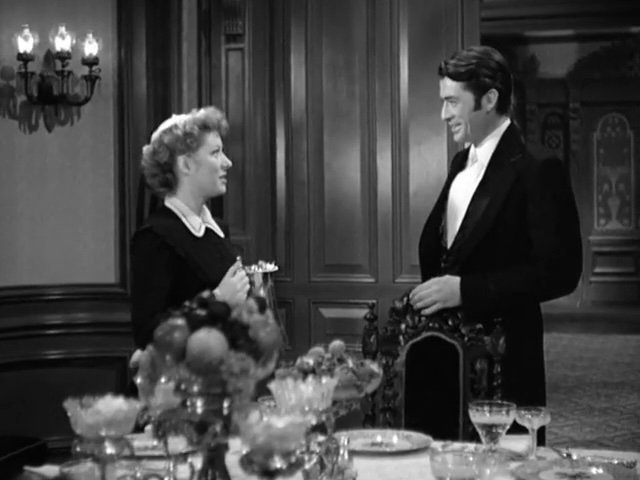
Movie description: An Irish maid falls for the son of her wealthy employer though her disapproving bitter disabled father and a strike at the steel mill complicate matters. It was released in 1945.
There are so many great stars in this movie: Greer Garson as Mary Rafferty, Gregory Peck as Paul Scott, Donald Crisp as William Scott Sr., Lionel Barrymore as Pat Rafferty, and Gladys Cooper as Clarissa Scott. It is directed by Tay Garnett and is based on the book of the same name by Marcia Davenport.
The movie is so much more than the above description. This is a movie about the immigrants who came to this country and helped build it by making the steel that was used for railroad tracks, high rise buildings and more, in the mid-to-late 1800s. It’s also a story of star-crossed lovers, similar to Romeo and Juliet, and of the divide between the classes. Also part of the storyline has to do with the formation of unions and the resistance to their creation.
In a way, this movie is a history lesson about how our country expanded and of how some men became millionaires by providing the materials necessary to that expansion. One of the segments at the end of the movie speaks to something we are considering during this time of upheaval. When Paul’s brother William Jr. wants to sell the mill after his mother’s death he discovers that she left her share of the mill to Mary so she can try to save it for Paul, who is the only sibling keeping the mill alive. Mary is trying to convince Paul’s sister Constance not to sell her share and so save it. She reminds Constance of a time when she, Constance and her husband Giles were in France and they witnessed a couple of men pour a little bit of their wine onto the ground. When they asked the waiter why the men did that, he told them that it was the custom in their country to give back a little of what they had taken from the land. And her viewpoint was that making steel was one way to give back not only from what they took from the land, but to the people who live on it. Up until that point in the movie Constance had been a selfish creature taking the money that the mill provided but not giving anything back to the workers or to society. If she saved the mill, that could be her way of giving back. The men would have meaningful work and the country would have the steel it needed to build. Constance agrees not to sell.
I know that the expansion of the European immigrants across the country is a controversial subject right now. There are so many things our ancestors did that were morally wrong from trying to annihilate the indigenous people who were already here, to enslaving the Africans we brought here to do our work for us. However, I think it’s important to examine all of our history and this movie depicts one part of it. In this movie, Paul comes up with a new kind of steel that is more flexible. It’s innovations like that that are also part of our history.
There are also many great themes in the movie: The affects of love and hate on Paul, Mary and their families, commentary on the society of the time, the differences between the wealthy and working class, and familial relationships, and the determination to improve the products needed to build a new society.
To Celeste and me, this movie is a gem not to be missed. We hope you enjoy our analysis. the movie is difficult to find, but once you’ve seen it, we hope you’ll agree that it is well worthy your viewing time.
And thanks to our new followers. Bring your friends along to join our discussions and our Facebook group.

