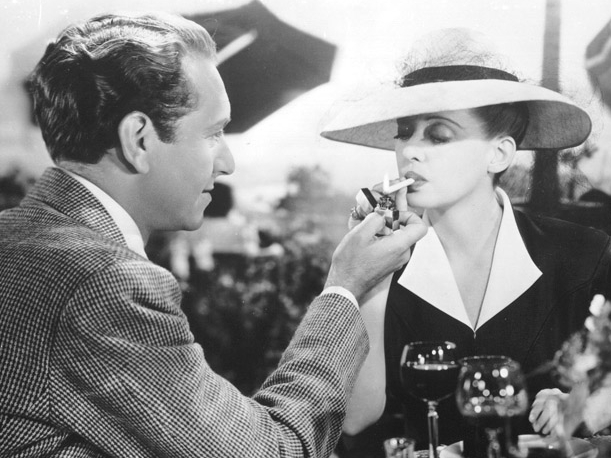
Now Voyager – A Relevant Classic

Bette Davis, Paul Henreid in Now Voyager

“Because one is content with oneself, one doesn’t need other’s approval. Because one accepts oneself, the whole world accepts him or her.” ~ Lao Tzu

“Dr. Jacquith says that tyranny is sometimes expression of the maternal instinct. If that’s a mother’s love, I want no part of it.” ~ Charlotte Vale in Now Voyager

One of the universal issues, in my opinion, that almost every human being must deal with is self-love and acceptance. It’s sad that we’re not taught to love ourselves. But then neither were our parents or theirs before them, so perhaps that situation is not so unexpected after all. Learning to love myself has been one of the most profound things I’ve undertaken in my life. And I’m not finished yet. So, when I first saw the movie, Now Voyager on Turner Classic Movies some years back, I could completely relate to Charlotte, played by Bette Davis, in her quest to not only learn to love herself, but deal with her extremely difficult mother.

Charlotte Vale’s story is nothing new, except that she comes from a old wealthy Boston family. So often we think that the rich have no problems whatsoever. This story shows that’s not always true. Charlotte has had no chance to become independent of her mother’s control or family ridicule, which results in profound self-loathing. At the beginning of the story, she has a nervous breakdown, as it was called in the 1941, and must go to Cascade, a sanitarium to heal from years of emotional abuse.

Dr. Jacquith, played by Claude Rains, the founder of Cascade, is a pioneer in the field of psychiatry. He and his staff give practical advice about how to deal with almost any situation, and with difficult people. In general Charlotte and her fellow patients socialize with each other, so they can see that they are not the only ones in pain. This gives them an opportunity to practice their skills and gives them confidence in being with other people. The book gives more details than the movie about what Charlotte learns and her tentative steps in using the techniques Dr. Jacquith teaches.

Once Charlotte has been pronounced well, her family ally, sister-in-law Lisa, and Dr. Jacquith send her on a long ocean cruise so she can practice her new interpersonal skills. On the voyage, Charlotte meets J. D. Durrance, played by Paul Henreid, a married man who is going to South America (France in the book) on business. They form a friendship and later fall in love, though their demonstrations of love never go past kissing and hugging. J. D., or Jerry as Charlotte calls him, is an honorable man. He has a demanding, shrewish wife and three daughters which puts a great strain on him. The youngest of his daughters, Tina, is showing the same kinds of symptoms Charlotte had before her breakdown. These facts are additional ties that bind Charlotte and Jerry together. When Jerry leaves the ship for his business meetings, he and Charlotte vow never to see each other again, even though they are deeply in love.

When Charlotte gets home after many months of being away from her mother, she is extremely apprehensive. However, Jerry has sent her a corsage of camellias, a nickname he gave her on the voyage. She knows he’s thinking of her and that fact gives her the courage to assert her independence when her mother begins making demands.

After that first evening, Charlotte and her mother form an unspoken truce. Over the next months, Charlotte walks a fine line between open rebellion and compliance to her mother’s demands, until one day when Charlotte breaks under her mother’s belittling. They have an argument and her mother has a heart attack and dies leaving Charlotte a wealthy heiress.

That’s when the story takes an interesting turn. Charlotte, thinking she killed her mother, goes to Cascade, where she finds Tina, Jerry’s daughter. At eleven years old, Tina is in bad shape. She’s thin, sullen, and a loner. Charlotte understands Tina better than anyone at Cascade and undertakes to be her friend. This friendship is beneficial to them both.

Charlotte’s journey is unusual for a story written in the 1940s. Though Charlotte becomes engaged at one point, when that relationship dies a natural death, she says she will remain resolutely single. After meeting Tina she devotes herself to not only helping her, but opening her home to her nieces and nephews. She also donates money to expansion at Cascade where Dr. Jacquith puts her on the board. At the end of the book, there is no indication that she and Jerry will resume their previous romantic relationship. However, Jerry agrees to allow Tina to continue living with Charlotte and the couple make a pact to work together to help her grow into a happy, independent, accomplished woman.

The movie is very much like the book, with few changes. It uses dialogue just as Olive Higgins Prouty wrote it. This is one of those classic stories I feel lots of people can relate to, and even gain some techniques for dealing with some of life’s more difficult situations. I highly recommend it.

Thanks for reading, liking and commenting. I appreciate it.

Lucinda Sage-Midgorden © 2018

Lucinda is the author of The Space Between Time, an award finalist in the “Fiction: Fantasy” category of the 2017 Best Book Awards. It’s a historical, time-travel, magical realism, women’s novel, and is available in all ebook formats at Smashwords, or you can find the ebook at iBooks or Barnes and Noble. I you prefer a physical copy, you can find a print-on-demand version at Amazon. To join her email list, click here. She will never sell the names on her list.
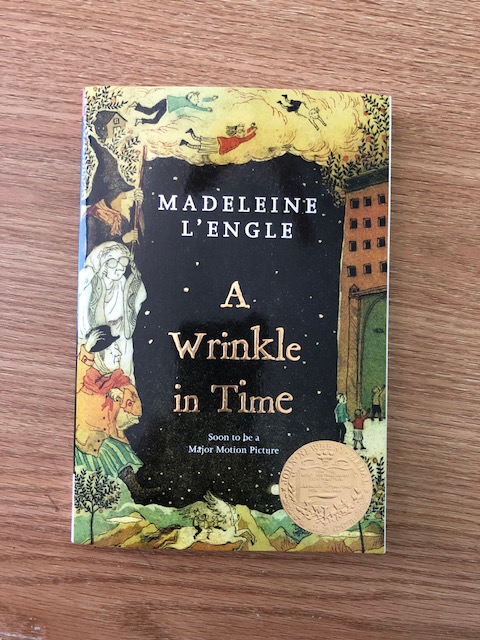
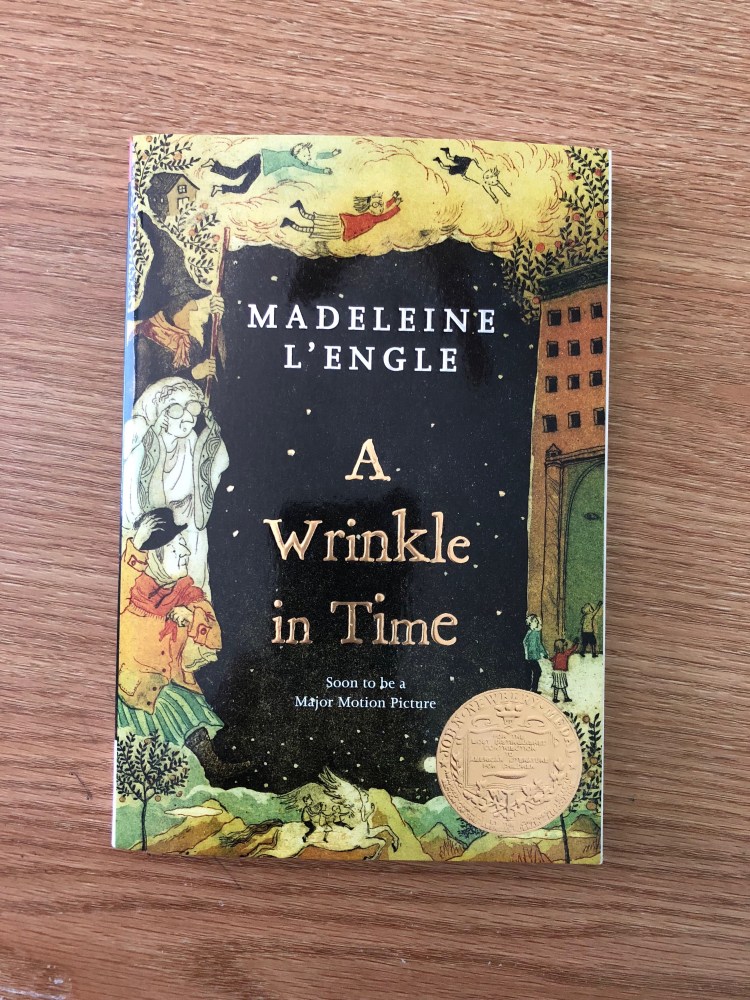
Game Changer – A Wrinkle in Time

“I don’t understand it any more than you do, but one thing I’ve learned is that you don’t have to understand things for them to be.” ~ Madeleine L’Engle, A Wrinkle in Time

“A book, too, can be a star, ‘explosive material, capable of stirring up fresh life endlessly,’ a living fire to lighten the darkness, leading out into the expanding universe.” ~ Madeleine L’Engle, author of A Wrinkle in Time

“What if we are here for a reason. What if we are part of something truly divine.” ~ Dr. Alex Murry, A Wrinkle in Time

What if a book/movie came into being that challenged our long held beliefs about who we really are? How would people feel about it? What would they think? Judging by the user reviews of the movie, A Wrinkle in Time, they’d hate it.

When I first read A Wrinkle in Time many years ago in the late 1980s, I loved it. That book was my introduction to the fantasy genre. I loved the blend of science and spirituality, the journey Meg takes from self-hatred to self-love. I could completely relate to her struggles because I to thought I was unlovable too. But one of my favorite segments in the book and the movie is when Meg gets a glimpse into the inner lives of three important people in her life, a girl who bullies her, her principal who does not understand her, and Calvin, the most popular boy at school. She gets to see that each one has a deep wound to deal with just like she does. That’s when she understands that we all need understanding and compassion.

Since the book was a Newberry Medal winner, I was completely surprised to discover that A Wrinkle in Time was rejected by publishers over thirty times. But then maybe I shouldn’t have been surprised, because it’s a story that challenges the way we perceive how the universe works. There are many planes of existence of which we, only using our five senses, are completely unaware. And the idea that our minds and hearts are much more powerful than we have previously believed is a central part of the book. The darkness that exists is inside us and the only way it can be vanquished is to nurture light of love within.

Barry and I went to see the movie version on Easter Sunday. I thought it was the perfect movie for that holiday because to me, Easter is about redemption, forgiveness and love. But when I went to read the user reviews on Internet Movie Database, everyone gave the movie one star rating. The headers told how much they hated the movie. When I read one that said, “I want to gouge out the part of my brain that remembers this movie,” I was so surprised. The movies I wish I could forget are dark, hopeless, humanity is coming to an end type movies, not ones full of hope. Then a lot of recent movies with similar hopeful story lines came crashing into my head.

If self-reflection, healing, and self-love are such horrible topics for a movie, then how do we explain the huge money makers from the last couple of years? Some of them were Doctor Strange, Beauty and the Beast, Wonder Woman, Justice League, Star Wars: The Last Jedi, and the biggest blockbuster of 2018 so far is Black Panther. Each one has a situation where darkness threatens to take over the planet or the universe and the solution to interrupt its progress is by finding inner balance and the strength of love. In the case of Doctor Strange, he’s willing to sacrifice himself to trap the dark entity it in a mindless time loop. Eventually the entity realizes the futility of doing the same thing over and over again expecting a different result and gives into Doctor Strange’s terms.

Those movies were blockbusters because most of them are action pictures with lots of fighting, and explosions to distract the audience long enough to get the final message across, that it’s only through finding peace within, that we’ll create peace without. Each of the main characters comes to the conclusion that they must deal with their wounds before trying to save the world. Those are the kinds of stories that are most interesting to me.

So what makes A Wrinkle in Time different than the above mentioned movies? I mean the visual effects are stunning and the cast does a good job. Is it just because Oprah’s in it? My theory is that it doesn’t try to trick the audience in any way. We learn pretty early on that in order to save her father, Meg’s going to have to do some deep inner work. That’s a scary prospect for some of us and this may be why some people hated the movie so much. Most of us try to avoid feeling pain using lots of different methods, but as Meg learns, you’ve got to embrace it to lessen it’s power.

I’m convinced that A Wrinkle in Time is going to end up being a beloved classic movie, just like It’s a Wonderful Life is now. When It’s a Wonderful Life came out, it did not get a good reception. But what would Christmas be without Mister Potter and George Bailey? We love to watch George fight against his true calling until that fateful day when his life seems to be falling apart and he gets the chance to see what the world would have been like if he’d never been born. George discovers that the love and compassion he shared with the people of his community was desperately needed. His one seemingly insignificant life sent out so many ripples of hope. And in the end all the good he did comes back to him ten-fold.

The message of both movies is that love is stronger than hate. Dr. Murry tells Meg, “I wanted to touch the whole universe, when I should have kept ahold of your hand.” He got seduced by his curiosity and theories. But Meg’s decision to love herself allows her to save her father, her little brother, Charles Wallace and herself. That’s why I love both the movie and the book of A Wrinkle in Time.

Thanks for reading, liking and commenting.

Lucinda Sage-Midgorden © 2018

Lucinda is the author of The Space Between Time, an award finalist in the “Fiction: Fantasy” category of the 2017 Best Book Awards. It’s a historical, time-travel, magical realism, women’s novel, and is available in all ebook formats at Smashwords, or you can find the ebook at iBooks or Barnes and Noble. I you prefer a physical copy, you can find a print-on-demand version at Amazon. To join her email list, click here. She will never sell the names on her list.

Miss Pettrigrew Lives for a Day

Frances McDormand as Miss Pettigrew

“Not everything comes along just when we want it. There are times when decisions just have to be made, or you certainly will miss out.” ~ Guinevere Pettigrew in Miss Pettigrew Lives for a Day

“I am not an expert on love, I am an expert on the lack of love, Delysia, and that is a fate from which I wish most fervently to save you.” ~ Guinevere Pettigrew in Miss Pettigrew Lives for a Day

Every once in a while I want to watch a movie, or read a book that just makes me laugh out loud so I can carry that happy feeling for a long while afterwards. Miss Pettigrew Lives for a Day is certainly that kind of story! But it’s so much more.

Sometimes story gems are discovered by film makers and the result is magic. If you haven’t seen the 2008 movie, which stars Frances McDormand and Amy Adams, you are missing out.

The book by Winifred Watson, has recently been republished by Persephone Classics and I’m so happy it’s in circulation. Persephone Classics has revived and republished several classics written by women. I’ll be looking for other titles from their shelves.

Miss Pettigrew Lives for a Day was first published in 1938. The movie is updated a bit with the addition of the beginning of WW II, some of the characters are combined, and events changed, but essentially it is the same story as the book. Much of the dialogue in the movie is exactly as Winifred Watson wrote it.

The story takes place in London. Miss Guinevere Pettigrew is a down on her luck 40ish gentlewoman who has been working, rather unsuccessfully, as a governess for many years. In the movie, we see her get fired from her job by a pompous woman taking sips from a glass of sherry, presumably her daily habit. The butler hands Guinevere her suitcase and basically throws her out without the wages she is owed. At the employment agency she faces a stern woman who is unwilling to recommend her for a new position. She sneaks an employment request card for a social secretary position but must wait until morning to attempt to get the job. In the meantime, she collides with a man who is getting out of jail, her suitcase opens and all her belongings are thrown to the wind. She is so embarrassed she walks away with only the clothes she wearing. From that moment on, Guinevere and the audience barely have time to catch a breath. She spends an uncomfortable night in a train station with no money, or prospects, except for the card in her pocket.

In the morning, she beats a path to the gorgeous flat of Delysia Lafosse an actress and nightclub singer. When Delysia opens the door, Geuinevere is thrown into an unfamiliar world. Delysia asks for her help in getting rid of her overnight male companion because another man, the one who pays for the apartment, is on his way. Feeling out of her depth, Guinevere swallows her misgivings, and plunges in. Next she helps Delysia get rid of the second man as well. Later a third man, Michael, shows up who is, by coincidence, the man who collided with her the day before. In each evermore desperate situation, Guinevere sheds her modesty and high ideals. She rises to the occasion helping not only Delysia, but her friends iron out kinks in their personal lives for which Delysia is eternally grateful.

I could relate to Guinevere because there have been times when I felt like I was too straight laced and unwilling to accept people for who they are. Getting involved in theatre helped me become more accepting. For Guinevere, meeting Delysia, who is almost her total opposite, changes her in the happiest of ways. Guinevere decides that perhaps she has been too rigid and embraces the glamorous life that Delysia and her friends lead if only for a day. She may never get another chance to be on the inside of life, as she describes it in the book.

I can relate to that desire to throw caution to the wind, to embrace life. I’ve even had periods when I’ve done that like the time my husband and I sold our house and took a trip around the world. Those kinds of times are the ones I cherish most.

Interestingly enough, I can also relate to Delysia. She’s much more outgoing than I am, and appears to be scatter brained, but she is open hearted and even perceptive. She sees Guinevere as a person of value who deserves to be treated well. Valuing others is something I strive for in my own life.

As the story progresses, we find out why Delysia welcomes Guinevere into her life so readily. Near the end of the story she says, ”For all the fancy apartments and fashion shows, do you know how close I am to having nothing? Every day I wake up and I think, if I make the wrong move, I could be out on that street with no clothes, no food, no job and no friends.” That’s the moment that Guinevere and Delysia become friends for life. Two seemingly dissimilar women sharing common fears. They understand each other.

This is one of those delightful stories that has a serious theme. We all need to be appreciated and understood. Delysia and Guinevere give that to each other with the result that both get their happy endings.

I recommend both the book and the movie if for no other reason than they are good for a hearty belly laugh. Laughing is good for the digestion and helps you sleep better. And can’t we all use a good laugh from time to time? But I also recommend it because Guinevere is a good example for us all. She lets go of long held beliefs that have kept her from enjoying life. Once she does that, all kinds of new and wonderful possibilities open up for her.

Thanks for reading. I appreciate your likes and comments. Have a delightful weekend.

Lucinda Sage-Midgorden © 2018

Lucinda is the author of The Space Between Time, an award finalist in the “Fiction: Fantasy” category of the 2017 Best Book Awards. It’s a historical, time-travel, magical realism, women’s novel, and is available in all ebook formats at Smashwords, or you can find the ebook at iBooks or Barnes and Noble. I you prefer a physical copy, you can find a print-on-demand version at Amazon. To join her email list, click here. She will never sell the names on her list.
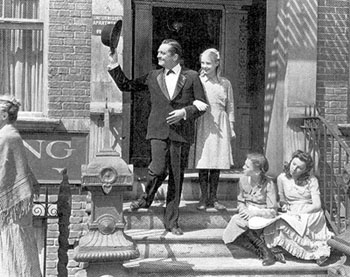
A Tree Grows in Brooklyn

“We can let the circumstances of our lives harden us so that we become increasingly resentful and afraid, or we can let them soften us, and make us kinder. You always have the choice.” ~ Dalai Lama

This spring is the fifth anniversary of beginning this blog. During the winter, I felt like my posts were getting stale and repetitious. I was considering giving up on it. I struggled with what to do, when I got the inspiration to write about two things I love, movies and books, I felt energized and inspired. There are so many great stories to explore.

Today’s post is about A Tree Grows in Brooklyn, by Betty Smith It’s a movie I almost always seem to catch in the middle, but it’s so compelling I watch to the end. I finally got to see it from the beginning recently and that’s when I remembered I’ve had the book on a shelf for a long time.

I love the Nolan family because I can relate to many aspects of their life. Katie and Johnny Nolan are children of immigrants living in Brooklyn. It’s the beginning of the 20th century. They’re poor, however, they are fortunate to have had some education allowing them to get a pretty good job. Even so, life becomes more complicated when the children begin to arrive.

The story is told from their oldest daughter, Francie’s point of view. She dearly loves her idealistic and imaginative father, as does everyone else, even though he’s an alcoholic and has a difficult time finding work because of it. Her mother, the practical one, keeps the roof over their heads by exchanging her cleaning services for rent. Francie and her brother Neeley do what they can to earn small amounts of money here and there to contribute to the family coffers.

Francie sees her broken down neighborhood as an enchanted place, in spite of the mean children and teachers at school. I love her because she’s unconventional, a dreamer, and bit of a loner like me. She loves reading, is a good writer, and has a fierce desire to improve her self through learning. In fact she and her father contrive to get her into a better school not far from her home.

One segment in the book, that is not in the movie, deeply affected me. Francie and Neeley have been invited to a party or pageant for poor children during the Christmas holidays at a nearby Protestant church. At the end of the program it’s announced there is one last treat. A young girl named Mary, comes out with a beautiful large doll which she is going to give to a girl in the audience also named Mary. Francie desperately wants the doll. She’s never had one of her own. Even though the peer pressure to remain silent is strong, Francie can’t resist. Thinking she’s lying, she says her name is “Mary Frances Nolan.” The doll is given into Francie’s waiting arms.

As she walks back to her seat, the mistress of ceremonies expounds about the generosity of little rich Mary who is willing to give away her doll in true generosity. Francie blinks back tears thinking “Why can’t they just give the doll away without saying I am poor and she is rich? Why couldn’t they give it away without talking about it?” I was asking the same question. Though we were not as poor as Francie’s family, there were times when I was given something in the same spirit as the doll was given to Francie. It’s humiliating.Why do some of the more fortunate people want to make sure the less fortunate are grateful for their charity. To me it should be given freely, even anonymously.

Interestingly, the other poor girls exact their revenge on Francie as she walks back to her seat by whispering, “Beggar, beggar, beggar,” as if upholding their pride is better than trying get something they really want.

The only thing Francie regrets about getting the doll is lying about her name. Knowing that her mother hates anything that smacks of charity, Francie tells her that the doll was a prize. Neeley keeps her secret. Francie, fearing she’s going to hell for lying, suddenly remembers something important. Her confirmation is coming up soon and she decides then and there to choose Mary as her middle name so that the lie will become the truth. When she asks her mother if she may choose Mary as her middle name, her mother says “No. … when you were christened, you were named Francie after Andy’s girl … but you were also named Mary after my mother. Your real name is Mary Frances Nolan. When I read that, I felt as Francie did, that God had given her a special gift. In a way it was an affirmation that her dreams could come true.

Even though there are bright spots in the story like getting the doll, Francie begins to truly understand the struggles her parents go through. As she gets closer to graduation from eighth grade, her father’s condition gets worse. He’s out of work most of the time, which means meals are infrequent. When Katie announces that a third baby is on the way, Johnny tries to quit drinking cold turkey so he can work but It’s too late. He dies of liver failure and pneumonia leaving the family in dire circumstances.

Though Johnny was incapable of providing for his family in life, they learn something remarkable about him. He had lots of friends. And it’s one of those friends, Mr. McGarrity who comes to the family’s rescue. He owns the bar where Johnny hung out. Even though Johnny owed him money, he misses his stories, as do his other patrons, so he hires Francie and Neeley to do odd jobs so he can help the family make ends meet.

I think one of the things that makes this story timeless is the love the Nolans have for each other in spite of their failings and circumstances. They also have a deep conviction that life is going to get better. Katie is the driving force behind this. When she discovers she is pregnant with Francie, this is in the book not the movie, she asks her mother for advice. And her mother, who can’t read, says that the family should read together every night. So Katie gets a Bible and an old copy of the complete works of Shakespeare and she begins reading to her babies. When they get older, they read and by the time the children go to school, they already have quite an education. It’s one of the little things that makes the Nolan family different than most of their neighbors.

In the end, Katie’s determination to make their lives better pays off. She marries a kind and loving police officer who knows how the family has struggled. Both Neeley and Francie get to go to college. It’s the perfect story of a poor family making their dreams come true by steadfastly loving each other, dreaming of a better life, and being willing to work hard to get it.

Thanks for reading, liking and commenting on my posts. I hope you’ll consider checking out A Tree Grows in Brooklyn. I think it will be well worth your time.

Lucinda Sage-Midgorden © 2018

Lucinda is the author of The Space Between Time, an award finalist in the “Fiction: Fantasy” category of the 2017 Best Book Awards. It’s a historical, time-travel, magical realism, women’s novel, and is available in all ebook formats at Smashwords, or you can find the ebook at iBooks or Barnes and Noble. I you prefer a physical copy, you can find a print-on-demand version at Amazon. To join her email list, click here. She will never sell the names on her list.