Fear and Decisions

Fear“Nothing ever goes away until it teaches us what we need to know.” –Pema Chodron

“Look not mournfully into the past. It comes not back again. Wisely improve the present. It is thine. Go forth to meet the shadowy future, without fear.” —Henry Wadsworth Longfellow

Fear is a liar. It whispers in our ear that if we control that person, circumstance or situation, we’ll feel better. But fear lives inside not outside of us. So when your attempts to control outside events fail, it grows into a monster threatening to eat us alive. It cripples all aspects of our life, physical, mental, emotional and spiritual, unless its faced. I know this from personal experience.

There have been times in my life when I made a choice based on fear’s advice. One instance was when, as a new college graduate, I took a job I knew in the pit of my stomach was not the right situation for me. Fear said, “Take the job. You might not get another offer. You need the money.” Foolishly I listened and for two years I worked for a toxic company. It was only when I nearly had a nervous breakdown, as we used to call them, that I woke up and faced my fear. Leaving that supposedly secure position was one of the best decisions of my life.

Elections are a prime time for politicians and commentators to spew fear. Natural disasters, war, or health threats are other times when fear whispers to those vulnerable to its call. Right now we’re in a vortex of events where, in my mind, Fear is rejoicing that there are so many people to feed upon. That’s a metaphor I chose on purpose. Fear feeds upon us.

I want to make it clear, we ALL feel fear from time-to-time. We can’t escape that fact. However, we can reduce or eliminate it with practice.

This is what I’ve learned in my process of facing fear. Its not strong. We think of fear as all powerful. Maybe because of the powerful emotions it evokes. But fear can’t stand up to scrutiny. When I’ve allowed myself to face my fear fully, then look beyond it to the myriad possibilities that fear is trying to hide from me, it dissolves. Not all at once, but the more I turn away from my fear, the more it shrinks.

There have been a number of times in my life when I know my family, and even some of my friends did not understand the choices I made. They thought I was crazy. Quitting my teaching job to become a writer, selling my house to fund a trip around the world, quitting that first job that was so toxic to get my Master’s in theatre. Oh, I’m sure many of my family members still shake their heads at the choices I’ve made.

But the thing is, it’s the people who look fear in the face that we admire. I admire Gabby Giffords, who was my Congresswoman, and now advocates for stricter gun regulations. Malala Yousafzai who promotes education for girls all over the world. The fearful tried to silence them by shooting them, but when they didn’t die, those two women became more powerful than ever before.

There are so many other people who’s names we don’t know, who are facing fear every day and winning. They are becoming powerful and doing great and creative things that contribute to all of humanity. We need them all if we’re going to create a new way to live that is more loving, more sustainable, more joyful.

We can’t control events outside ourselves. All we can control is our response to what happens to us. We can control our response to fear. Remember that when you go into the voting booth in a few weeks, or choose what to watch on TV or which pundits to listen too. Are they spreading fear, or hope?

It’s my prediction that the tide will turn away from fear. That we’ll take responsibility for embracing hope and love instead. That we’ll accept that life is unpredictable which makes living exciting. There can be a bright future ahead of us, if we choose it.

Lucinda Sage-Midgorden © 2014

Facebook
Twitter
Goodreads
LinkedIn

How I Got the Idea for My Book

Dad, Lucinda, Mom
Dad, Lucinda, Mom

“If you want your children to be trustworthy, you have to trust them.” –James Calvin Sage

“People who hurt others are wounded themselves. They think hurting others will help them feel better, but that never works. It makes them feel worse. The only way to help them heal is to love them.” –James Calvin Sage

When authors are interviewed, they are almost always asked, “How did you get the idea for your book?” I’m about to publish my first novel, The Space Between Time, and I’ve been thinking about the answer to that question. The answer is: I wrote it for my Dad.

I started the book in 1999 after a visit to my parents. They lived in Quartzsite, Arizona at the time. My father had his first open heart surgery in the mid-80s and though I knew somewhere in the back of my mind that he would die of the disease one day, up until that trip, he had seemed much the same as he’d always been. That weekend I knew that he’d taken a turn for the worse.

On the five hour drive home, the idea for the book formed in my mind. I wanted to write about a father and daughter and their close relationship. I also wanted to have the twist of a character in the present with some connection to father and daughter but that storyline was very unclear to me.

When Barry and I got home, I sat down at the computer and began writing the storyline that was most vivid, the one set in 1858 Vermont with Morgan and her father Thomas. Of course, the character of Thomas Carlyle was designed after my Dad. In tribute to him, I gave him the professions he would have loved, minister, scholar, writer and teacher. Though, in a way those professions did describe my Dad. His daytime job was as a machinist, but he was a lay minister in our church as well. And even though he’d dropped out of school because of undiagnosed dyslexia, he taught himself to read, which he did voraciously. My father was infinitely curious about everything. So, in a way, he was very much like Thomas Carlyle.

The other things that I incorporated into Thomas that were like my Dad, was his wanderlust, and a deep love and understanding of his fellow human beings. Though Thomas hadn’t traveled a great deal, he wanted to travel west to build a new life. Unfortunately, he fell ill, making the trip impossible for him. He does, however, encourage Morgan to make the journey on her own and build a new life for herself. That’s very much like my dad. He was always encouraging us to go do things he’d never been able to do himself.

Unfortunately, or perhaps fortunately, shortly after I started the book, I had to set it aside because I began teaching full-time. So the book sat unfinished for eleven years. In the mean time, things happened to me that helped me understand how to write the timeline in the present. Also, my father died in 2004. That was ten years ago this month. It’s fitting that the novel that he inspired is now nearly ready for publication. I’ve got a better perspective on my relationship with my Dad, what I learned from him and how those lessons helped me navigate some deeply challenging times in my own life. I’m grateful to have had him as my father. I know he’d be proud of my accomplishment.

Lucinda Sage-Midgorden © 2014

Facebook
Twitter
Goodreads
LinkedIn

Fall Cocoon

My Favorite Books
My Favorite Books

“How beautiful it is to do nothing at all and then rest afterwards.” –Spanish Proverb

“I make no secret of the fact that I would rather lie on a sofa than sweep beneath it.” –Shirley Conran

“There is virtue in work and there is virtue in rest. Use both and overlook neither.” –Alan cohen

Every fall I feel myself going into hibernation, or cocoon mode. It feels like lots of transformation is going on under the surface, but whatever changes are happening to me aren’t ready to see the light of day as yet. I’m not quite sure what it’s all about, except that I have to stop trying to do so much and allow the process to happen. All I know is I’ve entered a season of quiet, and I must honor it.

In this country we think that to be worthwhile, we must be active, always doing, accomplishing something. I think it’s our Puritan work ethic which is slowly killing us. Work is good if it’s meaningful, but too much is detrimental to our health. Our bodies are designed to rejuvenate in sleep. The mind needs to be quiet. We need to refresh and renew every so often, instead of pushing ourselves to the limit. I believe that when we don’t allow ourselves to relax, we develop insomnia, nervous disorders, and other health problems. I’m not a doctor, or scientist. I didn’t take the time to research my statements. I’m just going by what happens to me when I try to push myself too hard.

This past spring, we had a short visit from a friend from Australia. He’s a Law Professor. His University gives him $25,000.00 travel stipend every year. They want him to go explore, make connections, get out of the office and learn something new. On top of that Australians get four weeks of paid vacation, and paid maternity leave. I’m envious. There are times when I wish I lived in a country that valued planned idleness and play, because that’s when inspiration and innovation come to us. I know my mind works much better when I’ve allowed myself to rest and focus on something other than the current project on which I’m working.

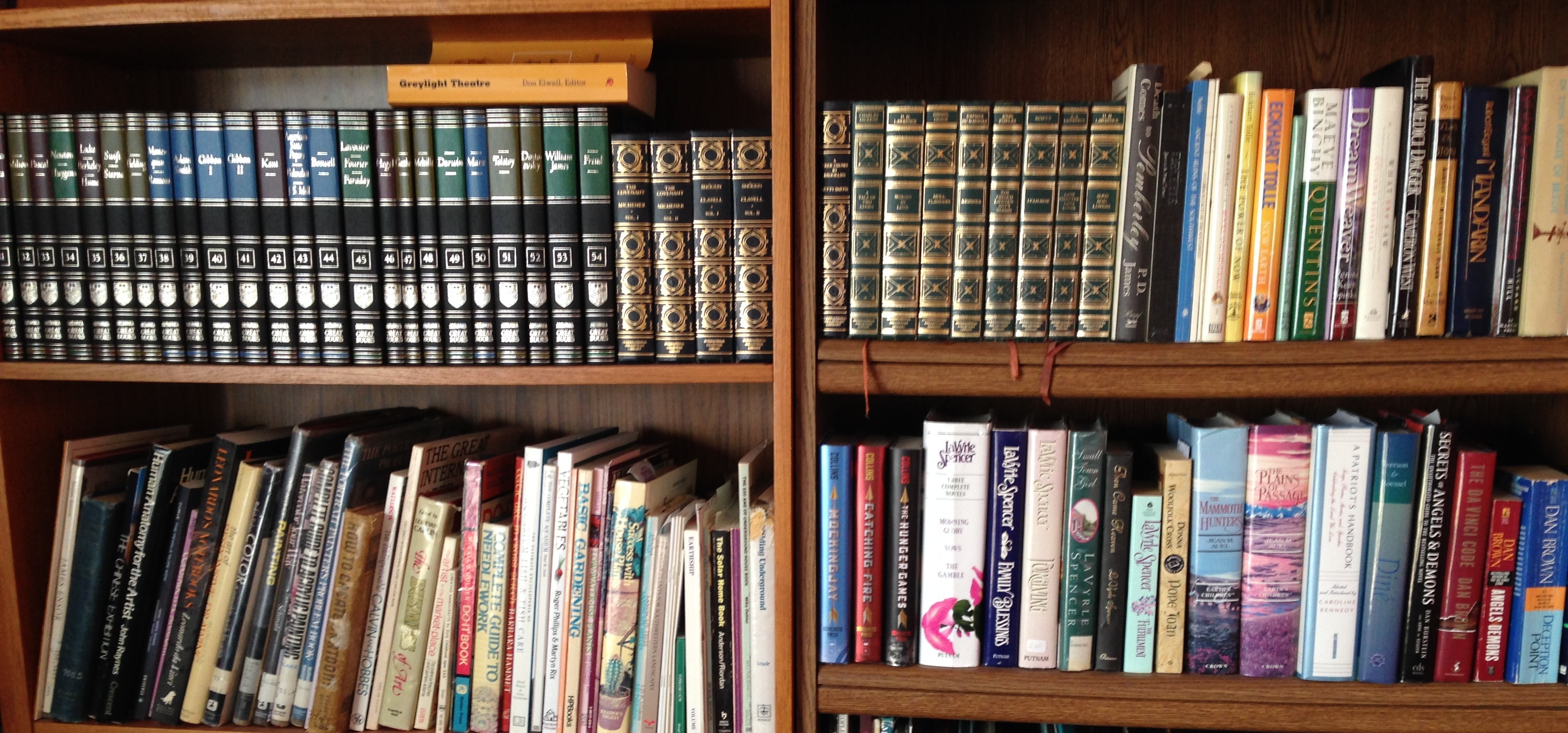
So, I’m going to follow my inclination to read lots of books, allow what I write to meander in fanciful ways. I’m going to take naps and generally enjoy myself this fall and winter. I hope you take some time off to play and relax when you need it too.

Lucinda Sage-Midgorden © 2014

Facebook
Twitter
Goodreads
LinkedIn

History Repeats Itself Until…

Franklin and Eleanor Roosevelt

“We gain strength, and courage, and confidence by each experience in which we really stop to look fear in the face…we must do that which we think we cannot.” –Eleanor Roosevelt

“Far better is it to dare mighty things, to win glorious triumphs, even though checkered by failure…than to rank with those poor spirits who neither enjoy nor suffer much, because they live in a gray twilight that knows not victory nor defeat.” –Theodore Roosevelt

“Competition has been shown to be useful up to a certain point and no further, but cooperation, which is the thing we must strive for today, begins where competition leaves off.” –Franklin D. Roosevelt

This weekend my husband and I binge watched The Roosevelts: An Intimate History. We were struck with how similar events during Franklin D. Roosevelt’s Presidency are to events that have happened in the last few years, and are still happening today. Isn’t that always the way, though. Even in our personal lives. We repeat lessons until we pay attention to what we need to learn from them.

The events we’re living with right now are so bleeping uncomfortable. Add to that the personal struggles each of us are going through and it’s no wonder we’re all freaking out a little bit. However, you may think I’m weird, but, for the most part I’ve learned to welcome challenges.

In my personal life, when I’m feeling uncertain or fearful, I know I’m getting a huge blessing. The Universe is telling me there is something extraordinary I need to be looking at. If I heed the call instead of poking my head in the sand, I’m always rewarded.

Right now the challenges I’m facing all have to do with the publication of my first novel, The Space Between Time. I’m in new territory here. I’ve never written a novel before and something tells me my life will be irrevocably changed when the book comes out.

Part of the reason I feel this way has to do with something that happened one day shortly after I made the decision to quit teaching. I was cleaning up my room at the end of the school year, thinking about my decision to teach one more year. But as I was packing, the thought came to me that if I chose I could trust the Universe and quit at that very moment. Instead of squashing the possibility, I considered it, which brought a flood of what I can only describe as ecstasy. I knew without a doubt I was on the right path. That I was supposed to take this step into being a writer. The extraordinary thing about that feeling was it lasted through the rest of my packing, and the hour drive home.

It ended up that I chose not to quit that day. I took my signed contract to the school district office on the deadline day with a little bit of a heavy heart. But, that last year of teaching was amazing, and I don’t regret my decision. However, ever since my extraordinary experience, I’ve had this feeling that no matter what, I’m meant to be a writer. Every morning when I wake up I know I get to do this amazing job and I feel immensely blessed.

That doesn’t mean that thinking about all the possibilities of my future as a writer doesn’t make me crazy sometimes. I’m an introvert, so the thought of attracting even a little bit of attention is daunting. But I’m building a new life for myself, like my two main characters in my novel, Jenna in the present, and Morgan in the past. I’m choosing to step out of my comfort zone following where Spirit leads me. I wouldn’t change my decision to become a writer for the world.

Theodore Roosevelt
Theodore Roosevelt

That brings me back to Theodore, Eleanor and Franklin Roosevelt. They are fantastic examples of people who looked for and followed their calling. They weren’t perfect people. They each suffered great tragedies in their lives. But they didn’t let those stop them from embracing life to the fullest. They did the very best they could with the life they had. That’s what I want to do. I want to do the best I can with this life I have, because doing that will influence someone, maybe a lot of someones. And isn’t that why we’re here? To make connections with, learn from, and inspire each other?

Lucinda Sage-Midgorden © 2014

Facebook
Twitter
Goodreads
LinkedIn

What’s Important in Life?

Cochise Campus Flower

“Don’t get me wrong, I admire elegance and have an appreciation of the finer things in life. But to me, beauty lies in simplicity.” –Mark Hyman

“Simplicity is the glory of expression.” –Walt Whitman

“I continue to be drawn to clarity and simplicity. ‘Less is more’ remains my mantra.” –Stephane Rolland

When I was growing up, we didn’t have lots of luxuries. I can’t say I missed them. We had plenty to eat and roofs over our heads. (We moved a lot.) My parents didn’t dabble in the Stock Market. They were just making a living to support us. Life was pretty simple. I didn’t know anything different. I was comfortable. That’s all that mattered.

During college, I took theatre classes. Celia Schall, one of my mentors, always said to her actors, “Less is more.” As an actor, I understood what that meant, but not so much in living. I wanted to have the big house, the nice car and financial freedom. However, when Barry and I got married, even though we both worked, we struggled. We struggled to keep up with everyone else.

It wasn’t until much later that I realized, we struggled because first, we set our sights on having all the stuff the advertisers said we needed, and second, we thought that’s what we were supposed to do. We thought we needed to have certain “things” to make us happy. Boy were we wrong. Happiness grows out of choosing to be happy, and for being grateful for what you have. It has nothing to do with owning the prescribed number of possessions.

At some point, we chose to live a simplified life. Barry and I decided not to go for all the trappings for which everyone was pining. Some of the choice to live simply was made for us, because we didn’t have a six-figure income, but another part of our decision had more to do with not wanting to hop on the merry-go-round of acquiring so many things to take care of and protect. Don’t get me wrong, we still have a lot more things than we’d like. It’s easy to get caught in the trap of accumulating stuff.

Most of the time, we don’t think the way we live affects other people, so I was surprised when my in-laws said, “We admire the simple life you two have chosen to lead.” Wow. I didn’t think anyone had noticed. That made me want to continue to put value in intangibles rather than in material things.

Our version of living simply is to cook at home most of the time, drive hybrid cars, recycle as much stuff as we can, to refrain from buying all the latest gadgets, and to pay for the minimum channels on the TV. We’re not big consumers. I think those ads where women have to check their shopping site every morning, or have shopping competitions are ludicrous. Capitalism is on it’s way out. We’ve got to come up with a new economic model.

To help create a new personal economic model, and become financially independent, we’re paying off all our credit card debt, which means we live within our means. Using things until they are worn out instead of getting the latest fad item. Soon we’ll make changes to our home to make it more energy efficient so the utility company can pay us, instead of the other way around. But the biggest lesson of all is that gratitude is a powerful tool toward living a happy and fulfilling life. No matter the amount of things I stockpile, they can’t make me feel better about myself.

I wonder where we got the idea that external things are the key to happiness?

About a week ago, a friend of mine pointed out in a response to a post that Americans consume most of the world’s resources. She’s right. We do. That’s not good. Perhaps the economic downturn of the last few years has helped us wake up to the fact that we can do with a lot fewer possessions. I mean we can’t take them with us. It’s not the possessions that make life worth living anyway. It’s what we give of ourselves, it’s the connections we make, the love we share.  It’s the lovely moments with friends and family. It’s the moments of helping others that we take with us.

Here’s a link to an article, “Living cheap is the new green,” that will help you get started if you want to live more cheaply and simply.

I’m grateful that I’ve chosen to live a simple life. Now I’ve got to go clear out some more clutter.

Lucinda Sage-Midgorden © 2014
Facebook
Twitter
Goodreads
LinkedIn