Words Are Important

“Language matters. It’s the raw material of story, it changes how we feel about ourselves and others, and it’s a portal to connection.” ~ Brené Brown, Atlas of the Heart 

I agree with Dumbledore, words are our most inexhaustible source of magic. They are capable of inflicting injury and healing it. So, reading Atlas of the Heart, by Brené Brown from which the above quote comes, has been an eye opening experience for me. It explores eighty-seven emotions that we can experience. The book’s purpose is to help us gain a better understanding of ourselves. When I read the definitions of some of them, I was finally able to put a word to some long unexpressed emotions that I had not had words for previously.

For example, when I read the definition for anguish, I wept because I was finally able to put a name to the way I felt twenty years ago when I was forced out of a most beloved teaching position. The definition expressed perfectly my lack of focus, of being in a fog, of shock and humiliation. (Humiliation is another of the emotions described in the book.) I wept and then I felt awe at how the Universe works. Because losing that job propelled me into deep self-examination and search for meaning. It also allowed me to become open to other bigger possibilities for my life. And in the end, I’m so grateful that I wasn’t allowed to continue teaching at that school because I love the life I have built. I was forced to come up with grander dreams that bring me so much joy.

In another section of the book, I was taken aback by Brené’s definition and discussion of contempt. She credits two writers, Arthur C. Brooks who in an article he wrote for The New York Times in March of 2019, sites an article in the 2014 publication, The Proceedings of the National Academy of Sciences about “motive attribution asymmetry.” Motive attribution asymmetry perfectly describes the wide ideological divide between political groups all over the world. Each group thinks that they are driven by benevolence, while their opponents are driven by hatred. It’s evident among Republicans and Democrats, Palestinians and Israelis, conservative and progressive religious organizations. The list goes on and on.

When I first read this section of the book, I wanted to deny that I feel that my side of the political landscape is all about helping our citizens live better lives, while the other side is selfish and all about gaining more and more wealth. Hmm, I suffer from motive attribution asymmetry. That was a little hard to swallow.

In the days since these realizations, I’ve been paying a lot more attention to the words I speak and those spoken to me. I’m noticing my emotions because naming my feelings is the only way to release them. I could go through life not doing any kind of self-examination. If I chose to do that, I would assume that everything that happens to me comes from the outside and I have no control over it. But, if I track my experiences and acknowledge that my response is internal, I have control. I can heal the dark places within and move on.

I hope you’ll consider reading this book, because we can’t do any real change if we don’t understand how we feel about our experiences.

Blessings to all of you who follow me, both old and new.

Lucinda Sage-Midgorden © 2022

Lucinda is the author of The Space Between Time, an award finalist in the “Fiction: Fantasy” category of the 2017 Best Book Awards.

Have you ever experienced life shattering events? Yeah, most of us have. In The Space Between Time, Jenna Holden gets slammed by her fiancé walking out, her mother’s untimely death, and losing her job all in one week. But she receives unexpected help when she finds her three-times great-grandmother’s journals and begins the adventure of a lifetime.

The Space Between Time is available in all ebook formats at Smashwords and for Kindle at Amazon, or you can find the ebook at iBooks or Barnes and Noble. If you prefer a physical copy, you can find a print-on-demand version at Amazon. Stay tuned for news when the audiobook version is published.

Lucinda is also the host of Story-Power a podcast where she and her guests discuss their creative endeavors, and/or the stories that have changed their lives. It’s available here on Sage Woman Chronicles and on Apple, Google, and Spotify podcast apps. Please rate and leave a review. It helps people find me.

What Do We Owe Our Fellow Human Beings?

Earth from the Moon

“You cannot hope to build a better world without improving the individuals. To that end, each of us must work for his own improvement and, at the same time, share a general responsibility for all humanity, our particular duty being to aid those to whom we think we can be most useful.” ~ Marie Curie

Ever since the Neil Young, Joe Rogan news broke, I’ve been thinking about what we owe our fellow human beings. I’ve only heard snippets of the controversy but I ask myself, is it okay to allow misinformation to spread? Is it okay to take a stand against a social media company for the content they allow? Do public figures have the right to share their opinion or to explore controversial subjects? And is it okay for us to vilify another person for the things they say and do that we don’t agree with?

A few days later, the Whoopi Goldberg controversy was in the news referring to her statements about the Holocaust. Some public figures accused ABC of overreacting for suspending Whoopi when she said that “…the Holocaust was not about race, it was about man’s inhumanity to man.” Whoopi clarified on The Late Show With Stephen Colbert, that she thought she and her fellow View hosts were having a conversation. One where everyone had a chance to share their opinion, then explore the different facets of the issue and hopefully learn something from the discussion. She also said that her opinion is that the Holocaust is about ethnicity, not about race, which she explained to Stephen Colbert. But, she also said she’s willing to learn from further conversation, if she’s wrong. 

A day or so ago, Barry told me about a recent StarTalk Radio episode where Neil deGrasse Tyson talked with with sociologist Nicholas Christakis about his book Apollo’s Arrow: The Profound and Enduring Impact of Corona Virus on the Way We Live. This episode aired on January 18, 2022. It’s interesting to hear that plagues, and pandemics throughout human history were also rife with misinformation. In a way, that was comforting to hear, in another way it’s sad that we haven’t learned much from the past. 

One thing that occurred to me as I was thinking about what I’d write in this post, is the fact that I’m a public figure. My audience isn’t very large, but my blog posts and podcast episodes are out in the world for anyone to consume. So far, people seem to like what I write and the conversations I have with my guests. Yet, the day will most likely come when someone will take exception to an opinion I or one of my guests express. In such a situation, what is my responsibility to my consumers?

It’s happened to me before. When I was in college, the campus minister delivered a very conservative Valentine’s Day sermon about chastity, and … well you know the drill. Rick Sarre, an Australian friend of ours wrote an op ed piece in the school newspaper challenging the minister and his point of view. That started a controversy, which my op ed piece defending and expanding on Rick’s turned into a conflagration. Both Rick and I were vilified, not just by current students, but by alumni as well. Many of the objections to what we wrote had nothing to do with a true discussion. They were about schooling us in our incorrect thinking. We challenged the status quo, and THAT was our offense.

What I believe, because I was taught this, is that I do have a responsibility to my fellow human beings, to listen to and care for them even if they have vastly different experiences and opinions from my own. But it’s also my responsibility to share my own point of view. That’s how true conversations are supposed to go. I express my opinion, you express yours, which might be different, and we keep examining the different aspects of the issue until we either come to a consensus, or we agree to disagree. The challenge and hope is that in the end, we can still appreciate each other’s right to our point of view, and even learn something vital from them. 

Maybe what we need to do is learn how to converse with each other again. Caring for someone is committing to actually listening to them on an active level; listening with our thoughts, and emotions. As Brené Brown’s latest book, Atlas of the Heart examines, we all have the same emotions even if we don’t live in the same location on the planet. So, if we are paying attention, have compassion, and empathy for one another, we can find some common ground. But to do that, it takes willingness to be open and vulnerable. That’s hard to do sometimes especially when we’re wounded ourselves. That’s why working on ourselves is so important. It’s pretty hard to show compassion for someone when all we want to do is protect ourselves.

I’m still thinking about my responsibility to all of you. For now, I’ll be as honest about what’s going on with me and what I’m thinking as I possibly can.

Welcome new followers. Thanks to all of you who read, like, and comment on these posts.

Blessings,

Lucinda Sage-Midgorden © 2022

Lucinda is the author of The Space Between Time, an award finalist in the “Fiction: Fantasy” category of the 2017 Best Book Awards.

Have you ever experienced life shattering events? Yeah, most of us have. In The Space Between Time, Jenna Holden gets slammed by her fiancé walking out, her mother’s untimely death, and losing her job all in one week. But she receives unexpected help when she finds her three-times great-grandmother’s journals and begins the adventure of a lifetime.

The Space Between Time is available in all ebook formats at Smashwords and for Kindle at Amazon, or you can find the ebook at iBooks or Barnes and Noble. If you prefer a physical copy, you can find a print-on-demand version at Amazon. Stay tuned for news when the audiobook version is published.

Lucinda is also the host of Story-Power a podcast where she and her guests discuss their creative endeavors, and/or the stories that have changed their lives. It’s available here on Sage Woman Chronicles and on Apple, Google, and Spotify podcast apps. Please rate and leave a review. It helps people find me.
Movies Transport Us When We Need It Most

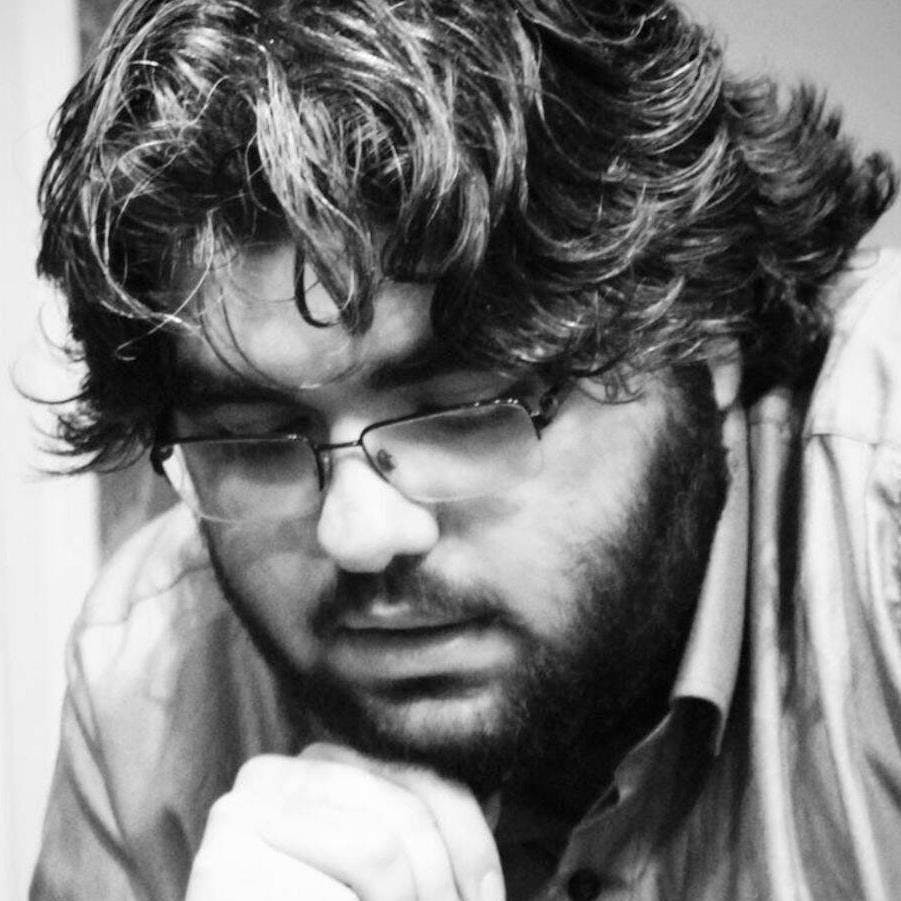
A bearded nerd from Iran in his mid 20’s, with a particular interest in the motion pictures as a hobby, career and general life. Has a very high opinion of Jeremy Irons, adores Westerns and Musicals and loves movies from the 1960s.

Ali Khamseh

Ali Khamseh YouTube Channel, LinkedIn, Instagram

Hammer Film Production Ltd., Christopher Lee, Peter Cushing

Arizona Dream (1993) Emir Kusturica, Director, David Atkins and Emir Kusturica, Writers

#PodMatch What I call, “A dating site for podcasters and their guests.”

Dracula: Prince of Darkness,(1966) Terence Fisher, Director, Based on a character by Bram Stoker, Jimmy Sangster and Anthony Hinds, Screenplay

The Devil Rides Out, (1968) Terence Fisher, Director, Dennis Wheatley, Novel, Richard Matheson, Screenplay

The Curse of Frankenstein, (1957) Terence Fisher, Director, Mary Shelley, based on her novel, Jimmy Sangster, Screenplay

The Gorgon, (1964) Terence Fisher, Director, J. Llewellyn Devine, Story, John Gilling, Screenplay

Horror Express (1972) Eugenio Martin, Director, Arnaud d’Usseau, Julian Zimet, Screenplay

New Hammer films:

  The Woman In Black, (2012), James Watkins, Director, Susan Hill, Novel, Jane Goldman, Screenplay, Staring, Daniel Radcliffe

  Let Me In, (2010) Matt Reeves, Director, Matt Reeves, Screenplay based on John Ajvide Lindqvist for “Låt den rätte komma in”

  The Resident, (2011) Antti Jokinen, Director, Antti Jokinen, Robert Orr, Screenplay

Star Wars: Episode IV A New Hope, (1977) One of the most famous movies on the planet

Firefly, (2002 – 2003) TV Series created by Joss Whedon

Serenity, (2005) Joss Whedon, Director and Screenplay

Logan, (2017) James Mangold, Director and Story, Scott Frank, Michael Green, Screenplay

The Father, (2020) Florian Zeller, Director, Christopher Hampton and Florian Zeller, Screenplay

Silence of the Lambs, (1991) Jonathan Demme, Director, Thomas Harris, Novel, Thomas Harris, Ted Tally, Screenplay

The Capture of the Green River Killer, (2008) TV Mini Series Norma Bailey, Director, Dave Reichert, Book, John Pielmeier, Writer

Sergio Leone, Italian Director

The Good, The Bad, and The Ugly, (1966) Sergio Leone, Director, Agenore Incrocci, Screenplay

Eli Wallach, American Character Actor

The Godfather, part III, (1990)Francis Ford Coppola, Director, Mario Puzo, Francis Ford Coppola, Screenplay

My Fair Lady, (1964) George Cukor, Director, George Bernard Shaw, Play, Alan Jay Lerner, Screenplay, Frederick Loewe, André Previn, Music 

Mary Poppins, (1964) Robert Stephenson, Director, P.L. Travers “Mary Poppins” books, Bill Walsh, Don DaGradi, Screenplay

Camelot, (1967) Joshua Logan, Director, T.H. White, Novel, “The Once and Future King”, Alan Jay Lerner, Screenplay, Frederick Loewe, Lyrics, Alfred Newman, Conductor

Ursula in The Little Mermaid, (1989) Ron Clements, John Musker, Directors, Hans Christian Andersen, Fairy Tale, John Musker, Ron Clements, Screenplay 

Scar in The Lion King, (1994) Roger Allers, Rob Minkoff, Directors, Irene Mecchi, Jonathan Roberts, Linda Woolverton, Screenplay

AK88 Studios, Ali’s other YouTube channel.

Ramadan, Rosh Hashanah

The Lighthouse, (2019) Robert Eggers, Director, Robert Eggers, Max Eggers, Screenplay

News of the World, (2020) Paul Greengrass, Director, Paulette Jiles, Novel, Paul Greengrass, Luke Davies, Screenplay

Bill and Ted Face the Music, (2020) Dean Parisot, Director, Chris Matheson, Ed Solomon, Screenplay

Pig, (2021) Nicholas Cage, Star, Michael Sarnoski, Director, Vanessa Block, Michael Sarnoski, Screenplay 

Annette, (2021) Leos Carax, Director, Ron Mael, Russell Mael, Original Story

Suicide Squad, (2016) David Ayer, Director, David Ayer, John Ostrander (Comic book) Screenplay

Zack Snyder, American Director

Ryan Reynolds Films

  Free Guy, (2021) Shawn Levy, Director, Matt Lieberman, Zak Penn, Screenplay

  Deadpool, (2016) Tim Miller, Director, Rhett Teese, Paul Wernick, Screenplay

  Woman in Gold, (2015) Simon Curtis, Maria Altmann’s Life Story, E. Randol Schoenberg, Life Story, Alexi Kay Campbell, Screenplay

Artist Gustav Klimt

Defiance, (2008) Edward Zwick, Director, Nechama Tec Book, “Defiance: the Bielski Partisans”, Clayton Frohman, Edward Zwick, Screenplay

The Forgotten Battle, (2020) Matthijs van Heijningen Jr., Director, Jesse Maiman, Story, Paula lander Test, Pauline van Mantgem, Screenplay

The Dressmaker of Khair Khana, Gayle Tzemach Lemmon, Copyright 2011

Michael Palin, Travels of a Lifetime, (2020 – 2021), TV Series, Andrew Abbott, Director

Tombstone, (1993) George P. Cosmastos Kevin Jarre, Directors, Kevin Jarre, Screenplay

The Queen’s Gambit, (2020) TV Mini Series, Scott Frank, Allan Scott, Creators

Mad Men (2007 – 2015) TV Series, Matthew Weiner, Creator

Squid Game, (2001 -) TV Series, Hwang Dong-hyuk, Director and Screenwriter

Southern Poverty Law Center

The Nightmare Before Christmas, (1993) Henry Selick, Director, Tim Burton, Story and Characters, Michael McDowell, Adaptation, Caroline Thompson, Screenwriter

Martin Scorsese,American Director, Producer, Actor, Writer

Turner Classic Movies

Movies Restored by Martin Scorsese, The Film Foundation – World Cinema Project,

  Iranian: Downpour, (1972) Bahram Beyzaie, Director and Writer,Iranian title: Ragbar 

  Turkish: Dry Summer, (1963) Metin Erksan, Director,Law of the Border, (1966) Lütfi Akad, Director 

Once Upon a Time in Anatolia, (2011) Nuri Bilge Ceylan, Director, Ercan Kesal, Ebru Ceylan, Nuri Bilge Cylan, Screenplay

John Ford, American Director, Producer, Actor

“Humans are not ideally set up to understand logic; they are ideally set up to understand stories.” ~ Roger C. Schank, Cognitive Scientist

Why Do We Do It To Ourselves?

Stressed Out.

“March on. Do not tarry. To go forward is to move toward perfection. March on, and fear not the thorns, or the sharp stones on life’s path.” ~ Khalil Gibran

I admit it. I don’t like to share my foibles. In this age when lots of people on social media show us photos of all their good times, or share only their successes, I’m often tempted to do that too. But we all have days when we’re less than perfect. I had one the other day. 

I am so ready to retire from teaching and I count my blessings that I will only teach one class the second eight weeks of this semester, but on Thursday I had to go to an event at the college. It was a club fair, and since most of the students in our club have classes during the day, and my co-sponsor was unable to attend, I was the designated person to sit at the table and hopefully sign up some new members. 

I have to say, I really do not like doing stuff like that, especially when I have a particularly long Story~Power episode to prepare. Even though the event was only two hours in the middle of the day, for me it takes up the whole day because we live so far from town. 

I managed to be personable at the event but as I was getting home there were texts going back and forth between me and a neighbor and between me and Barry and all I wanted to do was lay down, rest and regain my equilibrium before having to cook dinner. In situations like that, I get really testy. Fortunately no one was here to hear me yelling and complaining about having to attend to all manner of things before I could go decompress. 

The thing is, I’ve started studying A Course In Miracles Experiment by Pam Grout again and the lesson of the day was to see things are they really are. I knew I was getting bent out of shape on purpose. I knew that there was really nothing to get upset about, but in a twisted kind of way it felt good to do so. 

Part of me was looking at myself from the outside saying, “Why are you getting so upset at such trivial things?” While the other part of me felt justified in whining because things weren’t going my way.

I decided to just go with the negative feelings for a bit. Then when the texting and the few little chores were finished, I lay down on my bed to recalibrate. And that’s when I remembered that trying not to feel negative emotions sometimes makes them grow. But allowing them to have their say can reduce their hold on me. Once I lay down on the bed and called my co-sponsor to debrief, I felt better. That was the lesson of the day. 

I’ve been reading Brené Brown’s new book, Atlas of the Heart: Mapping Meaningful Connection and Language of Human Experience, in which she writes about what her research has taught her about human emotions. She and her team researched how we are affected if we can’t identify our emotions as opposed to how we are empowered when we can. 

In every book she’s written she encourages her readers to embrace their emotions. Trying to stuff them down is never a good idea and can lead to serious mental and emotional health problems. In the introduction to this book she points out that, “Language shows us that naming an experience doesn’t give the experience more power, it gives us the power of understanding and meaning.”

On Thursday, I was feeling frustrated that I’m not yet retired and that I was the one keeping the club together. It seemed to me on that day that my efforts were fruitless. I was also obsessing about an upcoming event that we are committed to doing, but had no plan for. So I was projecting disaster into the future and playing the martyr by attending this event when it seemed most likely that the club was going to fail. 

I have to say, that I was obsessing and feeling frustrated for no reason. During the event and shortly after, a plan for the future event emerged, I was joined by our club president, and we signed up three new members.

When I got home, I needed to acknowledge and expel the bad feelings from earlier. Once I did that I found balance once again.

I know that there will be more days when I feel frustrated that it’s taking so long to be completely rid of this teaching gig. In fact, I may have to teach a class in the fall again, but I’m also acknowledging that I’m making the choice to do that to help out my teaching partner. And helping others become successful is never a bad thing. I just need to adjust my attitude about the choices I’ve made.

Welcome to my new followers. Thanks for reading, liking, and commenting.

Blessings,

Lucinda Sage-Midgorden © 2022

Lucinda is the author of The Space Between Time, an award finalist in the “Fiction: Fantasy” category of the 2017 Best Book Awards.

Have you ever experienced life shattering events? Yeah, most of us have. In The Space Between Time, Jenna Holden gets slammed by her fiancé walking out, her mother’s untimely death, and losing her job all in one week. But she receives unexpected help when she finds her three-times great-grandmother’s journals and begins the adventure of a lifetime.

The Space Between Time is available in all ebook formats at Smashwords and for Kindle at Amazon, or you can find the ebook at iBooks or Barnes and Noble. If you prefer a physical copy, you can find a print-on-demand version at Amazon. Stay tuned for news when the audiobook version is published.

Lucinda is also the host of Story-Power a podcast where she and her guests discuss their creative endeavors, and/or the stories that have changed their lives. It’s available here on Sage Woman Chronicles and on Apple, Google, and Spotify podcast apps. Please rate and leave a review. It helps people find me.

Fear Is The Issue

Dune SONY DSC

“Fear keeps us focused on the past or worried about the future. If we can acknowledge our fear, we can realized that right now we are okay. Right now, today, we are still alive, and our bodies are working marvelously. Our eyes can still see the beautiful sky. Our ears can still hear the voices of our loved ones.” ~ Thich Nhat Hanh

“We can easily forgive a child who is afraid of the dark; but the real tragedy of life is when men are afraid of the light.” ~ Plato

The other day my teaching partner, Dave and I were on the phone working on changes to the acting class we teach. During the conversation he told me that he had to redo an assignment for one of his Masters classes and that the instructor had added some extra work because she didn’t like one of the things he’d written for the assignment. My red flags went up and I said, “She’s punishing you because you wrote something she doesn’t agree with?” Dave said, “Yeah, well this isn’t the first time this has happened during this program.” 

I remembered teachers I worked with in high school complaining because some student had challenged their ideas, or conclusions about something and they punished them. I always felt that was wrong. Education is about expanding our minds, not conforming to one point of view. And as a teacher, I’m always looking to learn as much from my students as they from me.

The next day I was doing my lesson in Pam Grout’s book, The Course in Miracles Experiment, which was “I am determined to see,” which means we’re asked to see the truth in every situation. When I read that lesson, I understood. Perhaps what Dave wrote had unusual ideas that his instructor had never encountered before and it scared her. My next thought was, fear is at the heart of every conflict, addiction, self-sabotage, every unhappy thing that happens in the world.

I think we are raised on fear. Just look at the accepted ideas of how the world works. “It’s us against the world, don’t talk to strangers, there’s not enough to go around, we have to scratch and claw our way to the top, the one who dies with the most toys, wins, and so on.”

I’ve started to look at what I’m afraid of, and how it makes me do and say some hurtful things sometimes. We do the most damage when we feel threatened. But what I’m finally beginning to believe is that I am protected always. And because some part of me felt that I’m always taken care of, I’ve always had a roof over my head, food on the table, good friends and family members, even good relationships with my co-workers, and students. But I had to “see” those around me as my allies, not my enemies. 

It’s not that I haven’t had challenges. We all do. But I now understand that I chose those challenges so I could learn something vital about living here on this planet. I remind myself that in this moment, I’m okay. When I do that, the fear I’m feeling diminishes or goes away completely.

I’m going to keep working on letting go of my fears in the hopes that if I do, I’ll have a positive effect on those around me and it will cause a ripple affect that goes out into the world.

Thanks for reading. I hope you are well. 

Blessings,

Lucinda Sage-Midgorden © 2022

Lucinda is the author of The Space Between Time, an award finalist in the “Fiction: Fantasy” category of the 2017 Best Book Awards.

Have you ever experienced life shattering events? Yeah, most of us have. In The Space Between Time, Jenna Holden gets slammed by her fiancé walking out, her mother’s untimely death, and losing her job all in one week. But she receives unexpected help when she finds her three-times great-grandmother’s journals and begins the adventure of a lifetime.

The Space Between Time is available in all ebook formats at Smashwords and for Kindle at Amazon, or you can find the ebook at iBooks or Barnes and Noble. If you prefer a physical copy, you can find a print-on-demand version at Amazon. Stay tuned for news when the audiobook version is published.

Lucinda is also the host of Story-Power a podcast where she and her guests discuss their creative endeavors, and/or the stories that have changed their lives. It’s available here on Sage Woman Chronicles and on Apple, Google, and Spotify podcast apps. Please rate and leave a review. It helps people find me.