The Future is Female

“And though she may be broken, she is not defeated. She will rise unfettered, unbeaten, unimpeded.” ~ Sara Furlong Burr, When Time Stands Still

After I wrote last week’s post, I realized I have a lot more to say about movies and the impact they have on our intellectual and emotional lives.

When Barry and I watched Captain Marvel, twice the weekend of my last post, I realized something important. Over the last few years I’ve been reading many books written by women and watching movies and TV shows with female protagonists carving out a place for themselves in a man’s world. These stories are in a variety of genres, from different time periods, and situations. The women in these stories have one thing in common, they no longer fit into the good girl/bad girl boxes dictated by society and culture. It’s refreshing to read about and see characters on the screen who are well-rounded and who represent real women.

One of most used put downs leveled at women is that we are too emotional, as if that’s the worst offense in the world. In Captain Marvel, Vers, as Carol Danvers is known by the Kree, is rebuked constantly by her mentor Yon-Rogg for being too emotional. To be a good warrior, he claims, you have to suppress your emotions.

But here’s the thing, almost every woman knows that making the best decisions requires use of both our heads and our hearts. There is a powerful montage sequence in the movie that shows Carol Danvers standing up again and again after being knocked down. She’s angry at being told she can’t do things that are considered off limits for girls. She’s stubborn enough to do what she wants no matter what. Her character represents every woman who must overcome challenges and obstacles. There have been so many women through the ages who have not let anyone define them.

Even though her determination has made her tough, she’s also emotional. When she absorbs a tremendous amount of energy from an alien power source, she’s kidnapped and taken to the Kree home world. She has lost her memory and so is manipulated by her Kree mentor. Yon-Rogg wants to use her power to advance the Kree agenda. But when she crash lands on Earth during a mission, she begins to remember who she really is. She remembers that one of the best things about being human is that we’re at our best when we integrate both sides of our nature when it comes time to making important decisions.

After Carol remembers who she really is and what happened to her, she embraces her full humanity. She says, “I’ve been fighting with one hand tied behind my back. What happens when I’m finally set free?” At that point she shows Yon-Rogg just how powerful she is. She takes back her power when she says, “I have nothing to prove to you.”

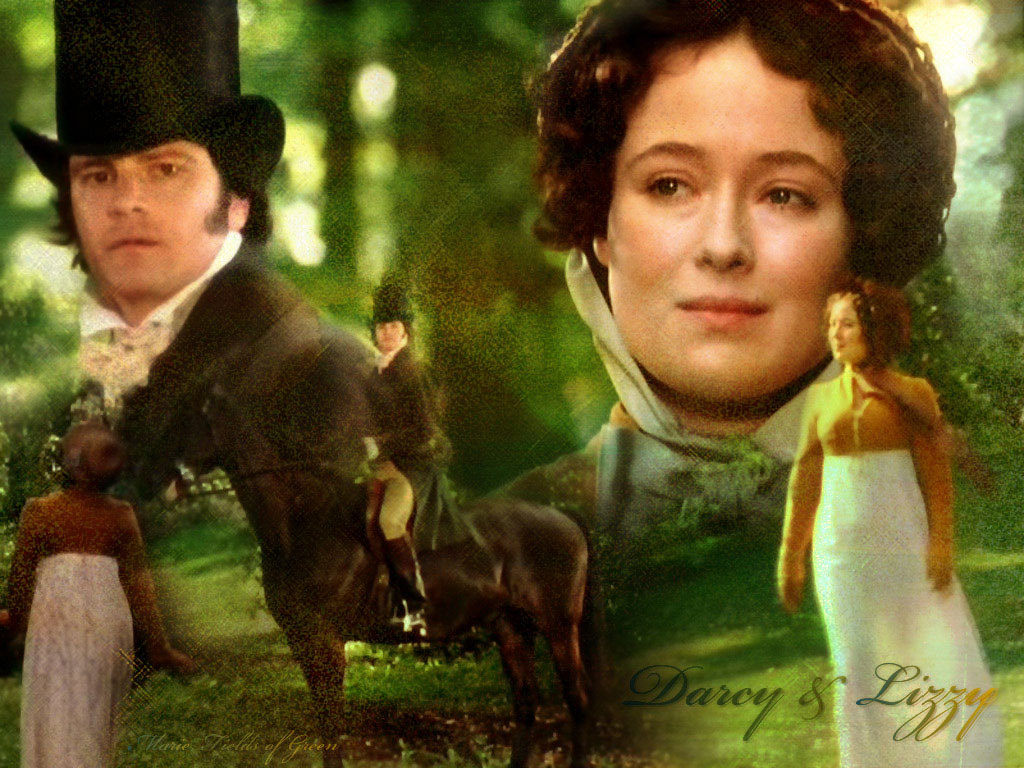
There are so many female protagonists, Elizabeth Bennet, the Crawley sisters, Hermione Granger, Katniss Everdeen, Clare Fraser, and almost any Bette Davis, Katherine Hepburn and Barbara Stanwyck movie ever made that show us how powerful and intelligent women are. They create fulfilling lives for themselves in spite of their flaws and the expectations of society.

What these fictional women show me is that something important is changing for women. I don’t know how this has come about, but I’m excited to see it happening. Women aren’t keeping silent any longer. They are not letting anyone dictate to them how to think, what to feel, or what they should do with their lives. It’s an exciting time that has been a long time coming.

I think I became a feminist because my mom worked throughout most of my childhood. She did it to supplement dad’s income so we could live in nice houses, have food on the table, and clothes to wear. It wore her out, but she did it, and we all pitched in with household chores. Because of my mom, I thought it was natural for moms to work outside the home just like dads did. And because my dad was not the macho guy who expected his wife to do everything for him, I learned what true partnership between a man and woman looked like.

I’m inspired by all the female characters, and real women who keep standing up for themselves. And I’m excited to see what the future will bring.

Thanks for reading, liking and commenting. Welcome to my new followers. I hope all of you have a spectacular weekend.

Lucinda Sage-Midgorden © 2019

Lucinda is the author of The Space Between Time, an award finalist in the “Fiction: Fantasy” category of the 2017 Best Book Awards. It’s a little bit like Outlander in that it’s a historical, time-travel, magical realism, novel. Except that Jenna’s life is shattered. When she finds old journals, she joins consciousness with her three-times great-grandmother, Morgan, rather than traveling physically. She is able to come back at intervals and apply what she’s learned to her own life situations.

The Space Between Time is available in all ebook formats at Smashwords and for Kindle at Amazon, or you can find the ebook at iBooks or Barnes and Noble. If you prefer a physical copy, you can find a print-on-demand version at Amazon. Stay tuned for news when the audiobook version is published. To join her email list, click here. She will never sell the names on her list.
Lessons From Unusual Places

Red Shadow Sky
Red Shadow Sky Magic Wand Sunset Cloud Girl

“Sometimes you learn, grow and give far more when your back’s against the wall.” ~ Rasheed Ogunlaru

I love movies! If you’ve been reading this blog for a while, you know that. I love them partly because watching and having nerdy conversations about them remind me of the great conversations I had with my dad about the ones we watched together. I learned a lot from those discussions.

I’ll watch a movie in almost any genre, but my favorites are the ones that make me feel good, give me a new perspective, or teach me something I can use.

This fall I’m going to be teaching my absolute favorite class of all time, dramatic structure. In the class we watch movies and analyze the stories and characters. And sometimes my students say things that blow me away. They point out things that I never thought about before.

My students always amaze me. They, or nieces and nephews, recommend movies, TV shows and books that I most likely would never consider watching or reading. Buffy the Vampire Slayer is just one example. Buffy is a kind of phenomenon. College classes have been taught about the lessons the show teaches.

When I take the advice of the young people in my life, I’m always pleasantly surprised by the depth of truth the stories they recommend tell. The characters might be in fantastic circumstances, or have unusual powers, but somehow the writers create characters with real human struggles. I love that!

This is nothing new. Storytellers have been teaching us things for centuries. There are plays from Ancient Greece that are still performed and analyzed today. Shakespeare’s plays are another example. My new friend, Dave Dahl, who is a theatre professional, said recently, “Shakespeare’s language may seem daunting, but the plays contain human emotion and that has never changed. That’s why we still perform them today.” That’s going to be true of many of the stories that are popular today.

For sometime, I’ve wanted to write a post about Captain America. He is my favorite superhero. Barry and I got hooked on superhero movies because or our youngest nephew. He’s a really intelligent kid who is already a master at analyzing the motivations of the characters in the movies he watches and thus in his real life too. Captain America is my favorite, I realized while writing this post, because he’s like my dad. He has a strong moral center that helps him when he’s faced with problems. He’s able to see what’s really going on in complicated situations as shown in Captain America: Civil War. Some of the other Avengers are manipulated by unscrupulous people with hidden agendas, but not Cap.

In story telling there are often key moments that cause everyone to reevaluate their beliefs and assumptions. This happens in real life too if we’re paying attention.

In the last two Avengers movies Thanos accomplishes his goal to wipe out half the population of the universe. He thinks he’s saving it by doing this, but the chilling thing is, he doesn’t care that he’s killing billions of beings. He doesn’t realize an act like that never brings peace.

The original Avengers are left to cope with their failure to stop Thanos. But two things happen. First, when Captain Marvel shows up in response to Nick Fury’s call for help. Rhodes asks her where she’s been, in essence accusing her of failing to prevent Thanos’ destruction. She replies by saying something like, “There are lots of other planets in the universe that needed my help. Earth has you guys.” Wow! She’s challenging them to take responsibility for what happened. That’s always painful. But she’s also challenging them to accept that they have extra-ordinary abilities and perhaps all hope is not lost.

Of course since this is a story, the second thing happens that allows the heroes to save the universe. Ant-man, previously thought to be dead, arrives with a possible solution for how to go back and defeat Thanos and set the universe right again. Well, at least, restore all those who were turned to dust. Carol Danvers, Captain Marvel, has challenged the Avengers to find solutions to the big world problems once Thanos is defeated. In essence she’s saying Earth has us! We are the ones who can save the planet and ourselves.

I’ve been watching movies for a really long time. I can name any number of classic movies that surprise my students with how their themes speak to contemporary problems. It’s another of the reasons I love teaching dramatic structure. We like to think that we’ve advanced so much as a species. Then we watch a movie from the 1930s or 40s and see that we’re not so very different from our parents, grandparents, and great-grandparents after all. Like Dave said, human emotions haven’t changed that much. But hopefully one day we will grow up into more compassionate, cooperative people.

I’d venture to say that’s one of the themes of the first batch of MCU movies. The superheroes learn to set aside their differences to find solutions for the huge problems they face rather than continue to assert that they are right and the others wrong.

It takes courage to admit that maybe we are wrong, that we are responsible for the mess in which we find ourselves. Alice Walker wrote the book, We are the Ones We Have Been Waiting for: Inner Light in a Time of Darkness. I’ll be reading that book because I need a push to be like all the characters in my favorite movies who had the courage to face and solve their problems. This will be a ongoing process. I have to remember that and not give up.

Thanks for reading. I appreciate your comments and likes. Have a fantastic weekend.

Lucinda Sage-Midgorden © 2019

Lucinda is the author of The Space Between Time, an award finalist in the “Fiction: Fantasy” category of the 2017 Best Book Awards. It’s a little bit like Outlander in that it’s a historical, time-travel, magical realism, novel. Except that Jenna’s life is shattered. When she finds old journals, she joins consciousness with her three-times great-grandmother, Morgan, rather than traveling physically. She is able to come back at intervals and apply what she’s learned to her own life situations.

The Space Between Time is available in all ebook formats at Smashwords and for Kindle at Amazon, or you can find the ebook at iBooks or Barnes and Noble. If you prefer a physical copy, you can find a print-on-demand version at Amazon. Stay tuned for news when the audiobook version is published. To join her email list, click here. She will never sell the names on her list.

The Joy of Creative Work

Earth from the Moon

“To find joy in work is to discover the fountain of youth.” ~ Pearl S. Buck

This week something miraculous happened. I was practicing, recording, and editing a long chapter from my book. It’s a chapter full of deep emotions and realizations. So, in a way it’s fitting that I was moved and changed while working on it.

You may or may not know that creating an audiobook takes a great deal of time. There is the rehearsal time, when I highlight each character’s dialogue. Then I must create a distinct voice for each new character, and remember the voices of the reoccurring ones. The next step is to record the selection and finally the recording must be edited, because no one can produce a recording without mistakes. This editing process often requires rerecording because I didn’t read the text correctly, or I just don’t like the way a section sounds.

At the beginning of each week, I hope to get two or more chapters finished, but that rarely happens. I was feeling discouraged about that. The new semester is going to start in a month and it’s going to be a very busy one. I’m not even halfway through the recording of my book yet. So, I’ll be trying to fit in recording where I can among my other work.

But as I was editing chapter 11 yesterday that miraculous thing happened. I felt a warm excitement in my solar plexus. What I was doing was fun! It felt like I was doing something significant that I have a passion for. And that, more than anything, is what we all long for, meaningful work that energizes us.

I’ve felt this joy in my work before, when I’ve acted or directed a play. I felt it when writing The Space Between Time. But the feeling doesn’t always come at the beginning of the project. It happens as I continue to commit to doing the work. It grows and lingers until sometime after I’ve finished. Who needs drugs when we can have the high of doing work that absolutely engages all our senses and fills us with satisfaction and joy?

And thinking of creative work, it took a lot of people dedicated to their work to get men to the moon all those years ago. Happy Moon Landing anniversary!

I’ve a busy day ahead, so I’ll leave you now. I hope you find joy in the work you do,  in your relationships, and in creating something beautiful. Blessings to you all.

Lucinda Sage-Midgorden © 2019

Lucinda is the author of The Space Between Time, an award finalist in the “Fiction: Fantasy” category of the 2017 Best Book Awards. It’s a little bit like Outlander in that it’s a historical, time-travel, magical realism, novel. Except that Jenna’s life is shattered. When she finds old journals, she joins consciousness with her three-times great-grandmother, Morgan, rather than traveling physically. She is able to come back at intervals and apply what she’s learned to her own life situations.

The Space Between Time is available in all ebook formats at Smashwords and for Kindle at Amazon, or you can find the ebook at iBooks or Barnes and Noble. If you prefer a physical copy, you can find a print-on-demand version at Amazon. Stay tuned for news when the audiobook version is published. To join her email list, click here. She will never sell the names on her list.

To Redo or Not to Redo

Stressed Out.

“Learn from the past, set vivid, detailed goals for the future, and live in the only moment of time over which you have any control: now.” ~ Denis Waitley

This summer I’ve gone back to a project I started last summer. It’s the audiobook for my first novel, The Space Between Time. Over the intervening year I’ve learned a lot about audiobook production. I stopped working on my book to record one for a friend of mine, The Dragon’s Gold, by Debrah Strait.

But now that I’m back to recording my book, I realized I needed to begin again and apply my new knowledge. I’m grateful I did my friend’s book first and I’m still learning. After recording about six chapters, I realized I needed to save recordings of the various voices so I can replicate them in later chapters. Doing the different voices is a challenge for me. As an actor, I was never good at impressions or mimicry. And yet, it’s fun to make up different voices because the quality of a character’s voice can tell the listener something about his or her personality.

Something else has happened as I make the recordings. I find there are mistakes in the manuscript, or the writing is a bit clumsy. Part of me wants to go back and clean up the writing. I mean, my name is on it and I want it to be the best it can be. When I mentioned that I might want to make corrections to the book, Barry said, “We can do a second edition.” Wow! I loved that idea, but now I’m thinking that I should leave that project for another day. Perhaps after I finish the sequel, Time’s Echo. There is such a thing as overworking a piece.

This situation has me thinking about do overs and wondering if they are worth the time and effort. George Lucas did rereleases the first Star Wars movies he produced with upgraded special effects. As I recall, there was a lot of controversy about that. Some critics said the movies were like time capsules, they reflected the technology of the time in which they were made and that he should have left them alone.

I know that first books are, in general, not always the best work of an author. I freely admit I’m learning to be a good writer as I go along. But The Space Between Time has not been read by millions of people. If I improve it now, maybe years down the road after I’ve written many more books, I might have enough fans who will want to go back to read this first one. I want those people to enjoy it. Is that crazy?

I have to remember what I tell my students, you didn’t learn to walk in one day. It takes babies lots of practice to be able to walk without falling down. In terms of writing and producing a book and audiobook, the same principle applies. In a way, I’m a perfectionist, but it might be nice for people to see the progression of my work.

There is another thing that has been nagging at the back of my mind.My characters have been called too perfect by some fellow writers, and maybe they have that point of view because most of my characters reflect the people I was surrounded by as I grew up. Our family social life revolved around our church friends. And though no one is perfect, I saw my parents friends as kind, compassionate, and caring. There were, of course, conflicts but until I was a teenager, I was unaware of them. Those early years of feeling nurtured by my church family had a big affect on my outlook on life.

I’ve mentioned Anne Bogel’s podcast, “What Should I Read Next”, in previous posts. She has a new short podcast called “One Great Book” in which she pulls a book she enjoyed off her own book shelves and tells the listeners about it. I was catching up on this podcast this week and listened to one about Love Walked In by Marisa de los Santos. Anne quoted Jane Austen from her book Mansfield Park, as an example of Marisa de los Santos’ work. “Let other pens dwell on guilt and misery,” and Marisa takes that same view. Anne said, Marisa believes her role is to tell stories with happy endings. That resonated with me. That’s the kind of novels I write.

Since we writers create from our biographies, I can’t do anything but write what I know. But even good people face challenges and tragedies both external and internal. I certainly have. And though my characters experience dark events and feelings, they don’t wallow in them. At the end of each book I want my characters to have learned something about themselves and human nature.

Some people may say I write the kind of books Hallmark could produce. That’s okay with me. Right now, I’m into feel good entertainment. So, I’ll continue to write books with happy or hopeful endings. But my goal is to improve my writing skills, to be less wordy, and to create interesting characters and situations that give insights into what it means to be a human being.

Thanks for putting up with my recent political posts. One of the things I’m attempting to do is to be vulnerable and truthful about my feelings and point of view. That’s always a struggle for a devout introvert like me.

I hope you have a fantastic weekend.

Lucinda Sage-Midgorden © 2019

Lucinda is the author of The Space Between Time, an award finalist in the “Fiction: Fantasy” category of the 2017 Best Book Awards. It’s a little bit like Outlander in that it’s a historical, time-travel, magical realism, novel. Except that Jenna’s life is shattered. When she finds old journals, she joins consciousness with her three-times great-grandmother, Morgan, rather than traveling physically. She is able to come back at intervals and apply what she’s learned to her own life situations.

The Space Between Time is available in all ebook formats at Smashwords and for Kindle at Amazon, or you can find the ebook at iBooks or Barnes and Noble. If you prefer a physical copy, you can find a print-on-demand version at Amazon. Stay tuned for news when the audiobook version is published. To join her email list, click here. She will never sell the names on her list.

Grateful but not Proud

Tattered but Salvageable

“Lock up your libraries if you like; but there is no gate, no lock, no bolt that you can set upon the freedom of my mind.” ~ Virginia Woolf

“The most courageous act is still to think for yourself. Aloud.” ~ Coco Chanel

“Freedom is never more than one generation away from extinction. We didn’t pass it to our children in the bloodstream. It must be fought for, protected, and handed on for them to do the same.” ~ Ronald Reagan

When George W. Bush was President, Barry said, “I’m grateful to be an American, but not always proud.” That’s how I’m feeling today, and I’m not alone. Alex Tanzi of Bloomberg published an article July 4th titled, “Americans Are Less Proud to Be Americans This Year.”

In fact, Tanzi says in the article that our level of pride is at the lowest point it’s ever been. Less than half of Americans consider themselves, “extremely proud” of our country. And if you ask them how they feel about the political, health, and welfare systems, only about a third of respondents say they are proud.

Since the day before yesterday was Independence Day in the U.S., many of us had a chance to reflect on how our country got started, the mistakes we’ve made in our history, and what changes we’d like to enact to make our country better.

It’s a 4th of July tradition at our house to watch the musical 1776 by Sherman Edwards and Peter Stone, based on their stage play of the same name. Now, I know, there are lots of people who don’t like musicals because they aren’t realistic, and they’re schmalzy. But this is not one of them. It shows the congress passing silly and unnecessary resolutions, John Adams and his harshest critic and opponent, John Dickinson, getting into a physical fight, and the intense struggle to even get the idea of declaring independence from England to the floor for debate. And once Thomas Jefferson has written the document, it is ripped to shreds by the delegates.

The dialogue is snappy, at times funny, and at times tragic. The songs move the story forward with the sentiments being debated among the delegates, and the personal struggles of the main character John Adams.

You may not know that Jefferson included a clause in the Declaration abolishing slavery, but, of course, the Southern delegates would not agree to ratify it if that clause was included. This debate is summed up in a beautiful and devastating song, “Molasses to Rum”, in which Edward Rutledge of South Carolina sings about how the Boston shipping companies, participate in the slave trade by trading molasses for rum, and then buying slaves and taking them back to be sold in the New World. John Adams may want the Northern colonies to be blameless of slavery, but they aren’t, and this song brings that fact to the forefront of our consciousness. Other songs, like “Cool, Cool, Considerate Men” and “Momma Look Sharp” are equally as moving in different ways.

This movie shows what a wonder it was that the Declaration of Independence was ratified by the delegates of all thirteen colonies. And it’s even more surprising that we eventually won the war against a vastly superior foe. Miracles happened, but we were born a nation with blots on our ledger and more than just the fact that we continued to allow slavery in our new country. The government promised the Native peoples things, which they didn’t keep. There was also religious intolerance from the beginning, and women, of course, were not granted equal rights.

I know that none of us get away from facing our “stuff”, the mistakes we’ve made, the wounds we have inflicted, or suffered. That goes for individuals and nations too. We’re at a critical juncture in this country. We need to address those old, old wounds that were left unresolved by the Declaration of Independence and our Constitution.

There are days when I’m tempted to bury my head in the sand and not deal with my part in where we are as a country. But in my personal life, I’ve worked to clear out the things that were unhealed and something about who I am can’t turn my back on the problems we’re facing in this country either.

As the last strains of the finale music from 1776 played, I said to Barry, “This movie gives me hope.” What I was thinking was how miraculous things happen against all odds when we least expect them to. But miracles don’t happen in a vacuum. We have to work for them in both big and small ways. I’m probably not going to be like the Founding Fathers, but I’m committed to doing by part in small ways.

Just writing this blog post makes me feel better. I’m still not happy with the human rights violations, corruption and dalliances with dictators of this administration, but I have to remember that this country is made up of lots of people who were fleeing TO freedom. And in the end, I can’t see us allowing ourselves to become victims of a dictator. At least, I hope we won’t. I’m praying for another miracle.

Thanks for reading, liking, and commenting. Welcome to my new followers.

Lucinda Sage-Midgorden © 2019

Lucinda is the author of The Space Between Time, an award finalist in the “Fiction: Fantasy” category of the 2017 Best Book Awards. It’s a little bit like Outlander in that it’s a historical, time-travel, magical realism, novel. Except that Jenna’s life is shattered. When she finds old journals, she joins consciousness with her three-times great-grandmother, Morgan, rather than traveling physically. She is able to come back at intervals and apply what she’s learned to her own life situations.

The Space Between Time is available in all ebook formats at Smashwords and for Kindle at Amazon, or you can find the ebook at iBooks or Barnes and Noble. If you prefer a physical copy, you can find a print-on-demand version at Amazon. Stay tuned for news when the audiobook version is published. To join her email list, click here. She will never sell the names on her list.