Miss Pettrigrew Lives for a Day

“Not everything comes along just when we want it. There are times when decisions just have to be made, or you certainly will miss out.” ~ Guinevere Pettigrew in Miss Pettigrew Lives for a Day
“I am not an expert on love, I am an expert on the lack of love, Delysia, and that is a fate from which I wish most fervently to save you.” ~ Guinevere Pettigrew in Miss Pettigrew Lives for a Day
Every once in a while I want to watch a movie, or read a book that just makes me laugh out loud so I can carry that happy feeling for a long while afterwards. Miss Pettigrew Lives for a Day is certainly that kind of story! But it’s so much more.
Sometimes story gems are discovered by film makers and the result is magic. If you haven’t seen the 2008 movie, which stars Frances McDormand and Amy Adams, you are missing out.
The book by Winifred Watson, has recently been republished by Persephone Classics and I’m so happy it’s in circulation. Persephone Classics has revived and republished several classics written by women. I’ll be looking for other titles from their shelves.
Miss Pettigrew Lives for a Day was first published in 1938. The movie is updated a bit with the addition of the beginning of WW II, some of the characters are combined, and events changed, but essentially it is the same story as the book. Much of the dialogue in the movie is exactly as Winifred Watson wrote it.
The story takes place in London. Miss Guinevere Pettigrew is a down on her luck 40ish gentlewoman who has been working, rather unsuccessfully, as a governess for many years. In the movie, we see her get fired from her job by a pompous woman taking sips from a glass of sherry, presumably her daily habit. The butler hands Guinevere her suitcase and basically throws her out without the wages she is owed. At the employment agency she faces a stern woman who is unwilling to recommend her for a new position. She sneaks an employment request card for a social secretary position but must wait until morning to attempt to get the job. In the meantime, she collides with a man who is getting out of jail, her suitcase opens and all her belongings are thrown to the wind. She is so embarrassed she walks away with only the clothes she wearing. From that moment on, Guinevere and the audience barely have time to catch a breath. She spends an uncomfortable night in a train station with no money, or prospects, except for the card in her pocket.
In the morning, she beats a path to the gorgeous flat of Delysia Lafosse an actress and nightclub singer. When Delysia opens the door, Geuinevere is thrown into an unfamiliar world. Delysia asks for her help in getting rid of her overnight male companion because another man, the one who pays for the apartment, is on his way. Feeling out of her depth, Guinevere swallows her misgivings, and plunges in. Next she helps Delysia get rid of the second man as well. Later a third man, Michael, shows up who is, by coincidence, the man who collided with her the day before. In each evermore desperate situation, Guinevere sheds her modesty and high ideals. She rises to the occasion helping not only Delysia, but her friends iron out kinks in their personal lives for which Delysia is eternally grateful.
I could relate to Guinevere because there have been times when I felt like I was too straight laced and unwilling to accept people for who they are. Getting involved in theatre helped me become more accepting. For Guinevere, meeting Delysia, who is almost her total opposite, changes her in the happiest of ways. Guinevere decides that perhaps she has been too rigid and embraces the glamorous life that Delysia and her friends lead if only for a day. She may never get another chance to be on the inside of life, as she describes it in the book.
I can relate to that desire to throw caution to the wind, to embrace life. I’ve even had periods when I’ve done that like the time my husband and I sold our house and took a trip around the world. Those kinds of times are the ones I cherish most.
Interestingly enough, I can also relate to Delysia. She’s much more outgoing than I am, and appears to be scatter brained, but she is open hearted and even perceptive. She sees Guinevere as a person of value who deserves to be treated well. Valuing others is something I strive for in my own life.
As the story progresses, we find out why Delysia welcomes Guinevere into her life so readily. Near the end of the story she says, ”For all the fancy apartments and fashion shows, do you know how close I am to having nothing? Every day I wake up and I think, if I make the wrong move, I could be out on that street with no clothes, no food, no job and no friends.” That’s the moment that Guinevere and Delysia become friends for life. Two seemingly dissimilar women sharing common fears. They understand each other.
This is one of those delightful stories that has a serious theme. We all need to be appreciated and understood. Delysia and Guinevere give that to each other with the result that both get their happy endings.
I recommend both the book and the movie if for no other reason than they are good for a hearty belly laugh. Laughing is good for the digestion and helps you sleep better. And can’t we all use a good laugh from time to time? But I also recommend it because Guinevere is a good example for us all. She lets go of long held beliefs that have kept her from enjoying life. Once she does that, all kinds of new and wonderful possibilities open up for her.
Thanks for reading. I appreciate your likes and comments. Have a delightful weekend.
Lucinda Sage-Midgorden © 2018
Lucinda is the author of The Space Between Time, an award finalist in the “Fiction: Fantasy” category of the 2017 Best Book Awards. It’s a historical, time-travel, magical realism, women’s novel, and is available in all ebook formats at Smashwords, or you can find the ebook at iBooks or Barnes and Noble. I you prefer a physical copy, you can find a print-on-demand version at Amazon. To join her email list, click here. She will never sell the names on her list.
A Tree Grows in Brooklyn
 “We can let the circumstances of our lives harden us so that we become increasingly resentful and afraid, or we can let them soften us, and make us kinder. You always have the choice.” ~ Dalai Lama
This spring is the fifth anniversary of beginning this blog. During the winter, I felt like my posts were getting stale and repetitious. I was considering giving up on it. I struggled with what to do, when I got the inspiration to write about two things I love, movies and books, I felt energized and inspired. There are so many great stories to explore.
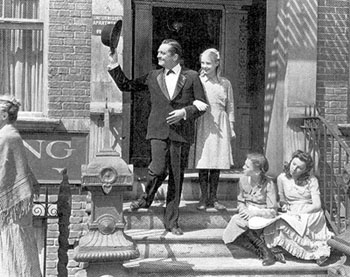
Today’s post is about A Tree Grows in Brooklyn, by Betty Smith It’s a movie I almost always seem to catch in the middle, but it’s so compelling I watch to the end. I finally got to see it from the beginning recently and that’s when I remembered I’ve had the book on a shelf for a long time.
I love the Nolan family because I can relate to many aspects of their life. Katie and Johnny Nolan are children of immigrants living in Brooklyn. It’s the beginning of the 20th century. They’re poor, however, they are fortunate to have had some education allowing them to get a pretty good job. Even so, life becomes more complicated when the children begin to arrive.
The story is told from their oldest daughter, Francie’s point of view. She dearly loves her idealistic and imaginative father, as does everyone else, even though he’s an alcoholic and has a difficult time finding work because of it. Her mother, the practical one, keeps the roof over their heads by exchanging her cleaning services for rent. Francie and her brother Neeley do what they can to earn small amounts of money here and there to contribute to the family coffers.
Francie sees her broken down neighborhood as an enchanted place, in spite of the mean children and teachers at school. I love her because she’s unconventional, a dreamer, and bit of a loner like me. She loves reading, is a good writer, and has a fierce desire to improve her self through learning. In fact she and her father contrive to get her into a better school not far from her home.
One segment in the book, that is not in the movie, deeply affected me. Francie and Neeley have been invited to a party or pageant for poor children during the Christmas holidays at a nearby Protestant church. At the end of the program it’s announced there is one last treat. A young girl named Mary, comes out with a beautiful large doll which she is going to give to a girl in the audience also named Mary. Francie desperately wants the doll. She’s never had one of her own. Even though the peer pressure to remain silent is strong, Francie can’t resist. Thinking she’s lying, she says her name is “Mary Frances Nolan.” The doll is given into Francie’s waiting arms.
As she walks back to her seat, the mistress of ceremonies expounds about the generosity of little rich Mary who is willing to give away her doll in true generosity. Francie blinks back tears thinking “Why can’t they just give the doll away without saying I am poor and she is rich? Why couldn’t they give it away without talking about it?” I was asking the same question. Though we were not as poor as Francie’s family, there were times when I was given something in the same spirit as the doll was given to Francie. It’s humiliating.Why do some of the more fortunate people want to make sure the less fortunate are grateful for their charity. To me it should be given freely, even anonymously.
Interestingly, the other poor girls exact their revenge on Francie as she walks back to her seat by whispering, “Beggar, beggar, beggar,” as if upholding their pride is better than trying get something they really want.
The only thing Francie regrets about getting the doll is lying about her name. Knowing that her mother hates anything that smacks of charity, Francie tells her that the doll was a prize. Neeley keeps her secret. Francie, fearing she’s going to hell for lying, suddenly remembers something important. Her confirmation is coming up soon and she decides then and there to choose Mary as her middle name so that the lie will become the truth. When she asks her mother if she may choose Mary as her middle name, her mother says “No. … when you were christened, you were named Francie after Andy’s girl … but you were also named Mary after my mother. Your real name is Mary Frances Nolan. When I read that, I felt as Francie did, that God had given her a special gift. In a way it was an affirmation that her dreams could come true.
Even though there are bright spots in the story like getting the doll, Francie begins to truly understand the struggles her parents go through. As she gets closer to graduation from eighth grade, her father’s condition gets worse. He’s out of work most of the time, which means meals are infrequent. When Katie announces that a third baby is on the way, Johnny tries to quit drinking cold turkey so he can work but It’s too late. He dies of liver failure and pneumonia leaving the family in dire circumstances.
Though Johnny was incapable of providing for his family in life, they learn something remarkable about him. He had lots of friends. And it’s one of those friends, Mr. McGarrity who comes to the family’s rescue. He owns the bar where Johnny hung out. Even though Johnny owed him money, he misses his stories, as do his other patrons, so he hires Francie and Neeley to do odd jobs so he can help the family make ends meet.
I think one of the things that makes this story timeless is the love the Nolans have for each other in spite of their failings and circumstances. They also have a deep conviction that life is going to get better. Katie is the driving force behind this. When she discovers she is pregnant with Francie, this is in the book not the movie, she asks her mother for advice. And her mother, who can’t read, says that the family should read together every night. So Katie gets a Bible and an old copy of the complete works of Shakespeare and she begins reading to her babies. When they get older, they read and by the time the children go to school, they already have quite an education. It’s one of the little things that makes the Nolan family different than most of their neighbors.
In the end, Katie’s determination to make their lives better pays off. She marries a kind and loving police officer who knows how the family has struggled. Both Neeley and Francie get to go to college. It’s the perfect story of a poor family making their dreams come true by steadfastly loving each other, dreaming of a better life, and being willing to work hard to get it.
Thanks for reading, liking and commenting on my posts. I hope you’ll consider checking out A Tree Grows in Brooklyn. I think it will be well worth your time.
Lucinda Sage-Midgorden © 2018
Lucinda is the author of The Space Between Time, an award finalist in the “Fiction: Fantasy” category of the 2017 Best Book Awards. It’s a historical, time-travel, magical realism, women’s novel, and is available in all ebook formats at Smashwords, or you can find the ebook at iBooks or Barnes and Noble. I you prefer a physical copy, you can find a print-on-demand version at Amazon. To join her email list, click here. She will never sell the names on her list.
Ben-Hur
 “You can break a man’s skull, you can arrest him, you can throw him into the dungeon. but how do you control what’s up here? (taps his head) How do you fight an idea?” ~ Sextus in Ben-Hur
It’s nearly Passover and Easter. When I was growing up, every year at this time the networks would show three movies, The Ten Commandments, Ben-Hur, and for some reason, The Wizard of Oz. Of course, other religious movies were also on the menu, but these three were the staples.
As a result, I saw Ben-Hur, the 1959 version directed by William Wyler, many times before channels like Turner Classic Movies were launched and showed it more than once a year. It’s one of my favorite movies for many reasons. The characters are well developed as is the plot. It deals with complicated and universal issues like, love and loyalty, hatred and revenge, racism and entitlement, and redemption, which is probably why it’s still relevant today.
The book written, by General Lew Wallace in 1880 who was Governor of the New Mexico Territory at the time, is a story of boyhood friends Judah Ben-Hur, and Roman Tribune Messala. It takes place in Judea during the lifetime of Jesus.
The two men are obviously from vastly different backgrounds. At the beginning of the movie, Messala returns to Jerusalem a newly promoted Tribune hoping to renew his friendship with Judah a wealthy prince of the city. Unfortunately that does not work out due to Messala’s selfish ambition to rise in the ranks by bringing to justice Jewish dissidents with the help of Judah’s connections.
When Judah refuses to give up the names the discontented, Messala takes advantage of an unfortunate accident to exact his revenge and advance his career. Judah’s mother and sister are condemned and imprisoned without trial. While Judah is sent to be a galley slave, essentially a death sentence. Arresting Judah and his family spreads fear among the people of Judea giving Messala more control over the populace.
For his part, Judah embarks on an amazing journey of self-discovery. At first, of course, all he can think of is to inflict his revenge on Messala. He lives three years, a feat almost unheard of, in various galleys chained to his oar. Then a new commander, Quintus Arrius is assigned to his ship, and a connection is formed that propels Judah to Rome first as a charioteer and later as the adopted son of Arrius. This gives Judah his chance to return to Jerusalem to confront Messala and hopefully save his family.
Some of the things I love about the movie are the little glimpses we get of the Judean way of life including Judah’s visit with a Sheik, how trusted slaves of the house of Hur are treated more like friends and colleagues, and small daily Jewish rituals. We also see how the Romans treat the local citizens with contempt because supposedly they are of inferior races. And although the full title of the book on which the movie is based is Ben-Hur: A Tale of the Christ, we don’t see much of Jesus. What is shown is the effect he and his teachings have on Judah and his family.
After years of loving and watching the movie at least once a year, last year I finally decided to read the book. Having read other classic books for the 1800s, I thought the language in this one might take some getting used to. I was wrong. The story was compelling and easy to connect with from the very beginning.
Of course, there is much more to Judah’s adventures in the novel than in the movie. For example, once Judah is an official citizen of Rome, many things happen to him on his trip back to Jerusalem. Messala hires people to kill Judah, he has two vastly different women interested in him, but, of course, both the book and the movie have the climactic chariot race, and in both Judah collides with the teachings of Jesus. He rejects them at first, but later has reason to change his mind. In the end, Judah finds peace in forgiving all that happened to him when he witnesses Jesus crucifixion, hears what he says from the cross, and then is reunited with his mother and sister.
My favorite quote from the movie is by Esther, a women who was once Judah’s slave: “It was Judah Ben-Hur I loved. What has become of him? You seem to be now the very thing you set out to destroy. Giving evil for evil. Hatred has turned you to stone. It’s as if you had become Messala.” That is the moment Judah realizes that forgiveness and love are stronger than hate and his path takes a new turn. He can finally find peace.
Thanks for reading, liking and commenting. I appreciate it very much.
Lucinda Sage-Midgorden © 2018
Remember, you can download my book, The Space Between Time for free through 3/25. Click on the link below to get your copy. Happy reading.
Lucinda is the author of The Space Between Time, an award finalist in the “Fiction: Fantasy” category of the 2017 Best Book Awards. It’s a historical, time-travel, magical realism, women’s novel, and is available in all ebook formats at Smashwords, or you can find the ebook at iBooks or Barnes and Noble. I you prefer a physical copy, you can find a print-on-demand version at Amazon. To join her email list, click here. She will never sell the names on her list.
Stephen King’s The Stand
 “You gain strength, courage, and confidence by every experience in which you really stop to look fear in the face. You are able to say to yourself, ‘I lived through this horror. I can take the next thing that comes along.’” ~ Eleanor Roosevelt
“I learned that courage was not the absence of fear, but the triumph over it. The brave man is not he who does not feel afraid, but he who conquers that fear.” ~ Nelson Mandela
I am not a fan of horror anything. I don’t like attending haunted houses on Halloween. I always shut my eyes at the bloody, gory parts of movies and I don’t read books in the horror genre. My distaste of horror probably has to do with the proliferation of slasher movies as I was coming of age, where the main attraction are the number of deaths and the buckets of blood generated from them.
Another reason I don’t like horror books and movies is because I’m a highly sensitive person. I dream about what I’ve just watched on TV or read in my book, so you can understand why I stay away from blood and gore especially right before bed.
Last night, as I was driving home from teaching, I was catching up on my Super Soul Conversations podcast. Oprah was talking to Jordan Peele, the writer, director, and one of the producers of the Oscar Nominated film, Get Out. It’s a horror movie, so I was not planning to go see it even though it’s a character study of African American/White relations, something I think extremely important. But Jordan Peele said something interesting about the horror genre, and I’m paraphrasing; it’s a genre that helps us face our fears. Hmm, maybe Get Out is a different kind of horror picture. I might want to see it because I’m a big fan of facing my fears.
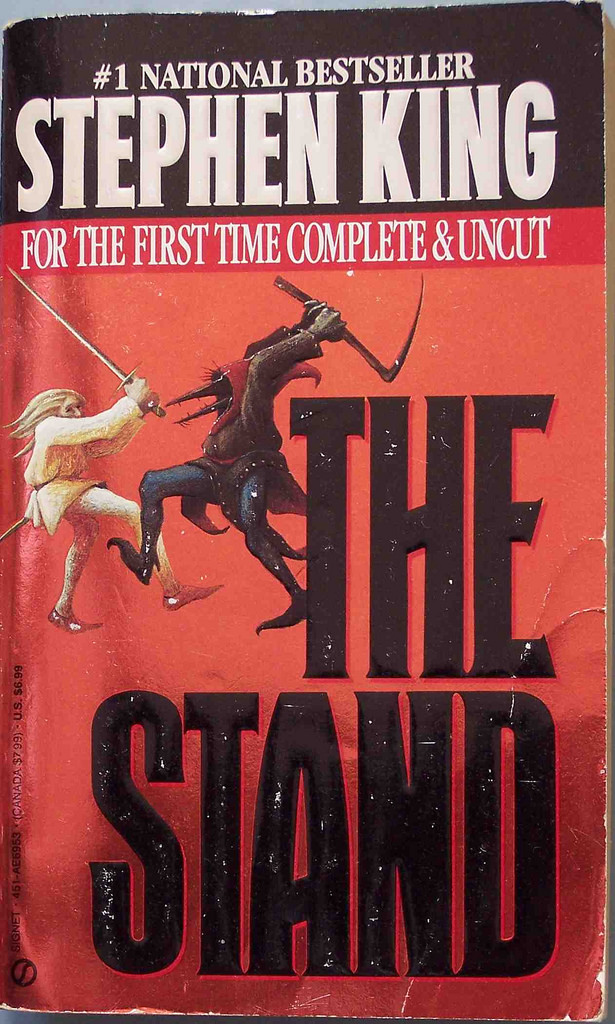
As I was listening to Jordan and Oprah talk, I couldn’t help but connect it to this post. I had planned to write about Stephen King’s The Stand.
The mini-series came out in 1994. Barry and I were intrigued by the trailers. It seemed like it was going to be an interesting character study couched in a good vs evil story line so we watched and loved it. It’s really more a dystopian type story than what I would call true horror.
The story is this: A plague has been accidentally released at a government facility and quickly spreads across the United States and the world. Almost everyone dies. In the U.S., those who live fall into two camps, the ones who dream primarily of Mother Abigail, a 106 year old woman living in Kansas, and those who dream primarily of Randall Flagg, a demon character in human disguise. The Mother Abigail group join her and move to Boulder, Colorado. The other group joins Flagg in Las Vegas. A war between good and evil ensues.
The religious references are mostly from an Old Testament point of view, which at first was a major drawback for me. However, as a student of religion and spirituality, I thought King’s take on this fictional spiritual war was fascinating. It was after all, just a story.
Some of the most interesting characters were the ones who chose to align with Flagg. Lloyd Henreid, for example, is a mixture of admirable qualities which includes loyalty, and not so admirable ones like self-interest. At one point Henreid knows he’s going to hell for his decision, but his loyalty to Flagg, who saved him, prevents him from making a new choice.
Trashcan Man is another fascinating character. He’s a mentally ill pyromaniac Flagg has recruited for a special mission, not realizing that that might not have been such a good idea.
On the other side, we have Nick Andros, a deaf mute who becomes one of the prominent leaders trying to establish and rebuild the “good” community, and Tom Cullen a “retarded” man who ends up being one of the heroes at the end of the story.
The cast of characters is long and varied with enough unusual backgrounds and personality traits to keep the viewer or reader engaged. Mother Abigail, for example, talks to God and shares what He tell her. She’s wise, but she makes mistakes along the way. Flagg, on the other hand, who seems to be strong, eventually shows how deeply insecure and frightened he really is. These kinds of characters make for a richly layered story.
The mini-series was so good because Stephen King was part of the production. And that compelled me to go right out and buy a paperback copy of the book. It’s over one thousand pages long filled with more unusual characters than I’ve had space to write about here. They find themselves in extraordinary circumstances and must try to cope and rebuild. Those are the kinds of stories I find most satisfying and in The Stand Stephen King delivered exactly that.
Who knows, I may read another of his books one day. My candidate is The Green Mile, another book recommended to me by the movie made from it.
Thanks for reading, liking and commenting. I appreciate it very much.
One last thing, a commercial announcement. I’m having a Spring sale of The Space Between Time for FREE, beginning tomorrow, March 22 and continuing through the 25th. If you want the ebook version, click on the Smashwords link below to download for any e-reader available. If you want a physical book, click on the Amazon link. The only payment I ask of you is to write an honest review and share it not only on the site where you got the book, but on your social media sites as well. Word of mouth is still the best way to advertise. Thanks in advance.
Lucinda Sage-Midgorden © 2018
Lucinda is the author of The Space Between Time, an award finalist in the “Fiction: Fantasy” category of the 2017 Best Book Awards. It’s a historical, time-travel, magical realism, women’s novel, and is available in all ebook formats at Smashwords, or you can find the ebook at iBooks or Barnes and Noble. I you prefer a physical book, you can find a print-on-demand version at Amazon. To join her email list, click here. She will never sell the names on her list.
 Sage Woman Chronicles