Marketing Lessons

Fsbo – THE SPACE BETWEEN TIME

“Read. Read. Read. Just don’t read one type of book. Read different books by various authors so that you develop different styles.” ~ R. L. Stine

“Every year the literary press praises dozens if not hundreds of novels to the skies, asserting explicitly or implicitly that these books will probably not be suffering water damage in the basements of their author’s houses 20 years from now. But historically, anyway, that’s not the way the novelistic ecology works.” ~ Lev Grossman

“Buy other author’s books when you go to their events. Even if you aren’t going to read it. Even if you are going to give it away. Even if you aren’t interested. Not just for the author but for the bookstore. It’s karma and just plain good manners.” ~ M. J. Rose

Okay, I admit it, I know almost nothing about how to market and promote my book. I loved writing it, even on the hard days. But I get a headache when I try to make a plan to market it.

The other day I was fretting about how to spread the word that I’ve published a book. I mean isn’t that a great accomplishment? Yes, it is and I feel good about that, but there are thousands, perhaps even millions of books published every day. So how do I toot my horn loud enough so that people will pay attention to my work, but not become annoying with roboposts on social media?

There are so many books and articles with tips for the independent author about how to “build your brand,” or how to “build your audience.” They say you’ve got to build a social media presence, create an email list, write a blog, do a podcast, or video series to help you find your target audience. Of course you have to take time to figure out who your target audience is while doing all that. I wish I could find someone to do all the marketing for me. But since I don’t have a big publishing firm behind me, I have to do it myself. Which means I keep reading and trying to expand my social media reach. Some tips are helpful, but to be honest, most of it makes my head spin and my heart sink.

I hit upon this fantastic idea to search for women writers who might be willing to review my book on their blogs and I came across an Arizona writer who specializes in writing reviews for little known women authors. Aha! I thought I’d hit the jackpot when she said the description of my book sounded interesting and she was willing to review my book. Then, in subsequent emails, she mentioned that she didn’t like fantasy and my heart sank. Of course she wanted me to buy and review her book in return. (I’m sending mine to her for free.) So, what to do? I told her that my book was kind of on the order of Outlander, and not surprisingly she wrote back that she hadn’t read the series, that’s how much she hates fantasy. Okay, by this point I was getting extremely frustrated. She is not the first person I’ve encountered who says they hate fantasy, and won’t even try reading it. To me, reading lots of genres of books is what keeps my reading life interesting. On the other hand, fantasy is like eating my favorite comfort food. If I’m feeling upset, or bored, I go choose a fantasy book to lose myself in. Some are fantastic, others not so much, but when I hit a gem of a book, I follow that author.

Here’s the thing, my book, The Space Between Time, and Outlander, are not strictly fantasy. They are really in a new category called magical realism. Both books have elements of historical fiction, while including time travel, and a bit of intrigue and romance thrown in. They’re kind of a hodgepodge of genres most of them with realistic settings and events. Isabel Allende’s book The House of the Spirits is always referenced when talking about magical realism. But, it’s not a category we could choose when publishing my book. So, what do I call The Space Between Time, and how do I find my audience? Fortunately, we had a wide range of tags we could attach to my book description, from women’s fiction, to fantasy, to historical.

The other day I was contemplating this marketing dilemma just before meditating. And, behold, in my meditation an answer came to me. Go join fantasy groups on my social media sites. There are many shades of fantasy, and among those fans must be people who love magical realism, or soft core fantasy as one of my students calls it. While I was doing that, another thought came to me to join sites, and organizations that are for women writers, and about women’s fiction.

So, even though my head still spins after spending time networking with these groups, I do feel like eventually, I will find my readers.

Having written all of the above, I challenge those of you who say you don’t like fantasy, to read a book by a friend of mine, Stacy Bennett. The book is Quest of the Dreamwalker. I just finished rereading this book because my sister, niece, brother-in-law, and I have formed a book club group. They wanted me to suggest a book, and since we’re all lovers of fantasy, I suggested, Quest of the Dreamwalker. It’s a book I loved when I first read it, and have continued to think about long after I finished the last page. To me well written fantasy books such as this, help me get a better perspective on human experience, and human nature. Maybe it’s because I’m a magnet for other people’s feelings, but sometimes books that are set in my time period are too jarring. If it could happen to me or my neighbors, then I’m reluctant to read the book. But, historical fiction, mystery and suspence, fantasy, magical realism, even classic literature help me separate from the situation a bit, while still experiencing the story along with the characters.

Here is a short description of Quest of the Dreamwalker, from my perspective. As Cara and Falin, helped by Khoury, Archer and Bradan, face danger from an evil sorcerer, they try to unravel who they are, and what their aborted purpose might be. In the process we get glimpses of their hopes, fears, grief, love, and connection to one another. While the book does take place in a made up world, and there are sorcerers, and a reluctant dragon, this book could almost be classified as medieval historical fiction. There are shamanic type characters and paranormal experiences, but if you’ve read The Shack, or The Alchemist, you’re used to that kind of thing anyway. Think about it, aren’t dark sorcerers just a representation of the darker side of human nature? And dragons, as part of our mythology, represent greed, or intelligence, or love of the land, or even wisdom. To me the main themes of this book are the same as most general fiction. It involves characters who are wounded and dealing with unhealed grief and pain. They are seeking self-discovery, finding their purpose, and finding and expressing love. I highly recommend this book, even to those of you who might not think you like fantasy.

Okay I’ve done my good deed for the day. I will continue to explore genres of fiction that I might normally shy away from. I will also continue to learn how best to promote my work.

Thanks for reading. Feel free to leave a comment or share with a friend.

Lucinda Sage-Midgorden © 2017

Lucinda is the author of The Space Between Time, a historical, time-travel, magical realism, woman’s novel. It’s available in all ebook formats at Smashwords, and will soon be available in a print-on-demand version at Amazon and other fine book sellers. To join her email list, click here. She will never sell the names on her list.

What I Learned from Alfred Hitchcock

Alfred Hitchcock

“I’m full of fears and I do my best to avoid difficulties and any kind of complications. I like everything around me to be clear as crystal and completely calm.” ~ Alfred Hitchcock

“Always make the audience suffer as much as possible.” ~ Alfred Hitchcock

“The only way to get rid of my fears is to make films about them.” ~ Alfred Hitchcock

I’m a little slow on the uptake, or maybe it’s just that now I fully understand, on all levels, that key ingredient that makes great writing endure. It’s emotion. You have to engage the reader, or audience member emotionally, or they won’t remember your work. “I remember most how the books made me feel.” A recent guest said on the “What Do I Read Next” podcast by Anne Bogel, that I have recently subscribed to.

I’m also taking a course through Turner Classic Movies about Alfred Hitchcock. An interesting thing I’ve learned about his style was that he always wanted his audience to connect emotionally with his main characters.

Then I felt chagrin when I realized, my last two posts, which got no likes or comments, were too intellectual. They didn’t express the emotion that I always feel when I make connections between big ideas. I often feel a sinking or rising feeling in my solar plexus. What I feel physically confirms what I think I know intellectually. But now I see that I have not done a good job expressing those emotion so you, my readers can connect to my excitement, or dismay, or whatever the heck I’m feeling. In a way, I’m just following my strengths.

I don’t mean to play “The Devil made me do it,” card. Let me explain before I go on. When I was teaching high school, someone recommended that I read the book Teach With Your Strengths, by Rosanne Liesveld and Jo Ann Miller. I love finding out more about my personality traits, so I bought the book. At the end you take the quiz to discover what your top five strengths are. Mine are empathy, intellection, connectedness, ideation, and strategic. Four of those strengths have to with the way I use my brain. Even though empathy is at the top of the list, I have to admit, I was completely surprised by the last four traits. Never before had I even thought about why I love to analyze everything. But when I watched the interview segments last week with Alfred Hitchcock, I got it. I’m a little bit like him, deadpan on the outside, swirling with emotions on the inside.

When something happens to me, lots of emotions are churning around inside me. But over the years through lots of moves, and toxic school, and work environments, I’ve learned to play ‘possum. It’s my defense mechanism to keep myself from getting ridiculed. So on the outside I look perfectly calm, while inside my emotions are doing somersaults. Alfred Hitchcock was the same way during the interview we watched in class. He was so deadpan. Yet what his many biographers, the instructor, and many movie critics have said is that, what makes his movies endure is how they make us feel. So, he must have been in touch with universal human emotions on some level.

That’s something I need to keep working on as a writer, especially when I’m working on these blog posts and other non-fiction work. Because the best non-fiction books I’ve read tell personal stories that engage my emotions as a reader. I can relate to the feelings expressed by the author.

This insight couldn’t have come at a better time. I’ve begun working on a new book titled, Inner Life of a Late Bloomer Baby Boomer, and even though it’s not a memoir, the essays do express my personal viewpoint about life. Each piece needs to reveal my emotions about the ideas I’m sharing. I think this will be easier now that I’m older and have been more open about expressing how I really feel instead of keeping silent. No more playing ‘possum for me.

Just now as I write this post, I know why I didn’t continue on with a higher degree in religion. It’s because theater grasped my emotions and taught me many of the same things that were expressed in my religion classes. But, theology is too academic. I honestly don’t remember many of the concepts I learned during those years of studying religion. What I do remember was how excited my instructors were to share the subjects they loved. Their excitement rubbed off on me and my world view was expanded, but the details of the concepts are gone.

So, I feel I must apologize to all of you. I’m going to work on infusing my work with more emotion, even while sharing the interesting ideas that spark my imagination. It’s a goal that should keep me busy for the next twenty or thirty years, and I hope will improve my writing.

Thanks for reading. Feel free to leave a comment or share with a friend.

Lucinda Sage-Midgorden © 2017

Lucinda is the author of The Space Between Time, a historical, time-travel, magical realism novel. It’s available in all ebook formats at Smashwords, and will soon be available in a print-on-demand version at Amazon and other fine book sellers. To join her email list, click here. She will never sell the names on her list.

Topsy Turvy

U.S. Constitution

“War is peace. Freedom is slavery. Ignorance is strength.” ~ George Orwell

“Mankind must put an end to war before war puts an end to mankind.” ~ John F. Kennedy

“Peace cannot be kept by force; it can only be achieved by understanding.” ~ Albert Einstein

“The universe as we know it is a joint product of the observer and the observed.” ~ Pierre Teilhard de Chardin

In the U.S. we have just celebrated Independence Day. This year I have been reflecting on the importance of the words in The Declaration of Independence and The United States Constitution, which are known world wide for the concepts behind the words in them. Those words changed the world. They express concepts that were new at the time, like freedom for all, equality, the pursuit of happiness, self-governance and so many others. Our country became an experiment in working together so that all our citizens would prosper in peace.

We created this country so we could live in peace, but peace doesn’t come out of conflict. I use our history as evidence. Not long after we won our independence, we were at war again in 1812. Then many wars followed: The Civil War, the Indian wars, the Spanish American War, World Wars I and II, Korean War, the Viet Nam War, and … you get the idea. We’re so used to what it feels like to be at war, that we have created the Temperance Movement to combat drunkenness. That left the door open for organized crime to move in which created more fighting. We now have the war on cancer, war on drugs, war on HIV/AIDS, war against poverty, and so on.

The use of the word war in all these instances, reflects our mindset. What if, instead of creating war monuments, we honored our war heroes by helping the family members left behind, and helped the living reintegrate into society? I have often heard war heroes say they hate it when we put them up on a pedestal. I’ve never been a warrior, but I imagine that those who must go and fight are the ones who want peace the most. They have seen horrendous things that haunt them for the rest of their lives. What if we helped them deal with their PTSD and find a measure of peace instead of asking them to be in parades with the weapons of war? I mean, do we really want to continue to glorify something so horrific?

Over the last three years I’ve learned some important lessons about words, the concepts behind them, and how we have misused them. Take for example the axiom, “Seeing is believing.” Most people would agree that that is true. But what would happen if we turn that phrase on its head and say, “I’ll see it when I believe it?”

I follow Pam Grout, author of E Squared, E Cubed, and Thank and Grow Rich. In a recent blog post she pointed out that we are “connected to everyone and everything that exists through an invisible field of intelligence and energy.” Scientists call this entanglement. If you want to know more, click here to read her blog post. In it she writes about recent discoveries about entanglement. I don’t want to get too technical, but these experiments by physicists prove that what we think, creates our reality. So, the phrase, “I’ll see it when I believe it,” is completely true.

Since scientists are turning what we thought we knew upside down, and recent events in this country and around the world are topsy turvy, it must be time to take a closer look at what we were sure we knew as fact.

This past weekend my husband and I watched the movie Arrival again. It perfectly illustrates what I’m trying to express here rather clumsily.

In the movie, Earth is visited by twelve large craft from outer space. Whenever that happens in movies, and I assume it would happen in real life too, the first reaction is one of fear. In the movie, the world leaders put the military on alert so they can defend our planet. But a main plot point is the difference between making decisions based on what has happened in the past on this planet, and learning new ways of thinking and being based on the language of the aliens. The protagonist is a woman linguist named Louise. She’s able to both teach the aliens our language and then learn theirs as well. In the process she begins to “dream” about future events in her own life. Learning the language of the aliens rewires her brain. She sees time and space the way the aliens do. In one crucial scene, Louise tries to get the government and military officials to understand the difference between the way we use the word weapon, and the way the aliens use it. But, as you can imagine, since that is a word with lots of baggage attached to it, she is not successful. So she takes desperate measures.

What this movie says to me is that we are often reacting to the words used by the people around us. We often make expedient choices based on fear rather than thinking of the long term consequences of our actions. The movie points out that words are inconsistent things. Their meanings really depend on who is using them, and how they are perceived. Therefore, sometimes we get angry at what someone says, thinking we understand what they mean, when in reality, they may mean something completely different. Some words are so charged with emotion that they trigger a violent response. In such cases, it’s hard to calm down enough to contemplate other possible meanings. A quote from a book Louise has written before her encounter with the aliens is this: “Language is the foundation of civilization. It is the glue that holds a people together. It is the first weapon drawn in a conflict.”

We find ourselves in conflict all over the world right now, and the question is, will we react to the words that fly around the news and social medias, or will we take time to look at the intent behind the words? Or maybe better still, find a balance between challenging the words, and believing that we can create a better world by using better words. We can practice seeing and feeling what it’s like to live in peace rather than in war. If we do that, eventually we will see the world we have wanted ever since The Declaration of Independence was written.

Thanks for reading. Feel free to comment or share with a friend.

Lucinda Sage-Midgorden © 2017

Lucinda is the author of The Space Between Time, a historical, time-travel, paranormal novel in which two women must rebuild their lives. It’s available in all ebook formats at Smashwords, and will soon be available in a print-on-demand version at Amazon and other fine book sellers. To join her email list, click here. She will never sell the names on her list.
On Misogyny

Mary, the Mother of God

“I hate to hear you talk about all women as if they were fine ladies instead of rational creatures. None of us want to be in the calm waters all our lives.” ~ Jane Austen, Persuasion

“When a man gives his opinion, he’s a man. When a woman gives her opinion, she’s a bitch.” ~ Bette Davis

“As long as she is thinking of a man, no one objects to a woman thinking.” ~ Virginia Woolf, Orlando

“Feminism is hated because women are hated. Anti-feminism is a direct expression of misogyny; it is the political defense of women hating.” ~ Andrea Dworkin

“The misogyny that is in every culture is not a true part of the human condition. It is life out of balance, and that imbalance is sucking something out of the soul of every man and woman who’s confronted with it.” ~ Joss Whedon

I’ve been reading A Brief History of Misogyny: The Worlds Oldest Prejudice by Jack Holland as part of my research for the sequel novel to The Space Between Time. In the new book, Morgan in the past becomes part of the suffrage movement, and Jenna in the present faces terrible misogyny because of what she has written. As I’m reading this book, I’m not finished with it yet, these are some things I discovered.

First, misogyny is ancient. I knew this from my studies of the Old Testament in college, but Holland places its introduction into written documents at the eighth century BC when Hesiod, a farmer turned poet, writes the story of Pandora. This means that misogyny was probably around long before that. Of course, the Greeks aren’t the only ones to use misogyny as part of their culture and or religion. Which means It’s so deeply ingrained into our way of thinking that it makes it extremely difficult for us to notice, let alone change.

Second, the root of misogyny has to do with man’s self-hatred or at the very least lack of self-worth in comparison to women. This produces a deep seated fear and a desperate inner struggle. Perhaps the ancient Greek myth of Zeus creating man first and then woman as an after thought to punish him, was the male writers way of trying to make themselves feel in control. Because that’s a common reaction to fear, we want to control people and events on the outside so we feel better, without doing the inner work necessary to bring about lasting peace. Trying to control things on the outside eventually backfires, people rebel, and events go against us. To truly get rid of fear, we have to pay attention to our thoughts and feelings, what triggers them, and then change our thinking. That’s an inside job.

The thing that makes misogyny so insidious, is the fact that the Greeks weren’t the only men who had this idea. The Hebrews wrote a similar kind of myth, God created Adam first, then Eve from his rib as an afterthought. Even when I was a child, I didn’t believe that story. If God created man first, then why didn’t they have the babies? And men say women are illogical.

It also seemed to me that Adam was lazy. He was content to have all his needs met without doing any work, while Eve was curious and wanted as much knowledge as she could get. And the final point of that myth that I just can’t buy is that God takes his vengeance out on the couple. If God is love, then that’s the most illogical part of the story. God doesn’t take revenge. She would celebrate Eve’s desire to become more than she was when she was first created.

Other ancient cultures around the world have different creation myths with a woman being the first created, or as female and male energies creating the cosmos together. But since Holland is tracing the origins of misogyny, he goes back to the most dominant myths that include it, and have influenced much of the worlds thinking.

Third, for some reason for centuries, dating back to the Greeks again, men have thought that if they wanted to get closer to the divine, they must deny the pleasures of the flesh. Those pleasures are, decadent food, and environment, and most importantly, sex. And it’s my opinion that this is where the twisted rape culture logic was born. It’s the whole, “The devil made me do it,” mentality. A man has a goal to become closer to God. That’s great, but studies have shown that men think about sex a whole lot more often than women do. So, he thinks he has to deny his natural inclination for sex, (another idea that is illogical. God created it, so what’s wrong with it?) and then a woman enters his awareness. She’s beautiful, he’s aroused. Does he blame himself? Of course not, because he’s got to control his outer environment, and a woman just entered his environment, so, of course, it’s her fault. Not one moment of self-examination about whether what he’s thinking and doing is right or wrong. Bah humbug!

Since misogyny is ancient, some people think, “Well, that’s just how it’s always been, so why change it now.” I think that kind of thinking is lazy and cruel. It’s a kind of thinking that says, “The way things are benefits me and my kind, so we’re not going to change it.” And since for much of history there were more men than women it’s been easy to maintain.

“More men than women?” I’m sure you’re asking that question. Yes, here are some facts Holland points out about why there were so few women in the ancient world. Male babies were highly prized, so when a girl baby was born, she would more than likely end up dumped on the garbage heap to die. Some of these girl babies were saved by men running brothels to replenish their prostitute population, but most of them died. To be fair, some male babies ended up on the trash heap if they were deformed, or not deemed worthy to live. However, this meant that there were few women to have babies in the first place. Then, getting pregnant and having a child was a dangerous and life-threatening situation for women who did not have the proper medical care. Which meant, that often more women died in childbirth than the number of men getting killed in wars.

Since, for centuries, there were more men than women, it was difficult to fight misogyny. It was only during more modern times when medical care was better, and more women survived child birth, that they were able to begin fighting back. Oh, there were some notable women throughout history who defied male domination, but not often, and they usually didn’t live for long. (I won’t go into the whole convoluted theology about Mary, the Mother of God, as they call her. She’s a woman who could never really exist.) There have been cultures that valued women, but again they were often conquered, or annihilated.

And that brings us to our current situation. Feminists, and that includes some wonderful men as well, have only been fighting for women’s rights with growing success for perhaps two hundred years. Compare that to approximately twenty-six centuries of entrenched misogyny. Thinking of it that way, I say we’re doing pretty well in our quest for equal rights, even given the current backlash against women. Most of the time attempts to go backwards wake people up. It seems to me that women all over the globe are standing up for themselves. That indicates to me that we will one day win equality among all people, because when one group wins equality, other groups will too.

For an interesting take on a strong man supporting a strong woman, read this article from the New York Times, “Behind Wonder Woman is a Great Man.”

Thanks for reading. Feel free to leave a comment, or share with a friend.

Lucinda Sage-Midgorden © 2017

Lucinda is the author of The Space Between Time, a historical fantasy involving time travel. It’s available in ALL ebook formats at Smashwords. The print-on-demand book will soon be available as well.

Women Rising

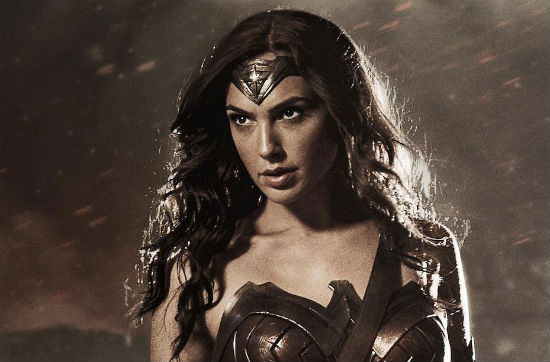
Gal Gadot as Wonder Woman

“A Woman is like a tea bag – you can’t tell how strong she is until you put her in hot water.” ~ Eleanor Roosevelt

“I just want to say to women, ‘Be yourself – it’s the inner beauty that counts. You are your own best friend, the key to your own happiness, and as soon as you understand that – and it takes a few heartbreaks – you can be happy.’” ~ Cherie Lunghi

“No struggle can ever succeed without women participating side by side with men.” ~ Muhammad Ali Jinnah

My husband and I went to see Wonder Woman this past weekend. It’s been out three weeks, so we thought the theatre might be fairly empty since we go to the movie on a Sunday mornings when most people are in church. However, this time the theatre was almost completely full. Granted it was Father’s Day, but I think the crowd had more to do with the movie, than the holiday.

There are movies that I like because they are good fun, or they have a message that makes you feel good after you’ve seen it. Then there are movies that have universal themes, ones that goe beyond the special effects, the story and characters. Wonder Woman is that kind of movie. I’d like to tell you why I think so.

But first I have to share a bit of serendipity. I’m doing research for the sequel novel to The Space Between Time. Both Jenna in the present and Morgan in the past, are fighting for women’s rights. Because of the complex themes, I’ve been doing some research. The book I’m currently reading is A Brief History of Misogyny: The World’s Oldest Prejudice. by Jack Holland. I had just started reading the book the day before going to see Wonder Woman. The section I was reading was about what the author thought were the origins of misogyny. He says in the Western world it was ancient Greece, in the eighth century BC when the writer Hesiod wrote a poem about Pandora. In the poem he states that man was created before women, sound familiar and against nature, and that men were completely happy until Zeus decides to punish man for complicated reasons which involve Prometheus sharing the secret of fire with them. I’ll interrupt myself here to state, I’ve never liked most of the Greek gods, especially Zeus. To me he displays the worst of male qualities. But to continue, Zeus creates women as a temping but evil thing to punish man for having the gall to think they deserved better than to live like wild animals. Pandora is beautiful, but evil as she is the one who opens the box that unleashes evil into the world. I always thought that the hidden theme to that story was that man messed up the world and not wanting to take the blame, created the story about Pandora. “Yes, let’s blame women for the evil in the world.”

Now, don’t get me wrong, woman can be just as evil as men. In fact, in the movie there is an evil woman, Dr. Maru, who creates mustard gas. (In reality is was created by a colleague of Albert Einstein.) But, she’s a wounded woman. Her face has been disfigured, we don’t know how or by whom. Later we discover that the inspiration for the mustard gas formula was whispered to her by Ares, the real antagonist of the story.

The mythology of the movie doesn’t mention Pandora, what it does do is show us a community of confident, strong, capable, intelligent, compassionate women who live together in peace. They don’t always agree, but when they don’t they listen to each other, discuss and work things out.

When Steve Trevor arrives followed by German WW I seamen, they fight and defeat the men, but though they acknowledge the help Steve gave during the battle, they also use the lasso to get to the truth of the situation from him. It seems that they don’t hate men, but they’ve had enough experience to know that they need to be wary. So the old, battle of the sexes theme is a part of the movie, but the way Steve and Diana relate to each other is not combative.

That’s another thing I love about the movie. It shows the way women are treated without beating the audience over the head with it. The island of Themyscira, where the Amazons live, is hidden from the world in which the rest of humanity lives. So, when Diana decides to go with Steve back to his world to find and defeat Ares, god of war, she is puzzled by the way the men treat her. They ignore her advice about battle plans, they treat her as if she’s invisible. They talk over her and tell her she can’t be involved in their plans.

And there is the central relationship between Diana and Steve Trevor. She asks him questions about the way things work in his world that he has trouble answering. Her questions make him think in a new way. He sees her battle skills, but has been indoctrinated that women are to be protected. At one point he says to her, “I can’t let you do this,” to which she replies, “What I do is not up to you.” They also have discussions about honor, and doing the right thing. Both have a strong desire to make the world a better place. At one point Steve says, “My father said, ‘When you see there’s something wrong with the world, you can do nothing or something.’ And I’ve already tried nothing, so I’m doing something.” At another point Diana says, “I will fight for those who cannot fight for themselves.” Because they share similar values, they find a deep connection with each other.

I know that in the recent past there have been lots of strong women characters on TV, in movies, and books. They’re not all perfect, they have flaws but most of them have a strong honor code. Love is extremely important to them. That’s a good thing. We need strong women role models. I hope to see more of this kind of entertainment. Not all strong women need to be warriors like Diana, but they do need to stand up for themselves and for what’s right.

Once at a Comicon conference, Joss Whedon, who created Buffy the Vampire Slayer, and other stories with fascinating women, was asked why he wrote such strong women characters. His answer says it all, “Because you’re still asking me that question.” We have a long way to go before men and women enjoy equality.

If you haven’t seen Wonder Woman I highly recommend it because it says that hope and love are what will save our future.

Thanks for reading. Feel free to leave a comment or share with a friend.

Lucinda Sage-Midgorden © 2017

Lucinda is the author of The Space Between Time, a paranormal, historical, time travel novel. It’s available in all ebook formats at Smashwords, and at most other fine ebook stores. It will soon be available for kindle and print-on-demand on Amazon.