The Peace Corps, Chocolate, and Books

This post contains affiliate links.

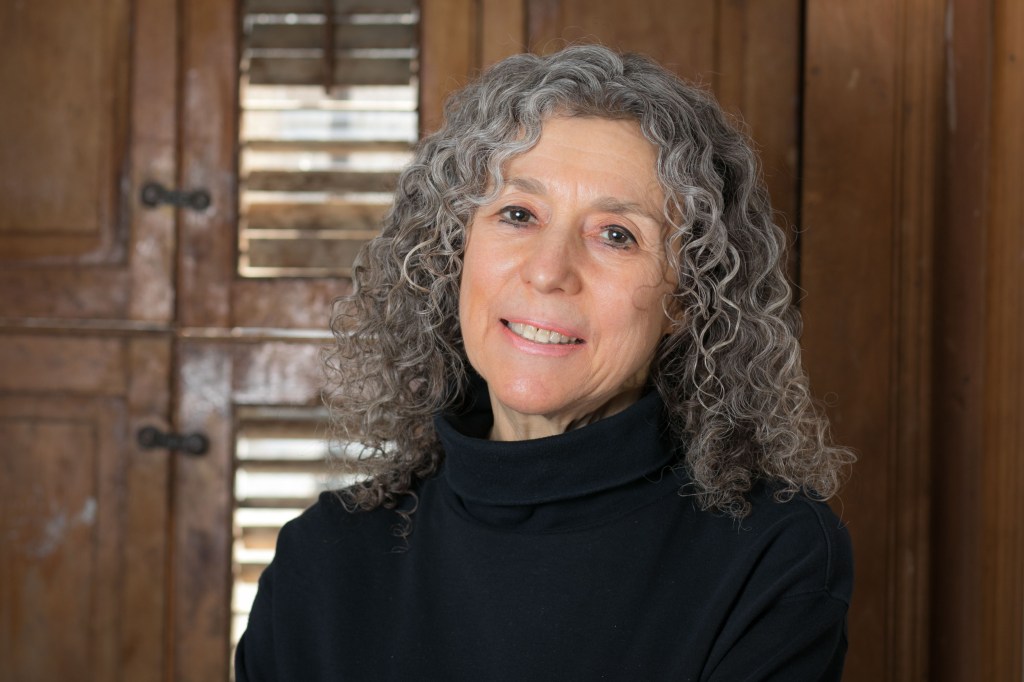
Christine Herbert is a part-time writer, part-time bodyworker, and full-time space cadet currently living in the Pacific Northwest. A dyed-in-the-wool introvert, she occasionally surprises everyone—especially herself—by chucking it all and living an adventurous life of service overseas, once as a U.S. Peace Corps volunteer in Zambia and later as a manager for a non-profit organization in Nepal. When not adventuring off to distant lands, she can be found holed up in her glorified oubliette under a pile of lap blankets surrounded by a multitude of storybooks and wheels of cheese.

Christine loves connecting with fellow writers, readers, globetrotters, and woolgatherers. She can be followed on Facebook, Instagram, and Twitter for news about upcoming releases, the latest scoops that uplift and encourage the human spirit, and travel snaps of her adventures abroad.

Christine’s Website, Facebook, LinkedIn, Instagram, Twitter, Pinterest 

Christine’s Book: The Color of the Elephant: Memoir of a Muzungu 

Become a volunteer with The Peace Corps

Republic of Zambia 

The Dressmaker of Khair Khana: Five Sisters, One Remarkable Family, and the Woman Who Risked Everything to Keep them Safe, Gayle Tzemach Lemmon

Sunflowers Beneath the Snow, Teri M. Brown, Story-Power Episodes, 67, “Real Life Inspired Stories” and Bonus Episode “The Patreon Conversation about An Enemy Like Me

Fatal Intent: A Novel, Tammy Euliano, Story-Power Episode 53, “Write What You Know”

Filaree: A Novel of An American Woman, Marguerite Noble The novel about an Arizona Woman

Middlemarch, George Elliot

Jane Eyre, Charlotte Brontë

The DaVinci Code, Dan Brown

Come Back for Me, Sharon Hart-Green, Story-Power Episode 45, “Writing is Observing the Humans Around Us”

The Deadly Scrolls, Ellen Frankel ( The Jerusalem Mysteries book 1, The Hyena Murders, book 2) Ellen Frankel, Story-Power Episode 44, “Stories From Around the World”

The Resurrector, Moshe Mikanovsky, Story-Power Episode 33, “Reading and Writing in Two Languages”, Episode 37 “Hanukkah Special”

What Could Be So Good, Cat Sebastian (Amazon Editor’s Pick)

And Then I Met You: An Unbelievable True Story, Mackenzie Lee

Full Tilt (Full Tilt Duet Book One), Emma Scott

Magic Claims (Kate Daniels: Willmington Years Book 2), Ilona Andrews

Annie’s Rainbow: A Thrilling Tale of Love and Justice, Fern Michaels

The Night Circus, Erin Morgenstern Also, The Starless Sea: A Novel 

The Overstory, Richard Powers

Finding the Mother Tree, Suzanne Simard

All the Light We Cannot See, Anthony Doerr, Also, Cloud Cuckoo Land

Cloud Atlas, and The Bone Clocks: A Novel, David Mitchell

The Circle of CeridwenBook One of The Circle of Ceridwen Saga), Octavia Randolph

PodMatch

This episode is brought to you by PodMatch, the dating service for podcasters. They introduced me to Christine Herbert, and I’m so glad they did. I hope you’ve enjoyed our conversation and remember that if you have a podcast or something to share with the world, check out PodMatch at my affiliate link at PodMatch and tell them Lucinda sent you.

Story-Power on Patreon

I’m so passionate about stories and what I can learn from them that I created the Story-Power podcast and Patreon communities so I’d have an excuse to talk story. You may have seen my Story-Power posts here. You will find several of my Story-Power guests sharing extra content about books and their creative projects for my patrons. If you’re passionate about stories too, and want to talk about your favorites, come join me at patreon.com/StoryPower.

The Hands of Time

Bending Time

This post contains affiliate links.

“Tough times never last, but tough people do.” ~ Robert H. Schuller

“Don’t spend time beating on a wall, hoping to transform it into a door.” ~ Coco Chanel

“Time changes everything except something within us which is always surprised by change.” ~ Thomas Hardy

Time is a human construct. We are the only species on the planet that can remember the past, at least our version of it, and imagine what the future will be like. Which means that most of us don’t live in the present moment.  I have to remind myself to concentrate on the moment I’m living in.

Something living in the present moment does, is to help me be more grateful. I tell myself often that in this moment I have a roof over my head, food on the table and the chance to be creative every day. In the past when times were not going so well, I would remind myself, “In this moment I’m safe, I have everything I need, and because of that I can relax.”

These past weeks have been stressful. My mother’s health is failing. As a result she’s been in and out of the hospital, and because she’s on Medicaid, she’s been moved to new living facilities two or three times as well. Other things have happened too. She’s been taken advantage of, which makes my brother, sisters and me very upset and worried for her. My youngest sister is the sibling who lives closest to her and has taken care of her for the past years. It has taken a bigger toll on her than the rest of us. In a way, I feel bad about that. But then I remember that I was the one who took care of my Mom’s mom. We’ve all done our part to support family members in any way we can.

On top of what’s going on with my Mom, there have been so many tragedies going on around the world. I must admit that sometimes I feel overwhelmed. When things go sideways, I feel it in my body. Sometimes it’s just a general sense of unease, others it’s an itchy feeling under the skin, others my stomach is so clenched that I get a sour stomach and heartburn. 

At times like these, I ask myself, “What am I supposed to be learning from this?”, and “How can I help my mother, sister, and all the other people who are suffering right now”? I live far from most of them. The only answer I’ve come up with is that my love and prayers for healing and support transcend distance, which I send out every day. I send it not just to my family, but to places where there is great turmoil and suffering. Sometimes I envision the Earth completely surrounded by light and love. It’s these things that help me feel that I am actually having a small positive effect on what’s happening.

One thing is for sure, nothing stays the same. Change happens whether we’re ready for it or not. The upheaval is a testament to that. I liken times like this to “cosmic closet cleaning”. Whenever we do any kind of reorganizing, we have to make a mess to get rid of the things we no longer need or want before we can put things back into some kind of order.

I don’t know about you, but for these past three years I’ve had to remind myself over and over again to stay in the moment and find things to be grateful for. It’s not easy. My first inclination is to moan and complain. A friend of mine said that humans tend to go to negative feelings when something unsettling happens. I’ve decided I don’t want to do that anymore. I’d rather feel good and so I keep reminding myself to go back to the present moment. When I concentrate on what I’m doing in this moment, most of the turmoil in the outside world fades away.  

How do you cope with unexpected challenges? I hope you’ll share so we can all gather more tools for relieving stress and living in gratitude.

Blessings,

Lucinda Sage-Midgorden © 2023

Story-Power on Patreon

I’m so passionate about stories and what I can learn from them that I created the Story-Power podcast and Patreon communities so I’d have an excuse to talk story. You may have seen my Story-Power posts here. If you’re passionate about stories too, and want to talk about your favorites, come join me at patreon.com/StoryPower.

PodMatch

If you are a podcaster, or have a message or fantastic product you want to share with the world, I encourage you to check out PodMatch. I call them a dating service for podcasters. Use the affiliate link and tell them, Lucinda sent you. Then contact me so we can set up a Story-Power chat.

Stories That Comfort

This post contains affiliate links.

“The harder the conflict, the more glorious the triumph.” ~Thomas Paine

“Conflict is drama, and how people deal with conflict shows you the king of people they are.” ~ Stephen Moyer

One of the tenants of good storytelling is to have plenty of conflict for the characters to deal with so that as the story progresses and finally ends, we feel satisfied by the lessons learned.

Great stories make us feel like we’ve been right there by the side of the characters. We see the dangers or relationship traps they might fall into and yell at them to watch out, or whisper to them not to make that choice.

In the most enduring stories, the characters are elevated by facing their fears, healing their wounds, and forgiving themselves and others. That’s on the one hand. On the other are stories like Macbeth or Hamlet, where the main character goes down a dark path and is defeated in the end. But those kinds of stories can teach us important lessons about pursuits that can destroy us. Those however, are not my favorites.

When I choose a book to read, TV series, or movie to watch, I’m looking for a warm feeling at the end. Life is hard enough. I’m not interested in seeing society destroyed, or a huge body count and then the “hero” going off to continue his or her quest for death and destruction. I quit watching or reading stories where the characters are going on a downward spiral. 

I recently read the second book, Under the Pawpaw Trees, in a series by my latest Story-Power guest, Cheryl King so we can record a new conversation about it for my Patreon Community. Her first novel is titled, Sitting on Top of the World. The stories take place during The Great Depression and begin when main character June Baker is 12 years old. Everyone in her small Tennessee town struggles, but through the two books June is beset by tragedy after tragedy that she must find a way to deal with.

I read Sitting on Top of the World while the pandemic was still grinding on and the world Cheryl created for June and her family to live in felt so familiar. Everyone in the book was affected by the difficult economic times and some of them had to risk their lives to try to help their families survive. 

In book two, Under the Pawpaw Trees, June is now 15 going on 16 and grieving the losses forced upon her by the continuation of the Depression. In her mind the tragedies that have happened can be placed at the feet of one man, someone who helped her in book one. However, she discovered he wasn’t who she thought he was. So in book two she’s out for revenge. But June discovers that what she thought was true, isn’t. She gains a new perspective that allows her to forgive. 

After finishing this second book, I didn’t feel like starting another one. I wanted to think about June and all she’d gone through as the two stories unfolded and how Cheryl King turned the ending to something satisfying and heartwarming. I wanted to hold onto that great feeling for as long as I could. Even though the pandemic is winding down now, we’re all still experiencing upheaval in our societies. And, I don’t know about you, but most of the people I know are feeling anxious, so anything that can alleviate that is a good thing.

What kinds of stories speak to you or are your favorites and why? I’d love to start a discussion about what you enjoy and learn from stories.

Have a wonderful weekend. If you live in the Northern Hemisphere, stay cool.

Blessings,

Lucinda Sage-Midgorden

Story-Power on Patreon

I’m so passionate about stories and what I can learn from them that I created the Story-Power podcast and Patreon communities so I’d have an excuse to talk story. You may have seen my Story-Power posts here. If you’re passionate about stories too, and want to talk about your favorites, come join me at patreon.com/StoryPower.

PodMatch 

If you are a podcaster, or have a message or fantastic product you want to share with the world, I encourage you to check out PodMatch. I call them a dating service for podcasters. Use the affiliate link and tell them, Lucinda sent you. Then contact me so we can set up a Story-Power chat.

Historical Books that Evoke Familiar Feelings

This post contains affiliate links.

“Humans are not ideally set up to understand logic; they are ideally set up to understand stories. ~ Roger C. Shank, Cognitive Scientist

Bio: Cheryl King is a dyslexia therapist and author of teen historical fiction Sitting on Top of the World, a 2022 Eric Hoffer YA winner, First Horizon winner, and Grand Prize finalist. She is working on a sequel and enjoying various flash fiction contests. Readers can learn more at https://CherylKingWritesThings.com.

Cheryl’s website: https://cherylkingwritesthings.com/

Cheryl’s second book, Under the Pawpaw Trees, both books available at, Amazon, Apple books, Barnes and Noble, Walmart, Bookshop.com, and her website.

Book narrator, Whitney Dykhouse

ACX, an Audible company

NYC Midnight Flash Fiction

Eric Hoffer Book Awards, for Small, Academic, and Independent Press

The Space Between Time, Lucinda Sage-Midgorden on Apple Books

Sunflowers Beneath the Snow, Teri M. Brown, novel about Ukraine, Story-Power episode 67, 1/25/23

Steampunk, according to Wikipedia, Sci-fi stories which “features anachronistic technologies or retrofuturistic inventions as the people in the 19th century might have envisioned them.”

The Invisible Library, Genevieve Cogman, book on of the series.

Embers at Galdrilene(Dragon’s Call series book 1) A. D. Trosper, She has other series as well. Story-Power episode 28, 8/4/21, “Dragons are Good”

Quest of the Dreamwalker, (Corthan Legacy book 1) Stacy Bennett, Story-Power episode 29, 8/18/21, “Writing is Better with a Buddy”

Ivan Bodley, Story-Power episode 35 11/10/21, “Am I Famous Yet?”

Story-Power Patreon Community

I’m so passionate about stories and what I can learn from them that I created the Story-Power podcast and Patreon communities so I’d have an excuse to talk story. You may have seen my Story-Power posts here. If you’re passionate about stories too, and want to talk about your favorite stories, come join me at patreon.com/StoryPower.

PodMatch

This episode is brought to you by PodMatch, the dating service for podcasters. They introduced me to Cheryl King through the PodPros community. I’m so glad they did. I hope you’ve enjoyed our conversation and remember that if you have a podcast or something to share with the world, check out PodMatch at my affiliate link at PodMatch and tell them Lucinda sent you.

The Significance of Stories

“Humans are not ideally set up to understand logic; they are ideally set up to understand stories.” ~ Roger C. Shank, Cognitive Scientist

“I believe that a different therapy must be constructed for each patient because each has a unique story.” ~ Irvin D. Yale

“The computer can’t tell you the emotional story. It can give you the exact mathematical design, but what’s missing is the eyebrows.” ~ Frank Zappa

For three years, since I started my Story-Power podcast, I have been actively trying to define what it is about stories that make them so significant for us. When I read the Frank Zappa quote above, I finally got it. Logic is cold and lifeless. We need it in certain situations, but when we gather with friends and family, it’s the emotions behind the stories we share that enrich our lives.

This past weekend we traveled to Portland, Oregon to attend my cousin’s memorial service. It was an emotional weekend to say the least. She died on Easter Sunday four days before her 59th birthday. The family spent a lot of time before and after the service sharing stories not just about my cousin and how she’d touched us, but stories about what we’d learned from related events in our own lives.

It’s during these types of gatherings, where stories take on a special significance. That’s why we continue to have family reunions, get together for Christmases or High Holy Days, birthdays, weddings, and end of life events. Because these events give us permission to tell the emotional parts of our lives that we keep hidden most of the time.

Humans are emotional beings but for some reason, at least in the U.S., we hide them as if we’re ashamed of them. Or we’re afraid someone will take advantage of us if we show how we truly feel. Stoicism has been considered a virtue in some sectors of the population since ancient Greek and Roman times and may be the origin of the reprehensible practices of placing money, power, and prestige before caring for human beings.

If you don’t know what stoicism is, think of Spock in the Star Trek franchise. His character comes from a whole race of stoics who prize logic above emotion because they believe it makes them stronger. But what Spock learns is that it’s emotional connections with others that is of ultimate strength. The MCU has other examples of characters who believe that to suppress emotions makes us stronger. Yon-Rogg in Captain Marvel is continually telling Vers (Carol Danvers) that. But when she discovers who she really is, he finds out he’s wrong. After all, we’re built with nervous systems in our bodies, not computer chips.

I have to admit that there have been people in my life who attempted to make me feel less than because I loved stories so much and wanted to spend my life as a story seeker and teller. They thought I should put away childish things and follow the money. Sometimes they succeeded in making me question my choice of education or careers. Fortunately that time is finally over. 

To me stories are one of the most powerful forces in the world. They can touch and change us in ways we often can’t even define. Watching someone go through things on the screen or in a book that are difficult, even traumatic, and then coming out the other side a stronger person, that’s priceless. We get to experience something extraordinary that in our normal lives we wouldn’t be able to be a part of. And it’s all because the storyteller chose to open their heart and be vulnerable enough to share something really important with the rest of us. 

It feels to me like humans are changing from cold emotionless people seeking validation from outside ourselves to beings who long for emotional connection with others. I say that because looking at the stories being told now explore internal conflicts more readily than stories which are exclusively driven by external conflict. Or they are a combination of the two with emphasis on how the characters deal with external events internally. How do the characters change because of what happens to them?

I’m going to continue to explore this idea of what makes stories so important to us and share new insights with you as they come to me. I hope you’ll come along for the ride.

Stay cool if you’re in the Northern Hemisphere enjoy the cooler temps if you’re not.

Blessings,

Lucinda Sage-Midgorden © 2023

Come join me on Patreon for more story discussions

I’m so passionate about stories and what I can learn from them that I created the Story-Power podcast and Patreon communities so I’d have an excuse to talk story. You may have seen my Story-Power posts here. If you’re passionate about stories too, and want to talk about your favorite stories, come join me at patreon.com/StoryPower.

PodMatch 

If you are a podcaster, or have a message or fantastic product you want to share with the world, I encourage you to check out PodMatch. I call them a dating service for podcasters. Use the affiliate link and tell them, Lucinda sent you. Then contact me so we can set up a Story-Power chat.