John Wayne Does Shakespeare?

This post contains affiliate links.

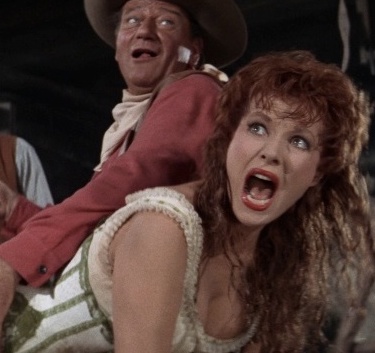
My dad was a big fan of Westerns, and particularly John Wayne. We watched and discussed lots of them as I was growing up. One of my favorites is McLintock, (1963) a western comedy that is lots of fun. But I didn’t know it was an adaptation of a Shakespeare play until just a few years ago, when I had an epiphany as I watched the movie again. “That’s an adaptation of The Taming of the Shrew!” I had just shown Shrew in my dramatic structure class, so the plot was fresh in my head.

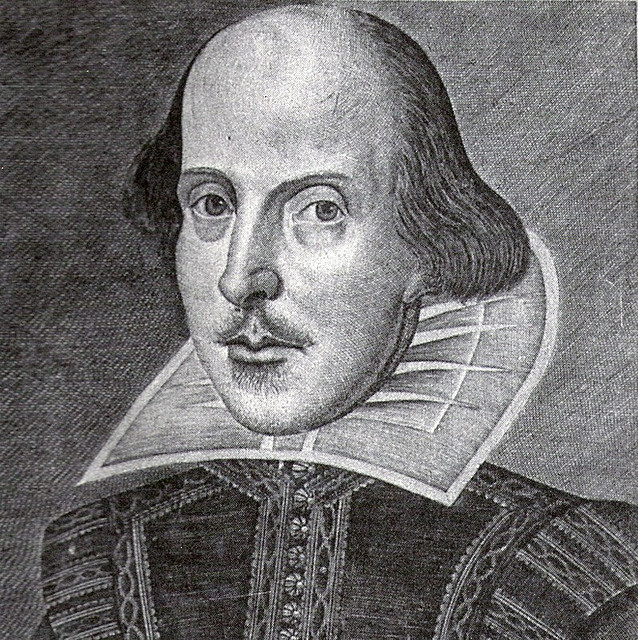
It’s pretty hard to mess up a Shakespeare story even if you’re John Wayne. But it’s also a great way to introduce his stories to those who think his work is inaccessible. 

I took two Shakespeare classes when I was studying theatre. The way I learned to understand his language was to read the play along with an audio recording of actors performing it. Once I began to understand the language, I fell in love with his work. And I began to notice stories based on his plays all over the place, like McLintock. Of course some of the details in such adaptations are changed from the original play, but still we get the benefit of the themes of the original stories.

In the case of John Wayne and Maureen O’Hara, they’re a middle aged married couple with a grown daughter who is just coming home from finishing school. The feud, of two years standing in this case, is over lipstick on George Washington McLintock’s collar. G.W. doesn’t know why Kate’s angry which makes his and our finding out part of the fun. However, it still has that problematic scene where G.W. spanks his wife to get her to give up her grudge. 

The way Petruchio treats Kate in the play is also problematic, but I’ve seen productions where, in the end, Kate manages to gain an equal footing with her new husband and gain his respect. To my mind, the play is a study in psychology because Kate is a shrew for a good reason. Her father loves Bianca, Kate’s sister, the most and doesn’t even try to hide the fact. Fortunately, Bianca’s deviousness gets exposed in the end.

In McLintock, the story centers around Katherine and G.W., while their daughter plays a much nicer Bianca, type character. Katherine’s reason for being angry is not so clear cut as in the play. Supposedly Wayne was trying to make a statement about marital abuse by either spouse. It’s a little hard to see that, but Kate IS verbally and even physically abusive to G.W. because of the lipstick thing. The only way G.W. can get Kate to stop and listen to him is to spank her in front of the whole town at the climax of the movie. 

The movie has other messages as well. For example, G.W. is the big man in the territory, but he honors the Native people too and thinks they got a raw deal from the Government, i.e. their representation in most westerns he was in, but had no control over. He and his daughter, Rebecca, have a heart-to-heart about marriage, and how a man and woman grow together by facing the tough times. And that’s why when he dies she will not inherit the entirety of his huge ranch. He’s giving most of the land he’s acquired to the country for a nature preserve. So, even though the movie is a fun romp with funny fight scenes, and all kinds of colorful characters, Wayne does manage to slip in some meaningful things for the audience to think about.

John Wayne is, of course, not the only person to adapt Shakespeare’s plays for a more modern take, or even to fit a different culture than Elizabethan England. There’s a partial list on Wikipedia if you care to find ones you might want to watch. Bollywood has made several. Macbeth was adapted by the famous, Akira Kurosawa into Throne of Blood. There is a long list of more modern adaptations like, 10 Things I Hate About You, another adaptation of Shrew. She’s the Man, an adaptation of Twelfth Night, and of course the musicals like, Kiss Me Kate, Shrew again and The Boys from Syracuse, The Comedy of Errors. Side note, I was in a production of The Boys from Syracuse during graduate school. 

Obviously there are too many adaptations for me to list here, but have some fun, watch an adaptation of a Shakespeare play and see if you don’t agree with me that his stories are just as relevant today as they were when he created them. 

By the way, Shakespeare was an adapter as well. Most of his stories are amalgams of lots of different stories, so those who adapt his work are carrying on his tradition.

Thanks for reading. I hope you’ll go enjoy an adaptation of a Shakespeare play this week. 

Blessings,

Lucinda Sage-Midgorden © 2023

Story-Power on Patreon

I’m so passionate about stories and what I can learn from them that I created the Story-Power podcast and Patreon communities so I’d have an excuse to talk story. You may have seen my Story-Power posts here. If you’re passionate about stories too, and want to talk about your favorite stories, come join me at patreon.com/StoryPower.

Saving the World One Story at a Time

Dale Carnegie wrote in his book How To Win Friends and Influence People, “Instead of condemning people, let’s try to understand them. Let’s try to figure out why they do what they do. That’s a lot more profitable and intriguing than criticism; and it breeds sympathy, tolerance and kindness. ‘To know all is to forgive all.’” 

That’s why I’m hooked on stories. I get to watch the characters go through their emotional ups and downs, try to understand them and by extension, myself. If that sounds like something you’d like to try, you might want to consider taking my course Saving the World One Story at a Time.

Course Code: //www.udemy.com/course/saving-the-world-one-story-at-a-time/?couponCode=SAVINGTHEWORLDJULY23

PodMatch

If you are a podcaster, or have a message or fantastic product you want to share with the world, I encourage you to check out PodMatch. I call them a dating service for podcasters. Use the affiliate link and tell them, Lucinda sent you. Then contact me so we can set up a Story-Power chat.

Don’t Retire, Do What you Love

This post contains affiliate links.

John’s Website:https://johncolladoart.com/

LinkedIn: http://www.linkedin.com/pub/john-collado/b/337/b57/

Twitter: https://twitter.com/johncolladoart

ArtStation: https://johncolladoart.artstation.com

Bookme: https://bookme.name/johncolladoart

Facebook: https://www.facebook.com/jcolladoart/

Pinterest: http://www.pinterest.com/collado1506

Instagram: https://www.instagram.com/johncolladoart/

Star Trek The original series

The Merchant of Venice, William Shakespeare

SnakeMilkers.com

Portrait of Leonard Nimoy on John’s website

For the Love of Spock, (2016) Director Adam Nimoy, Available on Netflix

Star Trek: The Next Generation (1987 – 1994) 

Outlander (2014 – ) Created by Ronald D. Moore, based on the novels by Diana Gabaldon

The Space Between Time, Lucinda Sage-Midgorden

Somewhere in Time, (1980) Director, Jeannot Szwarc, Screenplay, Richard Matheson, based on the novel, Bid Time Return

John Carter (2012) Director, Screenwriter, Andrew Stanton, based on a story “A Princess of Mars” by Edgar Rice Burroughs

Tarzan book series by Edgar Rice Burroughs

Adobe Suite, including InDesign and Photoshop software for graphics

Clip Studio Paint

Sage Woman Chronicles, Lucinda’s website and blog

Story-Power podcast on Libsyn,also available on Apple, Google, Spotify, Amazon

Trevor Valenzuela, “Caps off With John and Trevor” on YouTube

Literary License podcast

Vinnie Potestivo, Episode 69, 3/1/23 “Marketing Your Creative Work” on Apple podcasts

Goodreads, social media for book lovers

Letterboxd.com, social media for movie lovers

Story-Power on Patreon

I’m so passionate about stories and what I can learn from them that I created the Story-Power podcast and Patreon communities so I’d have an excuse to talk story. You may have seen my Story-Power posts here. If you’re passionate about stories too, and want to talk about your favorite stories, come join me at patreon.com/StoryPower.

PodMatch

If you are a podcaster, or have a message or fantastic product you want to share with the world, I encourage you to check out PodMatch. I call them a dating service for podcasters. Use the affiliate link and tell them, Lucinda sent you. Then contact me so we can set up a Story-Power chat.

Character and Character

This post contains affiliate links.

“A good character is the best tombstone. Those who loved you and were helped by you will remember you when forget-me-nots have withered. Carve your name on hearts, not on marble.” ~ Charles Spurgeon

“There will be times in your life that you will be challenged to choose between honor and something else. I am asking that you not sacrifice your honor for the sake of acquiring easy things.” ~ Idowu Koyenikan, Wealth for All: Living a Life of Success at the Edge of Your Ability 

“All tales, then, are at some level a journey into the woods to find the missing part of us, to retrieve it and make ourselves whole. Storytelling is as simple – and complex – as that. That’s the pattern. That’s how we tell stories.” ~ John Yorke, Into the Woods: A Five Act Journey Into Story

The first meaning of character is: “the mental and moral qualities distinctive to an individual.”

The second is: “a person in a novel, play, or movie: a part played by an actor.”

It seems to me that a lot of the news stories that come out on a daily basis are about character. How what politicians, judges, business leaders and even ordinary people say and do give us a clue about their values and morals. 

What qualities do people with good character have and how can we foster it in our children? I hinted at this in last week’s post about what we learn in kindergarten, but there is another way. If we examine the stories we consume, we have lots of examples of good and bad personal character. I write that because I began analyzing stories with my family at a fairly young age. Eventually I realized that gave me a wonderful education in what kind of person I wanted to be.

The process an actor goes through to understand her or his character is extensive. They look at what the character says and does, and why, to discover their moral bent, their mental/emotional state, and to get clues about their past that might be affecting the present of the story. Examining all of these things, and more, helps the actor make the best choices in his or her portrayal. 

In some sectors of society, acting is looked at as a trivial pursuit. After all lives are not being saved. And yet maybe they are. People who analyze stories understand human behavior and the good ones apply what they’ve learned in their lives away from the stage. As I used to tell my acting students, “You’ll be learning skills in this class that you will be able to use in your real life.” Knowing something about character analysis is particularly helpful if you’re a leader of some sort. You can look behind the behaviors of those who work for you and perhaps help the ones who need it instead of writing them off and firing them.

Understanding human behavior is also helpful during conflict with another person. The skills of looking beneath the surface kick in and you can think of the possible reasons this person is angry, or upset. I’ve used this tool often. Taking a breath and not reacting right away helps. Most times the other person stops yelling at you, wondering why you’re not engaging. In the silence you can say very calmly, “You’re really upset. Is there something I can do to help you?” Saying something like that usually causes the person to calm down enough so you can get to what’s bothering them. The key is to stay calm. 

Each of us decides at some point what kind of mental and moral qualities we’re going to develop. In some cases, this is an unexamined choice. However, it’s becoming more common to encourage people to examine what happens to them and how they feel about it. One tool is to keep a journal. A journal, unlike a diary, is a chronicle of our thoughts and feelings about what we experience. I don’t know about you, but in my journal I’m asking myself questions about the choices I’ve made and how they affected not only me, but those around me. I also ask questions about what’s happening in the world and how I can effect change. One answer that keeps coming back to me is to work on myself. Doing that creates a ripple effect. My life touches other lives, hopefully in a positive way, which might help them figure something out that they’ve been working on, and so on and so on. We can create positive ripples, or negative ones. It’s up to us.

I’m old enough to have seen lots of struggles for human rights on the one hand and corruption on the other. I’ve seen people, corporations, and governments choose money and power over people. But it seems to me things are changing, all be it slowly, toward choosing humans over the glitz and glamour, power and prestige. Maybe it’s because more and more people are choosing honor, love and caring over something else. 

For me, stories give us a myriad of examples of characters and the consequences of their choices. As we read, or watch, we get to choose the ones we want to emulate. 

Thanks for reading, liking, and commenting. I hope things are going well in your world.

Blessings,

Lucinda Sage-Midgorden © 2023

Story-Power on Patreon

I’m so passionate about stories and what I can learn from them that I created the Story-Power podcast and Patreon communities so I’d have an excuse to talk story. You may have seen my Story-Power posts here. If you’re passionate about stories too, and want to talk about your favorite stories, come join me at patreon.com/StoryPower.

Saving the World One Story at a Time

Dale Carnegie wrote in his book How To Win Friends and Influence People, “Instead of condemning people, let’s try to understand them. Let’s try to figure out why they do what they do. That’s a lot more profitable and intriguing than criticism; and it breeds sympathy, tolerance and kindness. ‘To know all is to forgive all.’” 

That’s why I’m hooked on stories. I get to watch the characters go through their emotional ups and downs, try to understand them and by extension, myself. If that sounds like something you’d like to try, you might want to consider taking my course Saving the World One Story at a Time.

Course Code: //www.udemy.com/course/saving-the-world-one-story-at-a-time/?couponCode=SAVINGTHEWORLDJULY23

PodMatch

If you are a podcaster, or have a message or fantastic product you want to share with the world, I encourage you to check out PodMatch. I call them a dating service for podcasters. Use the affiliate link and tell them, Lucinda sent you. Then contact me so we can set up a Story-Power chat.
What Children Learn and Adults Forget

Photo by cottonbro studio on Pexels.com

This post contains affiliate links.

One morning last week, I woke up remembering a slim little book published in 1986 titled All I Need to Know I Learned in Kindergarten, by Robert Fulghum. It’s really a book of observational essays about things he noticed in the world around him or about things he’d been thinking about and the effect those things had upon his life.

What I felt when I remembered the book was that we need more sharing in the world. That’s the first thing on the list of things we learn in kindergarten is to “share everything”.  I’m really good at sharing some things, but not so good at sharing others. I can share books, or my teaching materials, or my time, but I’m not so good at sharing money. That’s not good because I don’t share it when I feel like I don’t have enough. That’s lack thinking and I want to change my mind about that. I’m working on feeling prosperous no matter how much money I have. I mean, compared to some people in the world, I’m wealthy. I have two cars, a beautiful home, food on the table, I have annuities and Social Security. I’m beyond fortunate. One thing I’ve noticed is that giving away money helps me FEEL wealthy.

Some of the other things we learn in kindergarten according to Fughum’s list are, “play fair, don’t hit people, put things back where you found them, and don’t take things that aren’t yours.” It all seems so simple when we’re children. We’re taught to be open hearted and mindful of others feelings but as we grow somehow we forget. Things happen and we begin to protect ourselves. I’m on a mission to go back to being open to all the wonderful things the Universe has to offer me just as children are. It’s something I have to pay attention to every single moment. Those negative thoughts come crashing in and I begin to tense up and become afraid. And then I remember, if I allow it, good people and things will come to me. All I have to do is allow them in.

What kindergarten teachers are really trying to teach is empathy. It is a skill that can be developed to a high degree. Most of us have some measure of empathy. I mean think about a time when someone was yelling at their children in the grocery store, or a restaurant and almost everyone could hear them. How did that make you feel? Did you notice how the atmosphere in the room changed? I cringe just thinking about times like that. That’s my empathy kicking in.

I wish I could remember where I read this, but there was a study done about how people react when they view certain situations, either in real life or on the screen. What the researchers found was that when we witness cruelty or kindness done to others, it’s as if it is done to us. We experience the fight or flight response, or our hearts open to the wonderful feeling of being appreciated. Learning that was sobering, but not a surprising conclusion because I know that I cry when someone else does. I feel the happiness and warmth shared among people when I’m a witness to happy situations. I also feel the opposite when I watch or read a story that is full of hatred and darkness. That’s why I seek out stories that make me feel good. The characters might go through some tough situations, but if they learn something and come out the other side ready to be open hearted and loving, that’s my kind of story. I learn something from what the characters have experienced. 

Reading All I Really Need to Know I Learned in Kindergarten again has solidified my resolve to be more mindful and loving to others. I don’t pay attention to that often enough. I think we allow life to beat us down so we can fit in. But I’m determined to be better at sharing the good things in life from now on.

Note:I have moved Story-Power to a new hosting site. If you follow it here, it will be available as blog posts, at least for now. However, if you follow on any platform other than Apple, you may need to re-follow it. Spotify is in the process of approving the new RSS URL. It may take a few days to populate the latest episode there. I have also just put Story-Power up on Amazon, you can look for it there if you prefer.

Thanks for reading, liking and commenting. I appreciate your support.

Blessings,

Lucinda Sage-Midgorden © 2023

Story-Power on Patreon

I’m so passionate about stories and what I can learn from them that I created the Story-Power podcast and Patreon communities so I’d have an excuse to talk story. You may have seen my Story-Power posts here. If you’re passionate about stories too, and want to talk about your favorites, come join me at patreon.com/StoryPower.

PodMatch

If you are a podcaster, or have a message or fantastic product you want to share with the world, I encourage you to check out PodMatch. I call them a dating service for podcasters. Use the affiliate link and tell them, Lucinda sent you. Then contact me so we can set up a Story-Power chat.
Power Your Outreach

This post contains affiliate links.

Note to my followers: I have moved Story-Power to a new podcast host. If you have followed it on Apple, Google, or Spotify, you will most likely need to click the follow button again. I was unable to do a seamless redirect with the plan I have on WordPress. I apologize for the inconvenience.

I help small and medium-sized companies get ranked at the top of Google by using search engine optimization tactics and bringing in traffic via social media, paid ads, etc.

I am happy to help small and medium-sized companies get ranked at the top of Google by using search engine optimization tactics and bringing in traffic via social media, paid ads, etc.

Check out my podcast episodes, guest appearances, and webinars at https://www.youtube.com/c/BrandonLeibowitz/videos

Brandon’s Website: https://seooptimizers.com/gift, Webinars, classes, podcast

Thanks for Listening to the Podcast. Claim Your SEO Gift From Brandon Leibowitz & the SEO Optimizers Team. Special Early Access to our SEO Masterclass. Learn How We Use Search Engine Optimization To Increase Our Sales & Leads.

Brandon’s other Social Media: Facebook, LinkedIn, Instagram, Twitter, YouTube, Pinterest, Website

Helps with marketing with: social media, email marketing, Google Analytics, Google Search Console, Facebook, Instagram, Twitter, YouTube, Pinterest, Google Ads, Yelp, Local SEOs

Marketing Tip: Get as many “back links” as you can. A back link is another website, or other media talking about what you offer. The more back links you have the more Google trusts your site.

Paid Tools to get back links: MOZ.com, ahrefs.com, semrush.com

PodMatch

This episode is brought to you by PodMatch, the dating service for podcasters. They introduced me to Brandon Leibovitz, and I’m so glad they did. I hope you’ve enjoyed our conversation and remember that if you have a podcast or something to share with the world, check out PodMatch at my affiliate link at PodMatch and tell them Lucinda sent you.

Story-Power on Patreon

I’m so passionate about stories that I created the Story-Power podcast and Patreon communities so I’d have an excuse to talk story. You may have seen my Story-Power posts here. If you’re passionate about stories too, and want to talk about your favorite stories, come join me at either SageWoman.life, or patreon.com/StoryPower.