Taking Stock

Dad and me on Easter Sunday

“Have you ever stopped for a moment and looked at yourself through the eyes of the ultimate observer?” ~ Ramtha, What the Bleep do We (K)now!?

“No one is dumb who is curious. The people who don’t ask questions remain clueless throughout their lives.” ~ Neal deGrasse Tyson

“If we lose love and self respect for each other, this is how we finally die.” ~ Maya Angelou

I’m one of those people who is always asking questions, always seeking deeper meaning from outside and inside myself. I guess I’m a perpetual student. I come by it naturally, I learned it from my father. He wanted to know everything there was to know and so do I. I understand that won’t be possible while I’m alive in this physical body. Though, I’m pretty certain that once I pass into the next dimension, I’ll be immersed in the true reality.

Having written that, I want to stop a moment and take stock of what I’ve learned so far. I’ll be turning sixty-five at the end of this month so it seems like a great time for reflection.

I started this blog five years ago to be an electronic journal. I’ve been keeping one since I was twenty-four years old. I do still hand write in a paper journal occasionally, but I like the speed at which my ideas come out onto the screen as I type. That led me to create Sage Woman Chronicles. It’s my way of taking my ideas and experiences out and examining them.

A life long passion of mine has been to understand the relationship between Divine Oneness and human beings. That’s what led me to study religion in college, then theatre, then to become a teacher, to travel, to read extensively, to write. And it all started when, at eight years old, I felt the presence of Divine Oneness on the day I was confirmed. That connection has rarely been broken. When it was I was the one who broke it.

You might be surprised to know that one of the ways I reconnect with the Divine is by reading and watching movies and TV. I’m picky about what I watch. A healthy dose of PBS, Natgeo, the Science and Learning channels are part of my viewing fare. But I’m also always on the lookout for good story telling in a variety of genres. It may seem odd that I seek spiritual enlightenment from those sources, because we think of them as pure entertainment. Some people use entertainment as a drug to numb their stress, or pain. But I don’t think that’s true for everyone.

Here’s one small piece of evidence to support my premise. Every week I listen to a podcast titled “What Do I Read Next” hosted by Anne Bogel. Her format is to have one guest on and they talk books. At one point she asks the guest to talk about three books they love and one they hate. This is a version of what many of them say about the book they hate, “I just didn’t connect with it.” Many of the guests talk about how they read to get a new perspective on life, or to learn something about a different culture or country. Reading isn’t just entertainment to them, though it’s that too, but it’s a way to expand and grow. At the end, Anne recommends three books for them to read and she always wants to hear back about what they thought of the books she recommends. She and the guest have made a connection.

To me, art is a profound attempt by the artist to make a connection with their audience. I teach theatre classes. One thing I’ve noticed about my students, especially those who take acting because they need a fine art credit, is that they are surprised to learn that theatre is all about the examination of human behavior. It teaches methods for getting to motivations, why people do what they do. And that’s a skill we can use in all aspects of life. Because that’s true, plays, movies, and episodic TV shows can do the same thing. And now that I’m a novelist, I find that the fiction writer must show the character’s thoughts and feelings so their readers get a glimpse into their motivations and hopefully gain a deeper understanding.

This semester I’m directing the Shakespeare play Measure for Measure. It’s not one of his more well known plays but what happens in the play is so contemporary. The main event that the play revolves around an incident of severe sexual harassment. One of my students said, “This play is so full of unanswered questions.” And I agreed with him. As I examined the script, I came to understand that Angelo, the abuser, has cut himself off from other people by cultivating an image of the pure, faultless human being, while all the time seething underneath with self-doubts, suppressed passions, and dark emotions that he doesn’t want to face. The Duke of Vienna goes undercover into the city for reasons which are not clear, and leaves Angelo in charge of cleaning up the moral degradation that has occurred throughout the city. The first thing Angelo does is arrest one of the most prominent citizens for getting his fiancé pregnant. His downfall begins when the man’s sister comes to beg for her brother’s life. Angelo is smitten with her and offers to save her brother if she will “give me love.”

I’ve seen two versions of this play. Both directors chose to take a dark view of Angelo and people like him. I found something different in the play. At the end, the character Mariana, who was abandoned by Angelo, says, “They say, best men are moulded out of faults;/ And, for the most, become much more the better/For being a little bad: so may my husband.” It’s this idea that we have chosen to emphasize in our production. We all make mistakes and if we learn from them we can become more understanding, less judgmental, and more loving. Measure for Measure, and all of Shakespeare, have layers upon layers of themes for us to examine. All good literature and movies do. They are a doorway into the human soul and that’s what I find fascinating about them.

As I was writing this post, it went in a little bit different direction than I was originally intending. That’s okay, I’ve got another post on Saturday, when I may write more about the connections between seemingly disparate media that I’ve been making lately. I’ll leave you with this quote from my A Course in Miracles lesson for today. It struck me as profoundly comforting and perhaps it’s an idea that you need too. “Try to remember when there was a time, perhaps a minute, maybe even less when nothing came to interrupt your peace; when you were certain you were loved and safe. Then try to picture what it would be like to have that moment be extended to the end of time and to eternity.” Maybe that’s what we seek when we pray, meditate, read, watch content, talk to our friends and family, to find those moments of profound peace and extend them for as long as we can.

Thanks for reading, liking and commenting. I appreciate it very much. I hope you have moments of peace today.

Lucinda Sage-Midgorden © 2018

Lucinda is the author of The Space Between Time, an award finalist in the “Fiction: Fantasy” category of the 2017 Best Book Awards. It’s a historical, time-travel, magical realism, women’s novel, and is available in all ebook formats at Smashwords, or you can find the ebook at iBooks or Barnes and Noble. I you prefer a physical copy, you can find a print-on-demand version at Amazon. To join her email list, click here. She will never sell the names on her list.

Shōgun

“How beautiful life is and how sad! How fleeting, with no past and no future, only a limitless now.” ~ James Clavell, Shōgun

“First the priests arrive. Then the conquistadores.” ~ James Clavell, Shōgun

“it’s a saying they have, that a man has a false heart in his mouth for the world to see, another in his breast to show to his special friends and family, and the real one, the secret one, which is never known to anyone except to himself alone, hidden only God knows.” ~ James Clavell, Shōgun

Shōgun is a story of clashing cultures. It takes place in the early 17th century Japan.

The mini-series came out in 1980 with production values that were very high. It was the era of the big budget retellings of best selling and classic books. The cinematography of these mini-series was spectacular, the stories compelling as well as educational. Richard Chamberlain was the king of a succession of them. Every few months, audiences got to travel to exotic places, and learn something about different cultures and/or time periods. One of my favorites of this golden age the mini-series was the story of John Blackthorne played to perfection, in my estimation, by Chamberlain. The series also uses the talents of many famous and accomplished Japanese actors, the great Toshirō Mifune among them. You may have seen him in Seven Samurai, which was the inspiration for the western, The Magnificent Seven.

The kinds of stories that attract me the most are ones in which the main character goes on an awakening journey. The character of Blackthorne is based on the historical figure Sir William Adams, who surprisingly, even to this day has a neighborhood somewhere in Japan, named after him.

In the fictional story, Blackthorne is the English Pilot-Major of the Dutch ship Erasmus. It’s the first Dutch ship to breach the secrets of the Straits of Magellan. They have pirated Spanish navigational charts, which can get them killed if that’s discovered. Their goal is to get to Asia to take part in plundering the previously unknown lands that have made the Spanish and Portuguese so wealthy. It’s a dangerous mission, not only crossing so much ocean, but if and when they reach “The Japans”, they have no idea if they will be able to get around the Portuguese to negotiate with the inhabitants.

Unfortunately, they are shipwrecked on the the Japanese coast. Many crew members are killed, and their Captain-General is gravely ill. Blackthorne must become their spokesperson. But the Portuguese priests have a foothold and Blackthorne is protestant. He does not trust the Catholic priests to translate his words accurately. This complicates matters, as does the fact that the Japanese are not interested in the rivalries of these intruders. Even though the Portuguese have a foothold, it is a precarious one. After some painful lessons Blackthorne must endure about what the Japanese consider polite behavior, he is tentatively taken under the wing of the powerful, Lord Toranaga.

Both the book and the series do a great job of juxtaposing the European cultures with the Japanese. Each group have fundamentally different ways of viewing the world. This is even true for the Portuguese and Blackthorne. But what makes him different from all the other Europeans is that he’s willing to not only learn about Japanese culture and customs but he begins to embrace their way of life.

After months of separation, he is reunited with his shipmates and how much his world view has changed becomes painfully apparent to them both. He can barely stand to be near them. He’s become used to bathing every day, while his European associates stand by their fear of bathing as unhealthy. Blackthorne’s palate has changed as well, he can no longer tolerate the food and drink he used to enjoy, and he finds that his life philosophy has also been substantially changed. For one thing, each person in Japanese society has a specific purpose. For the most part, the Japanese people don’t question this. To play one’s role is to support one’s family honor, and the honor of their Lord. Doing something for individual gain is a foreign concept to the Japanese. Lord Toranaga may be in a power struggle with Lord Ishido, but he is not doing it for personal gain, at least not on the surface. He’s struggling to protect the Emperor, who is just a child, from the unscrupulous Ishido. And that is a much more noble purpose than the power struggle between the Portuguese and Dutch.

Shōgun is one of only a very few books I have read more than once. There is something I find appealing about the Japanese philosophy: There is only now, to give one’s life for others is the highest gift one can give, and to be content with one’s place in the grand scheme of things makes life simpler. It’s not that the Japanese characters don’t suffer, they do. Some are even ambitious for personal power. And to our Western way of thinking, some of their interactions were barbaric. But I love the fact that we get a chance to compare the Eastern and Western way of operating in the world. In the end the Western drive for conquest and riches is much less appealing than the harmony in all things sought by the Japanese characters. At least I found it so.

In the last few decades, we Westerners have begun to embrace many Eastern spiritual practices. I think this is a good thing since their goal is to achieve inner peace. I know I can use a lot more peace and much less hectic rushing around in my own life. Watching and reading Shōgun was my introduction to Eastern philosophy leading me to read the Tao Te Ching, and other such books. In my case, James Clavell, a writer of fiction, wove such a compelling story that I researched his source material and began a new tangent of spiritual exploration. I hope to be as accomplished a writer one day and influence some reader’s thinking in such a profound way.

Thanks for reading, liking and commenting. Have a restful weekend.

Lucinda Sage-Midgorden © 2018

Lucinda is the author of The Space Between Time, an award finalist in the “Fiction: Fantasy” category of the 2017 Best Book Awards. It’s a historical, time-travel, magical realism, women’s novel, and is available in all ebook formats at Smashwords, or you can find the ebook at iBooks or Barnes and Noble. I you prefer a physical copy, you can find a print-on-demand version at Amazon. To join her email list, click here. She will never sell the names on her list.
Pride and Prejudice

Elizabeth and Darcy’s first dance.

“It is a truth universally acknowledged, that a single man in possession of a good fortune, must be in want of a wife.” ~ Jane Austen, Pride and Prejudice

“For what do we live, but to make sport for our neighbors, and laugh at them in our turn?” ~ Jane Austen, Pride and Prejudice

“He is a gentleman, and I am a gentleman’s daughter. So far we are equal.” ~ Jane Austen, Pride and Prejudice

The mini-series, Pride and Prejudice with Colin Firth and Jennifer Ehle produced in 1995, was my introduction to Jane Austen. Since I was not an English major in college, I was not required to read any of her work, nor had I read any in high school. In fact, I was only vaguely aware of how famous and even controversial her work was. From the first episode, I was hooked on Jane Austen and vowed to read all her work. From the first moments of the series, the story was full of interesting characters, and situations.

The plot is, like most Jane Austen’s stories, about the hazards her main characters face in trying to find suitable husbands when they have little or no dowry to attract wealthy gentlemen. Since gentlewomen had very few options for finding work to support themselves, marriage was the best way to secure a comfortable future. But in each of Austen’s books, and certainly in Pride and Prejudice, the question becomes, “Do I want to marry for love, or for comfort”? Modern audiences and readers might not understand how making a good match was such an important thing for people in Jane’s era. The mini-series helps the audience understand this and other important themes of the story.

One of the first obstacles to Elizabeth, the heroine, and her sisters finding suitable husbands is their relatively lower social status. Even though Mr. Bennet is a gentleman, he’s not a very wealthy one and to Bingley’s sisters, that and the fact that the girl’s mother is the daughter of a trade’s man, makes them ineligible for their brother. Even so, Bingley falls deeply in love with Jane, the eldest of the sisters. Of course, he is advised by his sisters and Darcy, his best friend, to make another, more suitable, (profitable) choice. The ironic thing is that Darcy has fallen for Elizabeth, which he considers to be a flaw in his character.

We know at the beginning when Darcy and Elizabeth clash, that we’re in for an interesting romantic ride. He’s wealthy and proud, though we see as the story goes along, first impressions are not always accurate. Elizabeth is intelligent and witty, while at the same time, she seems to care deeply about her family and friends. She exudes independence, something rather unusual for a woman of her era. She’s a bit prejudiced against Darcy for his pride, and maybe even his wealth. We discover later, it is these qualities that attracts Darcy to her. Elizabeth is not like any other woman he knows. She is not inclined to following the behavior that is strictly enforced by class conventions.

Even though Pride and Prejudice is a romance, there are other elements that I find attractive about the book. Elizabeth has a particularly close relationship with her father. Darcy’s aunt, Lady Catherine de Bourgh, finds this unusual. They meet when Elizabeth is visiting with her best friend Charlotte Lucas who has married her cousin, Mr. Collins, a clergyman Lady Catherine has taken under her controlling wing. Elizabeth says her father needs her at home. Lady Catherine says, “Daughters are nothing to fathers.” But she is wrong about Elizabeth and Mr. Bennet. It seems to me that Elizabeth, of all the family, is the only person Mr. Bennet can be his true self with. I could relate to Elizabeth’s relationship with her father because I had a close relationship with my own father. Mr. Bennet, unlike my father, teases his girls calling them rather silly, “Well, Jane and Elizabeth have some sense,” he says. But, he is, in the end, benevolent to his family. They want for nothing. I also loved him because like my father, he seems to be interested in what goes on with the people of the town, and he’s a great reader. Mr. Bennet is one of my favorite characters in both versions of the story.

Elizabeth also has a close relationship with her sister Jane. And though she loves her other sisters and mother, they can be quite annoying at times. So, in the end, Mr. Bennet, Elizabeth and Jane are a comfort to each other when, Mrs. Bennet, Lydia and Kitty get too silly. Poor Mary, the middle sister, is mostly left to her own devices which, fortunately, she doesn’t seem to mind.

The story takes an interesting turn when the militia comes to town. Not long ago, I read a fascinating book titled: Jane Austen, the Secret Radical by Helena Kelly. In the chapter on Pride and Prejudice, she points out that the arrival of the militia is not necessarily a good thing, though Lydia and Kitty don’t seem to understand the dangers to the young women of the town. The representative character in this case is George Wickham, who we discover, grew up with Darcy. Wickham was the son of Darcy’s father’s steward, or may perhaps be Darcy’s half brother, that is unclear. Wickham takes advantage of Darcy’s reluctance to reveal their history and tell’s Elizabeth that Darcy went against his father’s will and denied him the living he was to have. This sets Elizabeth’s mind even more against Darcy. But when Darcy surprises Elizabeth with a proposal of marriage, she tells him she wouldn’t marry him if he were the last man on earth. When he asks her why, one of the charges she brings against him is his treatment of Wickham.

I love that Jane, as the movie, The Jane Austen Book Club points out, allows the gentleman their say. Darcy writes Elizabeth a long letter. It’s a great literary device. We find out more about Darcy and Wickham’s history, but we also begin to see Darcy in a new light. He prevented Wickham from ruining his most beloved sister, Georgiana’s, reputation. He further explains that he did not reveal what Wickham had done not only to protect Georgiana, but in hopes that Wickham might learn from the incident and change. His hopes, of course, are not realized.

It’s through Wickham that we see that many of the militia officers are social climbers, or take the opportunity to “sew their oats” in more ways than one. They are supposed to be defending the country from possible French invasion – the story takes place during the French Revolution – instead, merchant daughters are meddled with, debts go unpaid, gambling and drinking are common past-times. Every community that houses the militia must pick up the pieces once they leave.

Of course, Elizabeth and Darcy, and Jane and Bingley marry in the end. But getting to that point is not an easy journey for either couple, nor does the future promise that sisters will be fully accepted into the highest echelons of society. We get the feeling that social status matters little to the happy couples. It seems to me that in all her books, Jane is more concerned with her characters having loving, stable relationships rather than what society in her time period would consider advantageous matches. Since she never married herself, that might be something she was only able to enjoy through her characters.

Thanks for reading, liking and commenting. Have a fantastic end to your week.

Lucinda Sage-Midgorden © 2018

Lucinda is the author of The Space Between Time, an award finalist in the “Fiction: Fantasy” category of the 2017 Best Book Awards. It’s a historical, time-travel, magical realism, women’s novel, and is available in all ebook formats at Smashwords, or you can find the ebook at iBooks or Barnes and Noble. I you prefer a physical copy, you can find a print-on-demand version at Amazon. To join her email list, click here. She will never sell the names on her list.
Now Voyager – A Relevant Classic

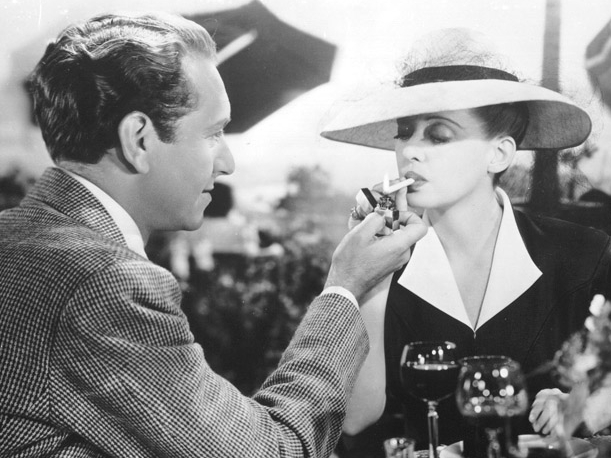
Bette Davis, Paul Henreid in Now Voyager

“Because one is content with oneself, one doesn’t need other’s approval. Because one accepts oneself, the whole world accepts him or her.” ~ Lao Tzu

“Dr. Jacquith says that tyranny is sometimes expression of the maternal instinct. If that’s a mother’s love, I want no part of it.” ~ Charlotte Vale in Now Voyager

One of the universal issues, in my opinion, that almost every human being must deal with is self-love and acceptance. It’s sad that we’re not taught to love ourselves. But then neither were our parents or theirs before them, so perhaps that situation is not so unexpected after all. Learning to love myself has been one of the most profound things I’ve undertaken in my life. And I’m not finished yet. So, when I first saw the movie, Now Voyager on Turner Classic Movies some years back, I could completely relate to Charlotte, played by Bette Davis, in her quest to not only learn to love herself, but deal with her extremely difficult mother.

Charlotte Vale’s story is nothing new, except that she comes from a old wealthy Boston family. So often we think that the rich have no problems whatsoever. This story shows that’s not always true. Charlotte has had no chance to become independent of her mother’s control or family ridicule, which results in profound self-loathing. At the beginning of the story, she has a nervous breakdown, as it was called in the 1941, and must go to Cascade, a sanitarium to heal from years of emotional abuse.

Dr. Jacquith, played by Claude Rains, the founder of Cascade, is a pioneer in the field of psychiatry. He and his staff give practical advice about how to deal with almost any situation, and with difficult people. In general Charlotte and her fellow patients socialize with each other, so they can see that they are not the only ones in pain. This gives them an opportunity to practice their skills and gives them confidence in being with other people. The book gives more details than the movie about what Charlotte learns and her tentative steps in using the techniques Dr. Jacquith teaches.

Once Charlotte has been pronounced well, her family ally, sister-in-law Lisa, and Dr. Jacquith send her on a long ocean cruise so she can practice her new interpersonal skills. On the voyage, Charlotte meets J. D. Durrance, played by Paul Henreid, a married man who is going to South America (France in the book) on business. They form a friendship and later fall in love, though their demonstrations of love never go past kissing and hugging. J. D., or Jerry as Charlotte calls him, is an honorable man. He has a demanding, shrewish wife and three daughters which puts a great strain on him. The youngest of his daughters, Tina, is showing the same kinds of symptoms Charlotte had before her breakdown. These facts are additional ties that bind Charlotte and Jerry together. When Jerry leaves the ship for his business meetings, he and Charlotte vow never to see each other again, even though they are deeply in love.

When Charlotte gets home after many months of being away from her mother, she is extremely apprehensive. However, Jerry has sent her a corsage of camellias, a nickname he gave her on the voyage. She knows he’s thinking of her and that fact gives her the courage to assert her independence when her mother begins making demands.

After that first evening, Charlotte and her mother form an unspoken truce. Over the next months, Charlotte walks a fine line between open rebellion and compliance to her mother’s demands, until one day when Charlotte breaks under her mother’s belittling. They have an argument and her mother has a heart attack and dies leaving Charlotte a wealthy heiress.

That’s when the story takes an interesting turn. Charlotte, thinking she killed her mother, goes to Cascade, where she finds Tina, Jerry’s daughter. At eleven years old, Tina is in bad shape. She’s thin, sullen, and a loner. Charlotte understands Tina better than anyone at Cascade and undertakes to be her friend. This friendship is beneficial to them both.

Charlotte’s journey is unusual for a story written in the 1940s. Though Charlotte becomes engaged at one point, when that relationship dies a natural death, she says she will remain resolutely single. After meeting Tina she devotes herself to not only helping her, but opening her home to her nieces and nephews. She also donates money to expansion at Cascade where Dr. Jacquith puts her on the board. At the end of the book, there is no indication that she and Jerry will resume their previous romantic relationship. However, Jerry agrees to allow Tina to continue living with Charlotte and the couple make a pact to work together to help her grow into a happy, independent, accomplished woman.

The movie is very much like the book, with few changes. It uses dialogue just as Olive Higgins Prouty wrote it. This is one of those classic stories I feel lots of people can relate to, and even gain some techniques for dealing with some of life’s more difficult situations. I highly recommend it.

Thanks for reading, liking and commenting. I appreciate it.

Lucinda Sage-Midgorden © 2018

Lucinda is the author of The Space Between Time, an award finalist in the “Fiction: Fantasy” category of the 2017 Best Book Awards. It’s a historical, time-travel, magical realism, women’s novel, and is available in all ebook formats at Smashwords, or you can find the ebook at iBooks or Barnes and Noble. I you prefer a physical copy, you can find a print-on-demand version at Amazon. To join her email list, click here. She will never sell the names on her list.

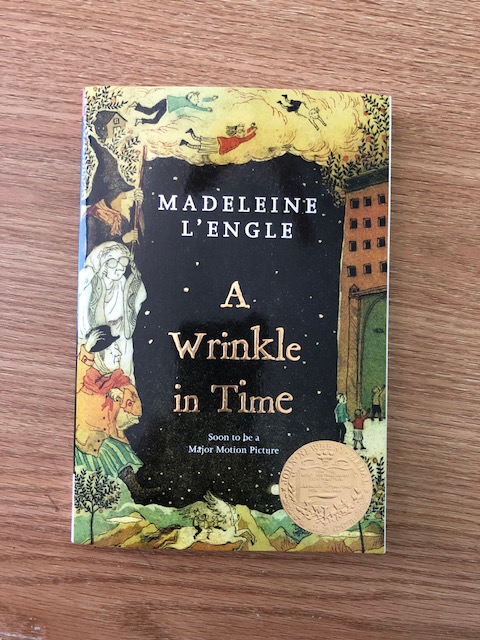
Game Changer – A Wrinkle in Time

“I don’t understand it any more than you do, but one thing I’ve learned is that you don’t have to understand things for them to be.” ~ Madeleine L’Engle, A Wrinkle in Time

“A book, too, can be a star, ‘explosive material, capable of stirring up fresh life endlessly,’ a living fire to lighten the darkness, leading out into the expanding universe.” ~ Madeleine L’Engle, author of A Wrinkle in Time

“What if we are here for a reason. What if we are part of something truly divine.” ~ Dr. Alex Murry, A Wrinkle in Time

What if a book/movie came into being that challenged our long held beliefs about who we really are? How would people feel about it? What would they think? Judging by the user reviews of the movie, A Wrinkle in Time, they’d hate it.

When I first read A Wrinkle in Time many years ago in the late 1980s, I loved it. That book was my introduction to the fantasy genre. I loved the blend of science and spirituality, the journey Meg takes from self-hatred to self-love. I could completely relate to her struggles because I to thought I was unlovable too. But one of my favorite segments in the book and the movie is when Meg gets a glimpse into the inner lives of three important people in her life, a girl who bullies her, her principal who does not understand her, and Calvin, the most popular boy at school. She gets to see that each one has a deep wound to deal with just like she does. That’s when she understands that we all need understanding and compassion.

Since the book was a Newberry Medal winner, I was completely surprised to discover that A Wrinkle in Time was rejected by publishers over thirty times. But then maybe I shouldn’t have been surprised, because it’s a story that challenges the way we perceive how the universe works. There are many planes of existence of which we, only using our five senses, are completely unaware. And the idea that our minds and hearts are much more powerful than we have previously believed is a central part of the book. The darkness that exists is inside us and the only way it can be vanquished is to nurture light of love within.

Barry and I went to see the movie version on Easter Sunday. I thought it was the perfect movie for that holiday because to me, Easter is about redemption, forgiveness and love. But when I went to read the user reviews on Internet Movie Database, everyone gave the movie one star rating. The headers told how much they hated the movie. When I read one that said, “I want to gouge out the part of my brain that remembers this movie,” I was so surprised. The movies I wish I could forget are dark, hopeless, humanity is coming to an end type movies, not ones full of hope. Then a lot of recent movies with similar hopeful story lines came crashing into my head.

If self-reflection, healing, and self-love are such horrible topics for a movie, then how do we explain the huge money makers from the last couple of years? Some of them were Doctor Strange, Beauty and the Beast, Wonder Woman, Justice League, Star Wars: The Last Jedi, and the biggest blockbuster of 2018 so far is Black Panther. Each one has a situation where darkness threatens to take over the planet or the universe and the solution to interrupt its progress is by finding inner balance and the strength of love. In the case of Doctor Strange, he’s willing to sacrifice himself to trap the dark entity it in a mindless time loop. Eventually the entity realizes the futility of doing the same thing over and over again expecting a different result and gives into Doctor Strange’s terms.

Those movies were blockbusters because most of them are action pictures with lots of fighting, and explosions to distract the audience long enough to get the final message across, that it’s only through finding peace within, that we’ll create peace without. Each of the main characters comes to the conclusion that they must deal with their wounds before trying to save the world. Those are the kinds of stories that are most interesting to me.

So what makes A Wrinkle in Time different than the above mentioned movies? I mean the visual effects are stunning and the cast does a good job. Is it just because Oprah’s in it? My theory is that it doesn’t try to trick the audience in any way. We learn pretty early on that in order to save her father, Meg’s going to have to do some deep inner work. That’s a scary prospect for some of us and this may be why some people hated the movie so much. Most of us try to avoid feeling pain using lots of different methods, but as Meg learns, you’ve got to embrace it to lessen it’s power.

I’m convinced that A Wrinkle in Time is going to end up being a beloved classic movie, just like It’s a Wonderful Life is now. When It’s a Wonderful Life came out, it did not get a good reception. But what would Christmas be without Mister Potter and George Bailey? We love to watch George fight against his true calling until that fateful day when his life seems to be falling apart and he gets the chance to see what the world would have been like if he’d never been born. George discovers that the love and compassion he shared with the people of his community was desperately needed. His one seemingly insignificant life sent out so many ripples of hope. And in the end all the good he did comes back to him ten-fold.

The message of both movies is that love is stronger than hate. Dr. Murry tells Meg, “I wanted to touch the whole universe, when I should have kept ahold of your hand.” He got seduced by his curiosity and theories. But Meg’s decision to love herself allows her to save her father, her little brother, Charles Wallace and herself. That’s why I love both the movie and the book of A Wrinkle in Time.

Thanks for reading, liking and commenting.

Lucinda Sage-Midgorden © 2018

Lucinda is the author of The Space Between Time, an award finalist in the “Fiction: Fantasy” category of the 2017 Best Book Awards. It’s a historical, time-travel, magical realism, women’s novel, and is available in all ebook formats at Smashwords, or you can find the ebook at iBooks or Barnes and Noble. I you prefer a physical copy, you can find a print-on-demand version at Amazon. To join her email list, click here. She will never sell the names on her list.